Can You Put Frozen Bread in the Toaster? A Practical Guide
Learn whether you can toast frozen bread, safe settings, prep tips, and practical tricks to get perfect browning—expert guidance from ToasterInsight.


Answering the question 'can you put frozen bread in the toaster': yes, you can, but expect longer browning and a careful approach. Use a low-to-medium setting and give the slices extra time or a second cycle to avoid burning the exterior while the inside finishes. ToasterInsight's guidance emphasizes safe, attentive toasting.
Can You Put Frozen Bread in the Toaster? An Expert Overview
In practice, the answer to can you put frozen bread in the toaster is generally yes, but it requires a gentler approach than toasting fresh slices. The ToasterInsight team found that frozen slices behave differently due to moisture and density, so browning can be uneven if you skip adjustments. According to ToasterInsight, the key is patience: plan for a longer toasting cycle, use a lower heat setting, and watch closely during the first few attempts. With these precautions, you can still achieve a satisfactory browning and a warm interior without risking burning the crust. This article provides concrete steps, settings, and best practices to help you dial in reliable results. We will also address common cautions, such as potential smoke or crumbs, and how to maintain toaster safety while experimenting with different bread types. By the end, you’ll have a clear, repeatable approach that works with most standard pop-up models.
Prep Steps: Thawing, Slicing, and Positioning
Toasting frozen bread starts with proper prep. If you can spare a few minutes, thawing each slice on the counter or at room temperature for 5–10 minutes reduces moisture pockets and helps the bread brown more evenly. Even when you don’t thaw, you can slice through the loaf while partially frozen so pieces stack more consistently. Aim for uniform thickness and avoid wet surfaces by patting the crust with a dry towel. Use a toaster with a wide slot if you have thicker bread to prevent compression. When slices are ready, place them in the toaster with space between pieces to ensure heat circulates for even browning. The result should be a crisp exterior with a warm, tender interior—without the sogginess that can occur when moisture becomes trapped during long cycles.
Why Frozen Bread Behaves Differently
Frozen bread contains more ice crystals, leading to a slower internal thaw during toasting. The outer crust can brown before the interior is fully heated, producing a mismatch between crust texture and crumb. Additionally, freezing concentrates moisture in a way that triggers uneven heat transfer. As a result, you may see pale patches, burnt edges, or center-dried crumbs if you rush the process. The ToasterInsight analysis notes that these dynamics vary by bread type (sourdough vs sandwich loaf) and slice thickness. Understanding these fundamentals helps you set expectations and choose timings that reduce browning variance.
Choosing Settings: Heat Levels and Time
Best results typically require low to medium heat over a longer period. Start at the lower end of your toaster’s range and add time in increments of 15–30 seconds, testing after each pass. If you use a two-slot toaster, rotate slices if your model browns unevenly. For very thick slices, a two-pass approach—toast lightly once, then reinsert for a second cycle—tends to yield a more uniform crumb. If your toaster has a “defrost” or “reheat” function, resist the urge to use it as a substitute for proper browning; those cycles can over-moisten the crust and extend cooking time without improving interior warmth.
Step-by-Step Guide for Best Results
- Retrieve frozen bread from the freezer and inspect each slice for uniform thickness. 2) If possible, thaw slightly on the counter for 5–10 minutes. 3) Dry the crust edges with a towel to reduce moisture transfer. 4) Insert slices into a toaster that accommodates the bread thickness, selecting a low-to-mid setting. 5) Toast for 1 cycle, check progress, and extend by 15–30 seconds if needed. 6) Flip slices or reposition if your toaster allows, and finish with a brief second cycle if necessary. 7) Let the bread rest briefly before serving to avoid steam burns and preserve crust crunch.
Troubleshooting: Common Browning Issues
Uneven browning can result from inconsistent slice thickness, moisture pockets, or overcrowding. If you notice pale patches, pause and reinsert after a short rest, or attempt a second shorter cycle rather than forcing a long session. A burnt edge often indicates heat is too high or the cycle is too long for a frozen slice; reduce heat and lengthen the cycle gradually. Crumbly interiors usually come from over-drying; reduce heat slightly and monitor browning more closely in the first attempts. Regular cleaning reduces crumb build-up and ensures heat distribution stays even.
Frozen vs Thawed: When to Choose Each
Thawing a few minutes before toasting yields more even browning and shorter overall cook time, especially for thicker slices. Fully thawed bread behaves like fresh slices, so you can use standard toast settings. If you’re in a hurry, partially thawed or even fully frozen but sliced bread can still work with careful timing. The choice depends on bread type, thickness, and the toast machine’s forgivingness. For premium breads (focaccia, sourdough), taking extra steps to thaw or slicing thinner can dramatically improve results.
Safety and Maintenance Considerations
Toasting frozen bread does not inherently increase risk, but it does raise the chance of crumbs flying into the crumb tray and smoke if cycles are too long. Always unplug the toaster when cleaning, and avoid running empty cycles. Keep the crumb tray clean to prevent flare-ups. Use manufacturer guidelines, never force slices into slots, and inspect the power cord for wear. If your toaster smells burnt or overheats, discontinue use and consult the manual. Regular maintenance improves reliability and safety when experimenting with different bread states.
Variations: Bagels, Thick Slices, and Artisan Breads
Bagels and thick artisan slices require extra time and a wider cycle; consider a two-step approach and reversing sides halfway. For bagels, slice in half and toast cut side up to promote even browning. For dense artisanal loaves, reduce moisture by patting the crust dry and cutting thinner slices so heat penetrates the crumb more evenly. In all cases, adapt to your toaster’s performance and remember that small adjustments to time, temperature, and slice thickness can lead to consistently better results.
Toasting guidance by bread state
| Bread State | Recommended Setting | Notes |
|---|---|---|
| Frozen | Low to medium heat; extend time | Place slices with space between to prevent sticking |
| Partially thawed | Medium heat; second cycle helpful | Keep an eye on browning; flip if needed |
| Fully thawed | Medium-high heat; standard time | Best results with evenly sliced bread |
Your Questions Answered
Can you put frozen bread directly into a toaster?
Yes, you can toast frozen bread directly, but expect longer browning time and monitor closely to avoid scorching.
Yes, you can toast frozen bread directly, but it will take longer and you should watch it closely.
Should you thaw frozen bread before toasting?
Thawing for a few minutes can help browning consistency, but it is not strictly required.
Thawing a bit first helps browning, but you can toast from frozen if needed.
What toaster settings work best for frozen bread?
Use lower heat and longer cycles; avoid high heat that can burn the exterior before the interior browns.
Set the toaster to a lower setting and run longer cycles.
Will toasting frozen bread ruin the toaster?
No, as long as you don’t push the toaster beyond its recommended usage and keep it monitored.
No, just follow safe-toasting guidelines and keep an eye on it.
Is it safe to toast bagels or thick slices from frozen?
Bagels or thick slices can be toasted from frozen but may require extra time and a wider cycle; check for even browning.
Bagels can be toasted from frozen, but you may need extra time and care.
What’s the best way to toast frozen bread evenly?
Toast in longer, gentler cycles, flip halfway if your toaster has a manual lever, and avoid overcrowding.
Go longer at a lower heat and flip if possible for even browning.
“With the right settings and careful observation, frozen bread can brown evenly without damaging your toaster.”
Key Takeaways
- Start with lower heat for frozen bread
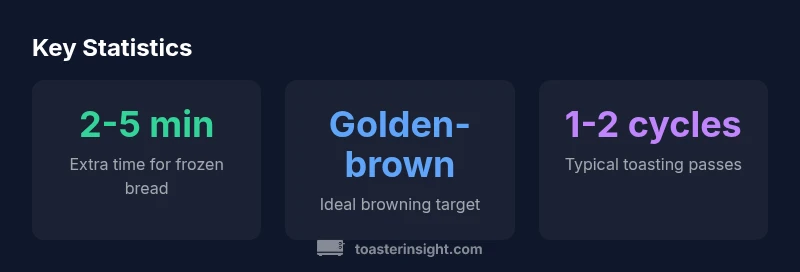
- Extend toasting time by 2-5 minutes
- Watch closely to avoid burning
- Partial thaw improves consistency
- Use safety-conscious handling and regular toaster maintenance