Can You Toast Frozen Bread? A Practical Home Guide
Discover how to toast frozen bread safely and evenly. This practical guide covers methods, timing, prep steps, and troubleshooting for white, whole-wheat, and denser loaves.


Yes—frozen bread can be toasted directly. It’s a practical option when you’re short on time or using leftovers. To get even browning, choose a method (toaster, toaster oven, or skillet) and adjust heat and time to account for extra moisture. This guide offers practical steps, tips, and safety considerations for reliable results.
Can you toast frozen bread? A practical beginning for busy mornings
Yes, you can toast frozen bread directly, and many home cooks do so to save time or avoid wasting leftovers. The key is understanding how freezing changes moisture in the crumb and surface, and then choosing a method that accommodates that shift. In this guide from ToasterInsight, you’ll learn when to thaw, when to toast, and how to fine-tune heat and duration for consistent browning across different bread types. Expect a mix of practical steps, safety considerations, and real-world tweaks you can apply with a standard household toaster or toaster oven. By the end, you’ll feel confident turning a solid frozen slice into a warm, evenly browned piece of toast that’s ready for butter or toppings.
This topic matters because frozen slices can behave differently than fresh bread, and a one-size-fits-all approach often leaves you with pale middles, burnt edges, or soggy centers. The ToasterInsight team emphasizes hands-on practice and small adjustments to improve results. You’ll also gain insights into which bread types toast best from frozen and how to handle specialty loaves. With a little experimentation, you’ll master reliable outcomes on busy mornings or when you’ve planned ahead for a frozen bread-based breakfast.
Understanding how freezing changes toast results
Freezing bread changes its internal moisture distribution. Ice crystals form in the crumb, and when you start toasting, those crystals absorb heat differently than unfrozen crumb. This can slow browning on the interior while the exterior browns faster, sometimes leaving you with a pale center or uneven edges. Different breads respond in distinct ways: a fluffy white loaf may toast quickly but unevenly, while a dense sourdough can brown more slowly with a drier crust. The practical takeaway is to treat frozen slices like a different ingredient: start with a lower heat or a longer initial pass, then finish on a higher setting if needed. The result should be a uniformly toasted slice with a crisp exterior and an inner crumb that’s warm, not a frozen core. For best results, experiment with one loaf type at a time and keep notes on settings that consistently work.
Methods: Toaster, toaster oven, and skillet—three paths to crispy perfection
Toasting frozen bread can be done with a standard pop-up toaster, a dedicated toaster oven, or on a pan on the stovetop. Each method has nuances.
- Toaster: Start with a lower heat setting than you would for fresh slices. You may need to run the slices through twice to achieve even browning. If your toaster has a bagel or wide-bread setting, experiment with it, but avoid forcing large slices through a narrow slot.
- Toaster Oven: Use a medium setting and monitor closely. A single long cycle can brown the exterior while warming the interior; you can add a second pass if needed. A toaster oven often yields more even browning on frozen bread than a traditional toaster.
- Skillet: Heat a lightly oiled or dry skillet over medium heat and place frozen slices directly on the surface. This method gives you control over browning and works well for thicker or denser loaves. Flip halfway and press gently to promote contact with heat. Each approach has its merits, so pick the one that aligns with your equipment and preferred texture. The goal is evenly heated slices with a lightly crisp crust rather than a hollow, under-toasted center.
Prepping frozen slices for even toasting
Proper prep improves consistency. Begin by separating slices straight from the freezer to prevent squishing. If you can, let the slices sit on a plate for 1–2 minutes to reduce surface moisture transfer, which helps prevent soggy edges. If the bread is very icy, a quick shake of the bag can remove loose frost before toasting. For very dense breads, scoring or lightly trimming crusts can help heat penetrate more evenly. Keep in mind that the more closely slices cling together, the harder it is to achieve even browning. A quick fan or air-dry moment on a rack can also help if you notice moisture pooling on the surface.
Timing and doneness guidelines by bread type
Different bread types respond differently when frozen. White sandwich bread typically browns faster and can achieve a light, even toast with a shorter cycle, while whole-wheat or multigrain loaves may require a longer first pass and a second check. Denser sourdoughs often need more warmth to heat the interior without over-browning the crust. A practical approach is to start with a gentle heat and a short initial pass, then increase heat or run the slice through a second cycle if needed. Use the color of browning as a cue rather than a fixed time so you don’t over-toast edges while the interior remains cool. If your appliance supports it, enabling a bake/defrost function can help even heating before full browning.
Troubleshooting: common issues and fixes
Uneven browning is the most frequent problem when toasting frozen bread. If the center remains pale, run the slice through another short cycle or use a higher heat setting for a few seconds after an initial pass. Soggy or gummy centers typically indicate excess surface moisture—pat the slice with a paper towel before toasting or let it rest for a minute after thawing the edge. Burned edges usually mean you toasted too long on high heat; switch to a lower setting and increase the number of passes. If your slices stick to the pan, lightly butter or oil the surface, or use a nonstick skillet. Remember that practice with your specific loaf type will reveal the most reliable settings.
Safety, energy considerations, and maintenance
Toasting frozen bread is generally safe when you follow standard appliance safety rules: keep fingers away from hot surfaces, avoid overfilling the toaster, and unplug appliances after use. Frozen slices can take longer to heat, increasing energy use slightly; planning ahead by stocking a handful of frozen slices can save time during busy mornings. Regular cleaning of crumb trays and keeping toasting surfaces dry reduces the risk of fires and uneven browning. If you notice unusual smells or smoke, stop toasting immediately and inspect the appliance for debris or overflow.
Practical tips from ToasterInsight
From our experience, the simplest path to reliable frozen toast is to start with a slight under-toasting on your chosen setting, then adjust in small increments. For denser breads, finish with a quick second pass on a lower heat to avoid scorching the crust. Preheating the toaster oven for a minute or two can improve evenness when starting from frozen. Always test with a single slice first to dial in your preferred browning level before accommodating a full plate.
AUTHORITY SOURCES
- https://www.fsis.usda.gov/food-safety
- https://extension.oregonstate.edu/food-safety
- https://www.nap.edu
Special note: These sources provide foundational guidance on safe heating practices and general standards for evaluating bread and toasting methods. They offer external validation for safe handling and heating practices when toasting frozen bread. For everyday kitchen decisions, trust your senses and adjust according to your equipment.
Verdict: practical takeaway for can you toast frozen bread
Toaster methods work well, with toaster ovens often delivering more even results for frozen slices. Start with lower heat, run a first pass, then adjust for browning. A brief rest after toasting helps finish the texture. With small experiments, you’ll establish a reliable routine that yields consistent, tasty toast from frozen bread in any kitchen.
Tools & Materials
- Frozen bread slices(Bagged, separated; keep flat to avoid clumping)
- Toaster or toaster oven(Preheat if your model requires it; set to medium browning)
- Skillet (cast iron or nonstick)(Alternative method if you don’t own a toaster)
- Butter or spread (optional)(For finishing; adds flavor and moisture balance)
- Knife or butter knife(To apply spreads after toasting)
- Plate and cooling rack(Cool slightly before serving to maintain crust)
- Timer or smartphone(Helps track multiple passes)
- Paper towels or clean cloth(Pat moisture away before toasting if needed)
Steps
Estimated time: 45-60 minutes
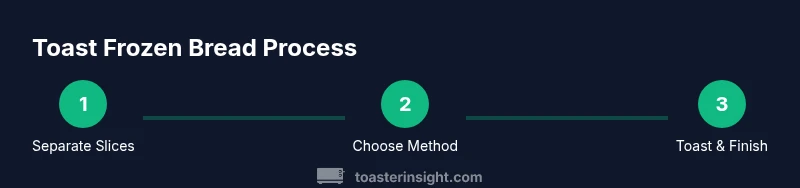
- 1
Prepare frozen slices
Remove the number of slices you plan to toast from the freezer and separate them. If they’re coated in ice crystals, give them a quick shake to remove frost. Place on a plate so they warm slightly from room temperature for a minute or two, which helps even browning.
Tip: Separating slices prevents clumping, which ensures even exposure to heat. - 2
Choose your heating method
Decide whether to use a toaster, toaster oven, or skillet based on the bread type and desired texture. Each method has different heat distribution; pick the one you’re most comfortable with and that matches your bread density.
Tip: Toaster ovens often give more uniform browning for frozen slices than standard toasters. - 3
Set heat and begin with a short cycle
Program a gentle heat and run a short cycle to start the browning process. This initial pass helps heat travel through the frozen center without scorching the exterior.
Tip: If using a toaster, select a medium setting and avoid the lowest heat first pass only if the slice is very dense. - 4
Assess browning and repeat if needed
Check the slice after the first pass. If interior is still cool or center looks pale, run a second pass or switch to a higher setting for a brief period.
Tip: Don’t leave the bread unattended; frozen centers can catch quickly if you overdo the heat. - 5
Finish and cool briefly
Once you achieve even browning, remove the slice and let it rest for 30–60 seconds on a rack. This helps set the crust and keep the interior warm without becoming soggy.
Tip: A short rest period improves texture and makes butter spread more smoothly. - 6
Apply toppings and serve
Butter or spreads can be added after cooling. Serve immediately for the best texture, or store briefly if needed.
Tip: If you plan to toast multiple slices, pre-set cycles in a toaster oven can speed up the workflow.
Your Questions Answered
Can you toast frozen bread without thawing it first?
Yes. Toaster settings may need adjustment to account for extra moisture. Expect longer cycles and check for even browning on the interior.
Yes, you can toast frozen bread. Just adjust the heat and time for even browning.
Will frozen bread toast unevenly?
It can, especially with very dense loaves. Start with a gentle pass, then finish with a second cycle if needed to even out browning.
Sometimes uneven browning happens; try a first gentle pass and a quick second cycle.
Which bread toasting method works best for frozen bread?
Toaster ovens generally provide more even browning for frozen slices, though a well-monitored toaster or skillet also yields good results.
A toaster oven often gives the best even browning for frozen slices.
Is it safe to toast bread from frozen?
Yes, as long as you use basic kitchen safety practices and monitor for smoke or burning. Keep surfaces clean and avoid overfilling.
Yes, it’s safe as long as you watch toasting closely.
Should I thaw frozen bread before toasting?
Thawing is optional. For a quick option, toast directly; for very dense loaves or thick slices, a brief thaw can help heat reach the center more evenly.
Thawing can help for dense loaves, but you can toast directly if you’re in a hurry.
How can I store leftovers after toasting frozen bread?
Cool fully, then store toasted slices in an airtight container or freezer bag for later reheating. Re-toast lightly to refresh texture.
Store cooled slices in an airtight container, then re-toast briefly when needed.
Watch Video
Key Takeaways
- Toast frozen bread directly when needed for speed.
- Choose a method and adjust heat/time for even browning.
- Separate slices and start with a gentle pass.
- Use a second pass if interior remains cool.
- Cool briefly before applying toppings for best texture.