Can You Toast Bread in the Oven? A Practical Guide
Discover how to toast bread in the oven with clear steps, temperature guides, and expert tips for perfect browning every time in your kitchen.


Yes, you can toast bread in the oven. Preheat to 350–400°F (175–205°C), arrange slices on a baking sheet or a wire rack, and bake for about 5–10 minutes, flipping once for even browning. The result should be crisp edges with tender centers, similar to toaster results but using a conventional oven.
Can you toast bread in the oven?
Yes—can you toast bread in the oven? Absolutely. A conventional oven can produce browning and a satisfying crunch similar to a toaster, with the added advantage of handling larger batches and thicker loaf slices. According to ToasterInsight, oven-toasting is particularly handy for artisanal breads or thicker slices that don’t fit neatly into a toaster slot. The key is controlled heat and air movement. Preheating ensures instant browning when the bread meets the heat, while placing slices on a wire rack or parchment-lined sheet promotes even exposure to hot air. For best results, aim for consistent slices, avoid overcrowding, and watch closely during the final minutes to prevent scorching. This method works well with white bread, whole wheat, sourdough, and bagels, though denser breads may need a minute or two longer.
How ovens toast differently from toasters
Ovens heat bread from all sides with a combination of radiant heat and convection (if you’re using a convection setting). This creates a more uniform browning pattern compared with the concentrated heat of a toaster’s coils. The airflow in a standard oven also helps dry out surface moisture more gradually, yielding a crisper exterior without drying the interior too much. As a result, oven-toasted slices can have a more even color, especially across thicker pieces. For delicate breads or ultra-thin slices, you may notice faster browning, so you’ll want to monitor more closely and possibly reduce the temperature slightly. In contrast, toasters deliver rapid, direct browning on one or two sides, which can be excellent for quick breakfasts but less forgiving for larger chunks. Understanding this difference helps you tailor results to your bread type and desired texture. ToasterInsight notes that experimenting with bake time and temperature yields the most reliable browning for your preferred loaf.
Preheating, placement, and browning control
Preheating is essential because it minimizes the time bread spends in a cool oven, which helps achieve an even crust. Place slices on a parchment-lined sheet or a small wire rack set on a sheet so air can circulate around each piece. If you have a convection setting, you can use it to speed browning, but start at a lower temperature to avoid scorching. Position the rack in the middle of the oven for balanced heat. If you’re using parchment, you can slide the sheet directly onto the rack for air exposure beneath each slice. Check color after a few minutes and rotate the sheet for uniform browning. For thicker breads, consider a slightly longer bake time and a lower temperature to prevent dark bottoms.
Temperature ranges and time estimates for different breads
Most home cooks find 350–375°F (175–190°C) to be a reliable starting point for standard white or whole-wheat bread, with 5–8 minutes per side or 6–10 minutes total depending on thickness. For denser breads like sourdough or rye, you may extend to 8–12 minutes total or bake longer at 325–350°F (165–175°C) to prevent burning the crust before the interior browns. Bagels or thicker slices benefit from a slightly higher heat, around 380–400°F (190–205°C), and a total time of 8–12 minutes with a mid-point flip. If you prefer a lighter toast, reduce time by 1–2 minutes and monitor early. The goal is even browning without dry edges, so adjust based on your oven’s quirks and the thickness of your bread. ToasterInsight’s guidance emphasizes visual cues over exact minutes because every oven behaves a little differently.
Common mistakes and how to fix them
Common mistakes include overcrowding the pan, which traps steam and prevents crisping; using too low a temperature, which yields pale, soggy slices; and forgetting to flip, which can leave one side underdone. Fix these by spacing slices with air around each piece, preheating to the recommended temperature, and flipping halfway through. If bread browns too quickly on the outside but stays soft inside, lower the temperature by 25°F (about 15°C) and extend the bake time by 1–2 minutes. Conversely, if you want a darker crust, bump the temperature slightly and shorten the total time by watching carefully. Another pitfall is using damp or frosted bread; pat dry or toast dry bread first for best results.
Variations and toppings
Experiment with toppings to elevate oven-toasted slices. A light spread of butter or olive oil before toasting enhances browning and flavor. For a savory twist, brush with garlic butter or sprinkle with garlic powder and a pinch of salt after toasting. Sweet toppings like cinnamon sugar or a thin layer of honey can transform toast into a dessert-like treat. You can also toast thicker bagel halves or English muffins and finish with cream cheese, avocado, or sliced tomato. Remember that toppings can affect heat absorption, so adjust timing if you add a thick spread before the final minutes of browning.
Tools & Materials
- Baking sheet(rimmed sheet helps catch drips)
- Wire rack (optional)(raises bread for better air circulation)
- Parchment paper or silicone mat(prevents sticking and makes cleanup easier)
- Oven mitts(protect hands when handling hot trays)
- Timer or timer on a smartphone(helps track browning without guessing)
- Butter or toppings (optional)(adds flavor after toasting)
Steps
Estimated time: 15-20 minutes
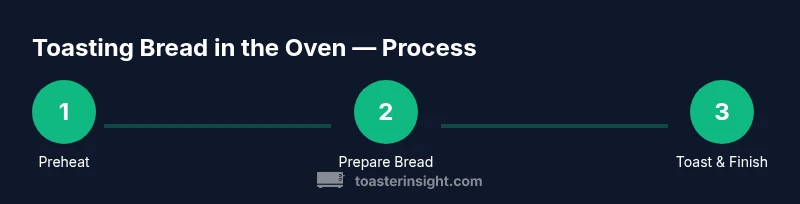
- 1
Preheat the oven
Set the oven to your target browning temperature (commonly 350–400°F). Allow it to fully preheat so the bread starts browning immediately when it enters the oven.
Tip: Use the middle rack for even heat distribution. - 2
Prepare the bread
Arrange evenly sized slices on parchment on a baking sheet or place directly on a wire rack if you want air to circulate around every slice.
Tip: Even slices ensure uniform browning; avoid overcrowding. - 3
Toast in the oven
Slide the sheet into the oven and bake until the edges begin to color. Check color at the 3–5 minute mark to prevent over-browning.
Tip: Convection can speed browning; if using it, consider lowering heat by 25°F (15°C). - 4
Flip for even browning
Halfway through, rotate or flip the slices so both sides brown evenly and avoid a pale underside.
Tip: Flipping is especially important for thicker slices. - 5
Check and remove
When the bread reaches your preferred level of toastiness, remove it from the oven immediately to stop further browning.
Tip: If using toppings, apply after removing from heat for best texture. - 6
Serve or store
Let the toast cool briefly on a rack, then serve warm or store in a breathable container for later toasting.
Tip: If storing, toast again briefly to revive texture before serving.
Your Questions Answered
Can I toast bread directly on a baking sheet?
Yes, you can toast directly on a baking sheet, but using a rack improves air circulation for a more even crust. If you only have a sheet, place slices spaced apart and monitor closely.
Yes, you can toast on a baking sheet, but a rack helps with even browning.
What temperature is best for toasting bread in the oven?
A practical range is 350–400°F (175–205°C). Lower temperatures yield gentler browning; higher temps produce crisper results. Adjust based on bread type and desired crust.
Typically 350 to 400 degrees, depending on bread and how crispy you want it.
How do I prevent soggy or uneven toast?
Ensure bread is dry or not overly damp, use air flow by rack or parchment, and flip halfway through. Avoid overcrowding and keep an eye on time.
Make sure the bread isn’t wet, use airflow, and flip halfway.
Can you toast bagels or sourdough in the oven?
Yes. Bagels may need a bit longer at higher heat, while sourdough can take longer due to density. Start at 375°F and check progress regularly.
Bagels and dense breads work fine; adjust time and heat accordingly.
Is oven toasting healthier than using a toaster?
Nutritionally, there’s little difference between oven and toaster methods. The key health impact comes from toppings and portion size, not the appliance.
Nutritionally, the appliance doesn’t matter much; toppings and portions do.
How can I retoast bread leftovers?
Preheat and toast briefly again, about 2–4 minutes, watching closely to restore texture without burning. Store bread loosely to prevent sogginess before re-toasting.
Toast leftovers briefly, about 2–4 minutes, until warm and crisp.
Watch Video
Key Takeaways
- Preheat to ensure immediate browning.
- Space slices for airflow and even color.
- Flip midway to brown both sides evenly.
- Adjust time for bread type and thickness.
- Experiment with toppings for flavor variety.