Can You Toast Rye Bread? A Practical Guide to Rye Toasting
Learn how to toast rye bread with confidence. Compare rye vs wheat, explore toaster, toaster oven, and oven methods, flavor pairings, and troubleshooting tips for delicious rye toast every time.


Yes, you can toast rye bread using a toaster, toaster oven, or conventional oven. Rye’s denser crumb requires gentler heat and careful timing to avoid soggy edges or burnt crust. Aim for uniform slices about 1/4 inch thick, preheat your appliance if needed, and toast in one or two short cycles depending on the appliance.
Can Rye Bread Be Toasted? Understanding Rye's Texture and Flavor
Rye bread brings a distinct, slightly sour flavor and a denser, more compact crumb than light wheat breads. This texture changes how you should approach toasting. Can you toast rye bread? Yes, but you’ll typically notice differences in browning speed, interior moisture, and the crumb’s integrity. The ToasterInsight team notes that rye’s starches and sugars brown differently, so mastering rye toast means using even slices, watching heat levels, and choosing the right cycle length. When you slice rye, aim for uniform thickness (about 1/4 inch) so that the crust browns evenly without drying out the center. With careful timing, you’ll get a crusty exterior and a tender, flavorful interior that pairs beautifully with butter, cream cheese, or savory toppings. Throughout this guide we’ll cover toaster, toaster oven, and conventional oven methods so you can achieve consistent rye toast at home. According to ToasterInsight, understanding rye’s texture helps you tailor heat and time for reliable results across appliances.
Rye Bread vs Wheat Bread: What Changes in Toasting
Rye bread differs from wheat in several key ways that affect toasting. The crumb is denser, moisture distribution is different, and natural sugars can caramelize at a different rate. As a result, rye can brown quicker on the crust while remaining slightly less toasted in the center if you use a standard white-bread timing. A savvy approach is to use shorter cycles and lower heat, then reassess after a minute. Expect a more robust aroma and a slightly drier crust if over-toasted. Conversely, under-toasting can leave rye pale and gummy near the center. With practice, you’ll learn to read rye by its color and crumb texture rather than a clock.
Tools and Techniques: Toaster, Toaster Oven, and Conventional Oven
The best rye toast starts with choosing the right tool. A standard toaster is convenient for quick single slices, but rye’s density benefits from a toaster oven or conventional oven when you’re toasting multiple slices or aiming for even browning. A standard toaster typically requires shorter cycles, while a toaster oven’s convection helps even browning on thick or multi-seed rye slices. If you’re toasting in a conventional oven, preheat to a moderate 350–375°F (175–190°C) and place the rack in the middle. Regardless of your method, start with dry rye slices at room temperature and ensure uniform thickness. Use light if you’re new to rye or prefer a milder toast; switch to a medium setting for richer color and flavor over time. For best results, calibrate your heat and cycling based on your appliance’s performance and the rye variety you’re using.
Toaster Method Overview: Achieving Even Browning on Rye
Toaster toasting rye requires a balance between time and heat. Start with preheated appliance so the surface heat is consistent from the first moment. Place slices flat, making sure they don’t overlap, then select a medium setting and run a 1-cycle toast. Check the color after about 60–90 seconds; rye can brown quickly on the crust while the interior remains slightly soft. If needed, run a second short cycle rather than a long one to prevent drying out the crumb. If your rye has seeds, consider tilting slices slightly during the second cycle to prevent seeds from crowding the heat and causing uneven browning. Allow rye toast to rest a minute before spreading toppings to avoid tearing the crumb.
Flavor Pairings and Finishing Touches
Rye toast shines with toppings that contrast its earthy flavor. Cream cheese, cultured butter, or smoked salmon are classic pairings, while avocado, goat cheese, or ricotta provide creamy texture that complements rye’s tang. For a savory twist, add capers, herbs like dill or chives, and a light drizzle of olive oil. If you prefer a sweeter finish, options like honey, jam, or fruit compote can balance the rye’s acidity. Toast helps awaken aromas, so toppings that melt or spread smoothly—like butter or soft cheese—often deliver the most satisfying bite. Remember to let the toast cool briefly before applying delicate toppings to prevent sliding or melting away the crust’s crispness.
Troubleshooting Common Rye Toasting Issues
Rye toast can behave a bit differently from white toast. If you see a pale center or uneven browning, adjust heat a notch down and allow the crust to brown more slowly. If the crust browns too fast and interior remains soft, use shorter cycles or switch to a lower heat setting. A dense rye loaf can bake up dry if toasted too long, so rely on shorter cycles and then check color. Watch for crumb collapse—rye’s denser crumb can crumble if over-toasted; in that case swap to slightly thicker slices or reduce toasting time. For seeded rye, seeds can stay crusty or burn; rotate or flip slices on the second cycle to keep seeds from scorching. Remember to preheat and avoid stacking slices; air circulation is essential for even browning.
Storage, Freshness, and Safety for Rye Toast
Store rye bread properly to maintain freshness before toasting. Keep it in a cool, dry place, ideally in a bread box or bag that maintains a little humidity to prevent the crust from drying out. After toasting, consume promptly to preserve texture and flavor; rye toast that sits too long will soften and lose crispness. If you freeze rye bread, thaw fully at room temperature before toasting to promote even browning. When handling hot toast, use a proper grip and a heat-safe surface to avoid accidents. If your toaster tray is crumbly or has buildup, clean it regularly to avoid smoke and fire risk. Rye crumbs can be messier than wheat crumbs, so a lined crumb tray makes cleanup easy and keeps your appliance smelling fresh.
Quick Recipe Ideas to Elevate Rye Toast
Elevate rye toast with simple, quick toppings. A thin layer of cultured butter with a sprinkle of flaky salt, a smear of cream cheese with chives, or a sliced avocado with chili flakes can transform a basic slice into a satisfying meal. For a breakfast option, top rye toast with poached eggs and dill or smoked trout. A savory-sweet combination like ricotta, honey, and crushed pistachios adds texture and sweetness. Experiment with seeds, such as caraway or sesame, stirred into a light spread for extra aroma. Rye toast pairs particularly well with tangy toppings that cut through the bread’s depth, creating a balanced bite.
Why Rye Toast Matters: A Quick Recap
Rye toast offers depth, aroma, and a satisfying bite that wheat toast often lacks. The denser crumb and distinctive flavor require mindful heat and timing, but the payoff is a toast that pairs well with both sweet and savory toppings. By choosing the right toaster method, controlling heat, and paying attention to slice thickness, you can consistently achieve rye toast with a crisp crust and a tender interior. With practice, you’ll tailor cycles to your rye variety and appetite for crunch.
Final Note: The Right Tool for Your Rye Toasting Goals
If you value speed and convenience, a toaster is perfect for quick weekday breakfasts. For even browning on multiple slices or thicker bread, a toaster oven or conventional oven may be better. The key to great rye toast is understanding its density and how heat interacts with the crumb. With a little experimentation, you’ll develop a routine that matches your rye loaf and your preferred level of toasting.
Takeaway: Mastering Rye Toast at Home
Consistency comes from uniform slices, appropriate heat, and short cycles. Rye’s denser crumb benefits from predictability—monitor browning, adjust cycles, and practice with small batches before scaling up.
See Also: Related Topics on Rye Bread and Toasting
For broader knowledge, explore rye bread varieties, storage techniques, and how different rye blends influence toasting behavior. This understanding helps you cook smarter and enjoy rye toast in more ways.
Tools & Materials
- Toaster(Fits standard rye slices; consider wide slots (minimum 1.75 inches).)
- Toaster oven(Useful for even browning and multiple slices.)
- Conventional oven(Bakes in larger batches; preheat to 350–375°F (175–190°C).)
- Butter or spread(For finishing with flavor after toasting.)
- Timer or smart timer(Helps manage cycles precisely.)
- Knife(For spreading toppings after toasting.)
- Cutting board(Prep space for even slices and toppings.)
Steps
Estimated time: 6-8 minutes
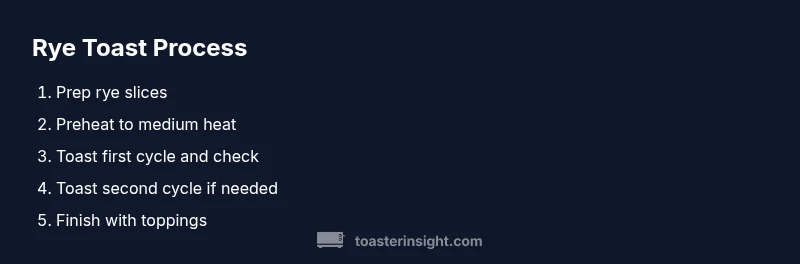
- 1
Prepare rye slices
Take rye slices from the bag and lay them on a clean cutting board. If needed, trim uneven edges so every slice is close to 1/4 inch thick for even browning.
Tip: Aim for uniform thickness to prevent over-toasting on one edge. - 2
Preheat the appliance
Preheat your toaster or oven to a medium setting. This ensures a consistent browning start rather than starting from cold metal and uneven heat.
Tip: If using a toaster oven, select a mid-range temperature and a light cycle first. - 3
Toast the first cycle
Place rye slices in a single layer with space between them. Run the first cycle and check at around 60–90 seconds to assess color and interior texture.
Tip: Avoid stacking slices; crowding leads to uneven browning. - 4
Assess and adjust
If the crust isn’t browned to your liking, run a short second cycle. For a lighter result, stop early; rye browns quickly once color starts to develop.
Tip: Keep a close eye on rye; it can go from golden to burnt faster than expected. - 5
Finish and serve
Remove slices carefully, let them rest a minute, then spread toppings of choice and serve. Resting helps the crumb set and maintain crunch.
Tip: Spread toppings when slightly warm for better adhesion.
Your Questions Answered
Can you toast rye bread in a standard toaster?
Yes. A standard toaster can toast rye bread, but you may need shorter cycles and close monitoring to account for rye’s denser crumb. Start on a medium setting and check after 60–90 seconds. If the bread is not browned enough, run a brief second cycle rather than increasing heat.
Yes. A standard toaster works, but rye’s density means you should use short cycles and watch it closely. Start at medium and check after a minute.
Why does rye toast crumble more easily after toasting?
Rye’s crumb is denser and can crumble if the interior dries out or if you toast too long. Use shorter cycles, avoid over-toasting, and spread toppings promptly to keep the surface intact. Allowing it to rest briefly helps set the crumb.
Rye crumbs can be crumbly if over-toasted; use shorter cycles and let it rest before topping.
Should I preheat rye bread before toasting?
Preheating the appliance is more important than preheating the bread itself. Rye should be toasted from room temperature slices so heat can start browning evenly across the surface. If you’re short on time, just ensure the toaster oven or toaster is preheated.
Preheat the appliance. Toast rye slices from room temperature for even browning.
Can you toast frozen rye bread?
To toast frozen rye bread, thaw the slices slightly or toast on a lower setting for a longer initial cycle. Allow the bread to come closer to room temperature for more even browning, then finish with a shorter second cycle if needed.
You can toast frozen rye, but thaw a bit first or use a longer, gentle initial cycle.
What toppings work best with rye toast?
Cream cheese, cultured butter, avocado, smoked salmon, and sharp cheeses pair well with rye. For a quick breakfast, try ricotta with honey and crushed pistachios. Savory toppings like tomato and herbs also complement rye’s earthy flavors.
Cream cheese or avocado on rye toast pairs wonderfully, with fun toppings like smoked salmon or herbs.
Is toasting rye bread healthier than fresh rye bread?
Toast changes the bread’s texture and flavor but doesn’t drastically change nutrition. It can make portions feel more satisfying, which may help with portion control. For the healthiest option, pair rye toast with protein-rich toppings to balance macronutrients.
Toasting doesn’t dramatically change nutrition; pairing with protein makes it a balanced meal.
Watch Video
Key Takeaways
- Toast rye in short cycles to prevent over-drying.
- Uniform slice thickness improves browning consistency.
- Choose the right tool (toaster vs toaster oven) based on batch size.
- Pair rye toast with flavor-forward toppings for best contrast.
- Monitor closely; rye can go from perfect to burnt quickly.