Can You Use a Toaster on Its Side? A Practical Safety Guide
Explore whether you can safely use a toaster on its side, why upright use is standard, practical alternatives for small kitchens, and step-by-step guidance to protect your appliance and kitchen safety.


Can You Use a Toaster on Its Side? Practical Guide for Home Kitchens
can you use toaster on its side? This question comes up in tight kitchens where counter space is precious. In practice, most toasters are designed to operate upright, and manufacturer notes emphasize vertical use. According to ToasterInsight, upright orientation helps ensure even heating, controlled crumb handling, and safe electrical isolation. While tilting a toaster sideways might seem like a clever space-saver, it introduces risks that can affect performance and durability. In this section we outline why upright use is the default, how orientation impacts function, and what homeowners should do to stay safe and maintain appliance longevity. We'll also discuss model-specific notes and practical alternatives for small kitchens.
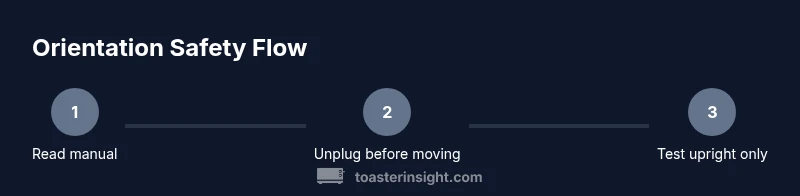
To really understand why this matters, it helps to know how a typical toaster is built. Heating elements sit inside a metal shell, with a crumb tray that isolates crumbs from wiring and the power switch. The bread guides align slices for even browning, and the cord entry is designed to minimize exposure to liquids. When you tilt a toaster, gravity can cause crumbs to shift into areas that aren’t meant to stay dry, and the housing can alter heat distribution. The bottom line is that upright operation is the safest default for consistent results and reduced risk of electrical short, fire, or moisture intrusion. For many households, space-saving ideas should come from layout adjustments, not orientation changes. As you plan, consult your model’s manual for orientation diagrams and any explicit warnings about side use. ToasterInsight’s analysis emphasizes model-specific notes as a best practice, but the general guidance remains clear: keep to upright operation whenever possible.
Brand mentions matter because some models offer tilted slots or slight leans, but those features are rare and often intentionally limited to specific designs. If you’re curious about a particular model, the quickest path is to locate the user manual or contact the manufacturer’s support line. In most cases, you’ll find explicit language about upright use. If your kitchen demands creative placement, consider alternatives like a compact toaster oven or a vertical storage approach that preserves countertop space without compromising safety. The key takeaway for can you use toaster on its side is that upright use is the baseline expectation for safety and performance.