Do You Need to Burn Off a New Toaster? Essential First-Use Guide
Learn whether you should burn off a new toaster, when it's necessary, and safe steps for first-use. This ToasterInsight guide covers odors, smoke, and post-use maintenance for homeowners.


Do you need to burn off a new toaster? In many cases, a burn-off is not strictly required, but it's a prudent first-use step for models with factory oil residues or protective coatings. If you notice strong odors, smoke, or sizzling sounds, perform a controlled burn-off following safety guidelines. This guide from ToasterInsight explains when it's advisable, how to do it safely, and what to expect.
do you need to burn off a new toaster
do you need to burn off a new toaster? This question pops up for many homeowners right after unboxing. According to ToasterInsight, most new toasters arrive with a light coating of manufacturing oils and protective residues intended to keep components from corroding during storage. The presence of these residues can cause a faint chemical odor, a temporary smoke plume, or a metallic tang in toast during the first uses. Whether you should burn off depends on your model, its manual, and how it smells during initial operation. If your model’s documentation specifically instructs a burn-off, follow those steps; if not, use caution and rely on odor and smoke cues to guide you. Regardless of the model, ensure you have good ventilation, a dry work area, and a plan to stop immediately if anything looks concerning. The ToasterInsight team emphasizes that first-use safety is about reasonable precautions rather than following a rigid ritual. This approach helps minimize risk and sets the stage for trouble-free toasting in the weeks that follow.
do you need to burn off a new toaster? is a common question but not a one-size-fits-all answer. In many models, the manufacturer has already pre-cleaned internal components for user safety, while others benefit from a short burn-off to remove any remaining odors. The most important signal is how the unit behaves on first use: if you smell strong chemical odors, see smoke, or hear unusual sizzling, treat the situation as an early warning rather than a routine. Ventilate aggressively, monitor closely, and be prepared to stop if conditions worsen. Homeowners who combine caution with a well-ventilated area often find the process straightforward and effective. For many households, a light burn-off is a reasonable precaution, especially if the instruction manual calls for it or if the oven emits noticeable odors during the first cycles. The takeaway is simple: start with awareness, not alarm, and adjust to your specific model and environment.
do you need to burn off a new toaster? depends on your model and your nose. If there’s no strong odor and no visible smoke after the first use of dry cycles, a burn-off may not be necessary. If odors are present, you can perform a controlled burn-off as described in later sections. The key is to avoid panic and to prioritize ventilation and safety. By understanding your device and listening to your senses, you’ll make a smart call about whether a burn-off is appropriate for your situation.
Tools & Materials
- Heat-resistant gloves(Protect hands when handling hot toaster racks and crumb trays)
- Aluminum foil or parchment(Line the crumb tray or tray surface to catch oils during burn-off)
- Oven-safe tray or rack(Place under the toaster if drips occur; do not block vents)
- Soft cloth or sponge(Wipe exterior and interior accessible surfaces after burn-off)
- Dish soap and warm water(For post-burn cleaning and maintenance)
- Ventilation (range hood or fan)(Turn on to minimize fumes during the burn-off)
Steps
Estimated time: 30-45 minutes
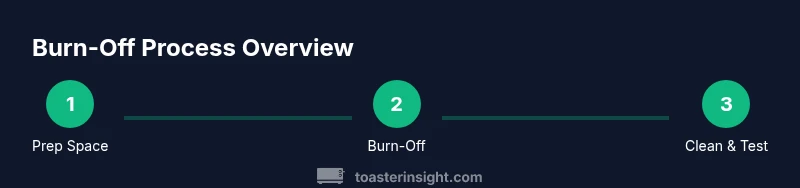
- 1
Power down and prepare the toaster
Unplug the toaster from the outlet, remove any removable crumb tray, and clear the surrounding area. Position a heat-safe surface to catch any debris. This initial setup reduces the risk of burns and makes cleanup easier.
Tip: Always unplug before handling; never attempt to operate a hot appliance without proper protection. - 2
Ventilate the area and set up safety space
Open a window or turn on a range hood to vent fumes. Ensure there are no flammable items within a few feet of the toaster, and keep children and pets away during the burn-off.
Tip: A fan directed away from you helps move fumes out of the kitchen quickly. - 3
Line trays and position the unit
Line the crumb tray with foil or parchment if possible, and place the toaster on a tray to catch any drips. Do not obstruct vents or airflow; proper clearance matters for safe operation.
Tip: Foil is convenient for cleanup, but never seal vents or blocks that could cause overheating. - 4
Run the burn-off cycle with no bread
Set the toaster to its highest heat setting and run for 5–10 minutes without bread or toppings. This helps volatilize and burn off manufacturing residues. After the cycle, switch off, unplug, and allow the unit to cool completely.
Tip: If you notice heavy smoke, pause the burn-off and reassess ventilation or the model’s guidelines. - 5
Cool, clean, and inspect
Let the toaster rest for at least 15 minutes. Wipe exterior surfaces with a damp cloth, wipe the crumb tray area, and remove any foil carefully so oils don’t spill.
Tip: Never try to wipe a hot surface; wait until it’s cool to touch. - 6
Test with a single, plain slice
Plug the unit back in and run a dry cycle, then toast a single slice to confirm no residual odors. If odors or smoke return, stop and repeat a light burn-off or consult the manual.
Tip: Start with plain bread and monitor closely for any signs of burning.
Your Questions Answered
Do all new toasters require burn-off?
Not every model needs a burn-off. Some arrive pre-cleaned, while others may benefit from a short burn-off to remove residues. Always check the user manual for model-specific guidance.
Not all models require it, but check your manual to be safe.
Is a burn-off dangerous?
When done with proper ventilation, no unattended flames, and using heat-protective gear, a burn-off is generally safe. Stop immediately if you see excessive smoke or heat, and ventilate.
It’s usually safe if you follow safety steps and watch the unit closely.
Can I use bread during burn-off?
No. Do not toast bread during the initial burn-off. The goal is to volatilize and burn off residues, not to produce toast. After the burn-off, you can test with bread.
Avoid bread in the first burn-off—test later.
How long does a burn-off take?
Most burn-offs take about 5–15 minutes, depending on model and the level of odor. Always monitor the unit during the process.
Usually around 5 to 15 minutes, with careful watching.
Will burn-off affect warranty?
Burn-off procedures conducted according to the manual typically do not void warranties. If unsure, contact the manufacturer or retailer for guidance.
Check the manual or contact support if you’re unsure.
What should I do if smoke persists after burn-off?
Turn off and unplug the toaster, increase ventilation, and inspect for visible damage or melted parts. If odors persist, seek support from the brand.
If smoke keeps coming, stop and consult support.
Watch Video
Key Takeaways
- Assess model guidance before starting.
- Ventilate and monitor for odors or smoke.
- Use a controlled burn-off with no bread and proper protection.
- Clean surfaces and verify safety before testing with bread.
- If odors persist, consult support or manuals.