How to toast bread without an oven: practical stovetop methods
Learn practical, oven-free methods to toast bread using a skillet, grill pan, or camp stove. This guide covers step-by-step techniques, safety, and energy-efficient tips for perfect toast every time.


Wondering how to toast bread without an oven? You can achieve golden, crisp slices using a skillet, grill pan, or camp stove. This guide provides practical, step-by-step methods, essential safety tips, and energy-efficient options to get bakery-worthy toast anywhere. Whether you’re in a small apartment or camping, you’ll learn how to control heat, avoid burning, and customize flavor with butter, oil, or toppings.
Why toast bread without an oven
Toast is a breakfast staple and snack that doesn't always require an oven. There are times when the kitchen’s heat or space is limited—apartment living, a camping trip, or a quick snack between tasks. In these situations, a dry skillet, grill pan, camp stove, or even an electric griddle can produce crisp, evenly browned slices that rival toaster results. The ToasterInsight team has found that small-batch stovetop toasting is not only convenient but can be more energy efficient than firing up an oven for a single loaf or a few slices. You’ll learn when to use each method, how to adjust heat for different bread types, and how to avoid common pitfalls like uneven browning or burnt edges. This section sets the stage for practical, reliable techniques you can rely on in daily cooking.
Core Methods at a Glance
There are several reliable ways to toast bread without an oven. Each method has strengths and trade-offs, depending on your kitchen setup, the bread type, and your preferred texture.
- Dry skillet or frying pan on the stove: fast and controllable, great for a light crunch and minimal cleanup.
- Grill pan on the stove: adds grill marks and a slightly smoky flavor without an outdoor grill.
- Toaster or toaster oven (if you’re avoiding the main oven): convenient for small batches and consistent browning.
- Campfire or outdoor grill: best for camping or outdoor cooking, requiring careful heat management.
- Microwave with a crisping accessory or short heat burst: not ideal for traditional toast, but useful in tight spaces when you need speed.
Each approach uses hot, direct heat but differs in timing, browning, and texture. In the steps that follow, you’ll get specifics for whether you’re using a skillet, a grill pan, or an improvised setup.
Essential Tools and Safety
Toasting bread without an oven relies on a small, focused set of tools. The essentials are a sturdy skillet or frying pan (preferably cast iron or heavy steel for even heat), a flat spatula or long-handled tongs, a few bread slices, and a reliable heat source (stovetop, camp stove, or outdoor grill). Optional but helpful are a light coating of butter or oil for flavor, a lid to trap heat for faster browning, and oven mitts if you’ll be handling very hot pans. Safety is crucial: keep children and pets away from open flames, monitor pan temperature to prevent scorching, and use long tools to avoid burns. If you’re experimenting with different bread types, keep a timer handy to compare browning times and adjust heat accordingly.
Practical Techniques: Skillet Toast, Electric Griddles, and More
Skillet toast is the most versatile method and a great starting point. Preheat the dry pan over medium heat, test with a small corner of bread, then lay slices flat in the pan. Flip after about 1–2 minutes and continue until both sides are golden. For thicker slices, press gently with a spatula to maximize contact with the pan and promote even browning. If you’re using an electric griddle, set it to around medium heat and watch for browning; butter the outer surfaces lightly to enrich flavor without making the toast soggy. On camp stoves or outdoor grills, manage heat with a stable pan and a cautious flame. If you must use a microwave briefly for a dry crisp, use a crisping tray or microwave-safe plate and monitor closely to avoid rubbery textures. Each method yields a slightly different texture; control heat and timing to reach your preferred browning level.
Doneness and Flavor: How to Control Browning
Browning is a balance between heat and time. Lighter browning yields a tender, warm crumb with a pale crust, while deeper browning adds crunch and a more complex flavor. Thickness of bread matters: thicker slices take longer and benefit from a slightly hotter pan or a short, repeated flip to prevent scorching. Bread with higher sugar content browns faster, so you may need to reduce heat or shorten cooking time. If you prefer a buttery finish, apply a thin layer before toasting, but keep the pan heat moderate to avoid oil splatters. Finally, let the toast rest for 30 seconds after removing it from the heat to settle flavor and regulate steam.
Common Mistakes and Fixes
Common mistakes include burning edges, uneven browning, and soggy centers. Burnt edges happen when heat is too high or slices are too thick for a single pass; fix by lowering heat and toasting in shorter bursts. Uneven browning occurs when bread is not flat on the pan or when slices are of uneven thickness; fix by trimming or choosing uniform slices and applying gentle pressure with a spatula. Soggy centers are common with very fresh bread or when butter or oil pools in the pan; fix by toasting dry or using only a light coating and by keeping slices in one layer without overlapping. If you’re short on time, toasting briefly on the skillet and finishing under a broiler for a minute can create a crisp exterior without overdoing it.
Tips for Energy Efficiency and Convenience
To minimize energy use, group bread slices and toast in batches, using a single preheated pan rather than heating repeatedly. If you have a small kitchen, opt for methods that heat only the bread and not the entire room—skillet toast or a compact grill pan works well. Preheating should be brief; aim for 30-60 seconds on the pan before you start timing. Butter or oil can enhance flavor but add a tiny energy cost as you’ll need to heat slightly longer to reach the desired browning. For camping or travel, a cast-iron skillet or a sturdy nonstick pan paired with a portable stove is a reliable, energy-efficient setup.
Quick Reference: Choosing Your Method
- If you have a stove and a single pan: use a dry skillet for quick, even toast.
- If you want grill marks and a hint of smokiness: pick a grill pan.
- If you’re avoiding the main oven entirely: use a toaster or toaster oven for consistent results.
- If you’re outdoors or camping: a sturdy pan over a camp stove is the best bet.
- If you need a very fast result: a microwave with a crisping tray is a last resort.
Tools & Materials
- Bread slices(Choose even thickness and similar size for uniform toasting.)
- Skillet or frying pan(Cast iron or heavy steel heats more evenly.)
- Spatula or tongs(Flat spatula helps flip without tearing bread.)
- Butter or oil (optional)(A light coating enhances flavor but isn’t essential.)
- Heat source (stovetop, camp stove, grill)(Ensure stable setup and safe handling.)
Steps
Estimated time: 15-25 minutes
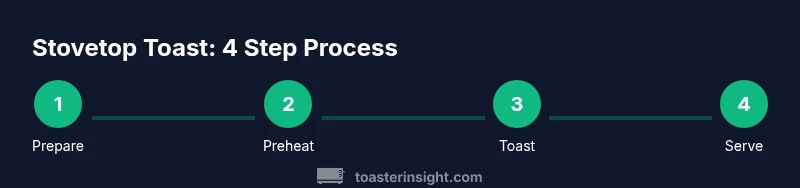
- 1
Gather bread and tools
Collect bread slices, a skillet, a spatula, and a heat source. Arrange them on the counter so you can start quickly and avoid searching mid-toast. This reduces downtime and ensures even browning.
Tip: Keep bread slices evenly thick and unbroken; uniform slices toast more evenly. - 2
Preheat the pan
Place the skillet on the stove over medium heat and allow it to come to temperature before adding bread. A properly heated pan creates a better crust and reduces sticking.
Tip: Test heat with a tiny pinch of bread; if it sizzles, you’re ready. - 3
Toast the first side
Lay bread slices in a single layer and press lightly with a spatula. Let the bottom browns for 1-2 minutes without moving too much to avoid tearing.
Tip: Avoid overcrowding; use one layer per pan surface. - 4
Flip and finish the second side
Flip slices over and toast the other side 1-2 minutes, watching for even color. If you want extra browning, press again lightly to maximize contact.
Tip: Keep an eye on color; pull when edges are golden. - 5
Check doneness and rest
Remove toast from heat and let it rest 30 seconds to set the crust. This helps avoid steam soaking into the crumb and keeps the surface crisp.
Tip: If needed, reheat briefly for extra browning, but check frequently. - 6
Suggest toppings and serve
Choose toppings such as butter, jam, avocado, or cheese. Apply toppings after cooling slightly to prevent sliding and ensure even distribution.
Tip: Try a light butter pat on the still-warm toast for flavor.
Your Questions Answered
Can you toast bread without any fat?
Yes. Dry toasting in a hot skillet works well for basic toast. For extra browning, you can brush a small amount of oil or butter on the outside.
Yes—dry toasting in a hot skillet works well. For more browning, brush a tiny amount of oil or butter on the outside.
What bread types work best for stovetop toast?
Sturdier breads like sourdough, baguette, or whole wheat toast well; very soft breads can brown unevenly or become soggy if buttered heavily.
Sturdier breads like sourdough or baguette toast well; soft breads may brown unevenly.
How long does stovetop toast take per side?
Typically 1-2 minutes per side on medium heat, depending on thickness and pan material.
Usually about 1-2 minutes per side.
Is it safe to toast bread for kids on a stovetop?
Yes, with supervision and a safe setup. Keep handles turned inward and away from children to prevent contact with hot surfaces.
Yes, with supervision and a safe setup.
Can I reheat toast without burning?
Yes—reheat on low heat in short bursts or use a toaster at a low setting to avoid scorching.
Reheat on low, in short bursts.
Watch Video
Key Takeaways
- Toast evenly by preheating and flipping halfway.
- Dry heat yields crisp texture with less moisture.
- Butter/oil is optional for flavor; consider energy use.
- Practice different pan types to achieve your preferred browning.