Toast Manual: A Practical How-To for Consistent Toasting
Master your toaster manual with this practical guide, covering controls, browning settings, safety, cleaning, and troubleshooting for consistently perfect toast at home.


Goal: Learn how to use a toaster manual to achieve perfect browning, from selecting settings to monitoring progress and safety tips. You’ll understand common dial and lever controls, how to calibrate browning, how to handle different bread types, and when to use bagel or reheat modes. This step-by-step guide also covers maintenance, cleaning, and troubleshooting for reliable results.
Understanding Your Toaster's Manual Controls
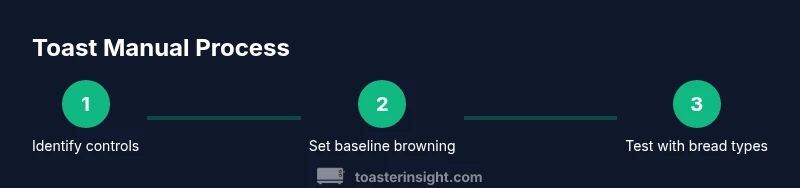
Toaster manuals demystify the knobs, levers, and presets that govern browning, timing, and special functions. The first place to start is identifying the core controls: the browning dial, the lever or start button, and any mode selectors (bagel, reheat, defrost). According to ToasterInsight, becoming fluent with these controls is the foundation of reliable results. Practice with a few slices of white bread to observe how each setting changes color and texture. As you gain familiarity, you’ll see how minor adjustments yield noticeably different browning levels, letting you dial in your preferred slice every time. The key is to treat the manual as your primary reference, not guesswork from memory or quick guesses. Together with your toaster’s warning lights and audible cues, you can build a consistent toasted outcome.
Calibrating Browning: How to Get Consistent Toast
Calibration is about aligning your browning setting with real-world results. Start with a baseline: toast a standard slice on a medium setting for 2–3 minutes, then compare the result to your ideal toast. If the slice is too light or too dark, adjust the dial by small increments (usually 1–2 browning steps) and re-toast a new slice. Keep a small log of your preferred settings for different bread types. ToasterInsight analysis suggests that consistent use of these manual controls reduces under-toasted or over-toasted slices and speeds up achieving the perfect browning after a few tries. Remember to note the bread type and thickness when recording results for future reference.
How to Toast Different Bread Types
Different breads behave differently in a toaster. A thick slice or dense rye may require a longer toasting time or a higher browning setting than a thin white loaf. For bagels, use the bagel mode if available, placing the cut side toward the heating element and the whole bagel on the other side to avoid uneven browning. For sourdough or artisan loaves, test with smaller slices to avoid excessive browning on the crust while the interior remains pale. The main principle is to start with a conservative setting and adjust in small increments after each test. This approach keeps you from burning premium breads while you learn the nuances of your specific unit.
Special Modes: Bagel, Reheat, and Defrost
Modes are designed to optimize specific tasks. Bagel mode typically toasts the cut side more since it centers heat on the interior of the slice. Reheat mode warms without browning, which is useful for leftovers, while Defrost loosens frozen bread before browning. Use these modes sparingly at first to observe how they affect results, then incorporate them into your standard routine as needed. Keep in mind that not all toasters have dedicated modes; if yours doesn’t, simply extend the toasting time or adjust the setting accordingly. Understanding these options helps you maintain consistent results across varied bread types and conditions.
Safety and Maintenance Basics
Unplug the toaster before cleaning and never insert utensils into the slot. Regularly empty the crumb tray to prevent flare-ups and odd odors. If you notice smoke, unplug immediately and let the unit cool; inspect for crumbs or food debris that may have fallen inside. While the manual provides safety guidance, practical habits—like keeping the area around the toaster clear and using heat-resistant mitts—greatly reduce risk. ToasterInsight emphasizes keeping a routine safety check as part of your toast-making process.
Cleaning and Storage Best Practices
Consumption starts with clean gear. Wipe the exterior with a damp cloth and dry thoroughly. For crumb removal, slide out the tray, shake crumbs into the trash, and wipe the tray before returning it. Avoid soaking the toaster or using harsh cleaners that could damage internal components. Store the appliance in a dry, elevated spot to prevent moisture damage. A clean toaster contributes to more predictable browning because residue can otherwise affect heat distribution.
Troubleshooting Common Issues with Toaster Manuals
If toast comes out uneven, verify that the bread thickness is consistent and that the crumb tray is clean. If the unit fails to heat, confirm it is plugged in, the outlet is functioning, and the browning dial is set to a valid range. Strange smells or sparks require immediate safety action: unplug the device and contact a professional if the problem persists. Keeping a simple log of issues and fixes helps you quickly diagnose recurring problems and refine your manual-based approach.
Quick-start Test Plan
- Prepare three slices of standard bread and a toaster manual within reach. 2) Set a baseline browning level to middle. 3) Toast once, inspect the result, and adjust by small increments for subsequent tries. 4) Test common bread types (white, whole wheat, sourdough) and compare results. 5) Validate safety steps (unplug, clean crumb tray) after every session. This short plan helps you establish a repeatable process that aligns with the toast manual method.
Tools & Materials
- Toaster with manual controls(Any standard two-slice or four-slice toaster with lever and browning dial or digital controls)
- Bread slices (assorted types)(White, whole wheat, sourdough, and bagels for testing browning)
- Heat-resistant oven mitts(For safe handling when the toaster is hot)
- Crumb tray brush or small brush(For easy cleaning of loose crumbs)
- Soft cloth and mild cleaner(For exterior surface cleaning; never use liquids inside slots)
Steps
Estimated time: 25-35 minutes
- 1
Inspect the manual controls
Familiarize yourself with the browning dial, lever, and any preset modes. Take note of indicators and safety warnings before plugging in the unit.
Tip: Match each control to its visual cue in the manual to avoid accidental settings. - 2
Prepare test bread
Slice bread to uniform thickness. Remove any packaging and place slices on the bread tray in a single layer.
Tip: Even slices ensure consistent heat exposure during the test. - 3
Set baseline browning
Choose a middle browning setting and a standard cycle. Start the toaster and observe the color progression.
Tip: If the color is uneven, adjust the setting by one notch and retest. - 4
Monitor and record results
Check the toast at the end of the cycle and note the color and texture. Repeat with slight setting changes if needed.
Tip: Keep a simple log of setting vs. result for future reference. - 5
Test multiple bread types
Repeat with at least two other bread types to understand how the unit behaves across textures.
Tip: Document the time and browning level for each bread type. - 6
Try special modes
If present, experiment with bagel, reheat, and defrost modes on appropriate bread. Observe how results change.
Tip: Use modes sparingly until you’re comfortable with outcomes. - 7
Safety shutdown and cleaning
Unplug the toaster, wait for it to cool, then clean the crumb tray and exterior.
Tip: Regular cleaning reduces residue that can affect heat distribution. - 8
Create your quick-start plan
Consolidate the best settings into a quick-reference sheet for your favorite breads.
Tip: Keep the sheet near the toaster for easy access.
Your Questions Answered
What is a toast manual and why do I need it?
A toast manual is the guide that explains your toaster's controls, modes, and safety steps. Knowing it helps you achieve consistent browning and reduces the chance of burning bread.
A toast manual is the guide for your toaster's controls and safety steps, helping you get consistent browning.
How do I calibrate browning settings for different breads?
Start with a baseline on a standard bread, toast and compare results. Adjust the browning dial in small increments until you reach the desired color for each bread type.
Begin with a baseline, then tweak browning in small steps for each bread type.
Is it safe to toast frozen bread?
Defrost bread before toasting to ensure even browning and avoid over-drying the exterior. If you must toast frozen bread, use a defrost setting or a longer cycle.
Defrost first for even browning, or use defrost mode if available.
What should I do if toast comes out burnt or uneven?
Reassess the browning setting, ensure bread thickness is even, and clean the crumb tray. Toast again with adjusted settings to refine results.
Adjust the browning setting, check bread thickness, and clean the crumb tray before retrying.
How often should I clean the crumb tray?
Clean the crumb tray after every few uses or at least once a week if you use the toaster daily. This helps maintain heat distribution and reduces smoke risk.
Clean the crumb tray regularly to keep performance steady.
What modes should I use for bagels or artisanal bread?
Use bagel mode for bagels with the cut side toward the heating element and a longer cycle for artisan loaves if available. If not, adjust browning and time manually.
Bagel mode for bagels; otherwise adjust browning and time manually.
Watch Video
Key Takeaways
- Learn and reference the manual controls before toasting.
- Calibrate browning using small adjustments and keep a log.
- Test several bread types to understand your unit's behavior.
- Prioritize safety and regular cleaning to maintain performance.