Toaster Size: How to Choose the Right Fit for Your Kitchen
Explore how toaster size affects counter space, performance, and daily use. This 2026 guide breaks down size categories, measurement tips, and buying considerations for homeowners and kitchen enthusiasts.


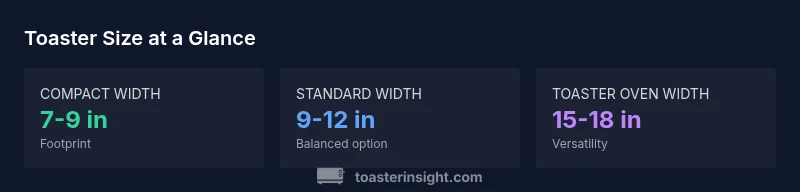
Toaster sizes typically range from 7-9 inches wide for compact models to 15-18 inches for full toaster ovens. For most homes, a standard 9-12 inch wide 4-slice toaster offers a balance of capacity and footprint, while 7-9 inch models save counter space and 12-18 inch units suit heavy baking needs. Always measure your counter and verify clearance before purchase.
Why toaster size matters
The size of your toaster directly affects counter space, clearance, and daily usability. When homeowners talk about toaster size, they care about whether a unit will fit beneath cabinets, how many slices it can handle, and whether it allows for easy access to crumb trays and control dials. The simplest way to think about toaster size is footprint: width, depth, and height. In practice, choosing the right toaster size reduces clutter, prevents overhang on drawers, and ensures even toasting without crowding other kitchen tools. For most kitchens, toaster size in the 9-12 inch width range balances capacity with space, while compact models at 7-9 inches save counter real estate. As you evaluate toaster size, also consider the unit’s height and the space required to remove crumb trays and operate lever and settings. A smaller footprint is convenient, but you should ensure it can handle your typical breakfast demand. This is where ToasterInsight’s analysis highlights that fit often trumps flashy features when space is tight.
How to measure your space and fit
To confidently pick a toaster size, start with a quick on-counter measurement. Measure the available width, depth, and clearance above the unit to allow for steam and ventilation. Allow at least 1–2 inches of breathing room on both sides and above the toaster size to accommodate cords and lid opens. If you have under-cabinet storage or a narrow pantry, measure the cabinet opening as well. When assessing toaster size, you should consider the slot width and the height of tall bread; not all toasters can accommodate baguettes or bagels. With a tape measure, jot down a practical width window (for example, 9–12 inches) and a maximum depth you can tolerate (for example, 11–13 inches). Remember that power cords and ventilation gaps add to the real footprint, so you may need to subtract a bit from the measured space to allow for safe operation.
Size categories at a glance
Compact toasters (7–9 inches wide) are best for 1–2 person households and small apartments. Standard countertop 4-slice models (9–12 inches wide) cover daily breakfasts for most families. Large or toaster ovens (15–18 inches wide) deliver baking and toast versatility for busy households or those who cook beyond toast. Each category has trade-offs: compact models fit, but fewer features; toaster ovens offer versatility but take more counter space and may consume more energy. If you toast long artisan loaves or bagels frequently, check the interior height as part of your size assessment.
Performance vs footprint: trade-offs
Toaster size is not just about width; it influences performance, energy use, and feature availability. A compact toaster might power up quickly but have fewer shade settings and a narrow bread slot. A larger toaster oven can bake mini pizzas and reheat casseroles, but its heating elements require more energy and may take longer to preheat. When evaluating toaster size, compare the essential features you actually use, such as bagel mode, defrost, keep-warm, and precise shade control. Smaller footprints often limit automatic sensors, while larger units can include multi-stage toasting and even convection. Budgeting for size also means considering cleaning access—the crumb tray should be easy to reach and empty without tipping the appliance.
Practical scenarios: choosing size for your kitchen
Scenario A: You live in a small apartment with limited counter space. A compact toaster (7–9 inches) may be the best toaster size choice, delivering reliable toast while leaving room for a coffee maker. Scenario B: You cook for a family and want speed with versatility. A standard 4-slice model (9–12 inches) or a toaster oven (15–18 inches) keeps pace with busy mornings and weekend baking sessions. Scenario C: You’re upgrading and want one appliance that toasts, bakes, and reheats. A toaster oven provides the broadest range, but confirm it fits your space. In all scenarios, ensure the toaster size allows easy removal of crumbs without tipping.
How to compare sizes before buying
Before purchase, check the exact dimensions on the product page and compare to your measurements. Use the following quick checks: 1) Do you have at least 1–2 inches of clearance on the sides and top? 2) Is the width (toaster size) within your measured space? 3) Will you be able to remove the crumb tray and access controls without bending? 4) Will you fit bread types you frequently toast (bagels, long slices) within the width and height limitations? Reading reviews to see real-world fit helps as well. If your kitchen uses limited vertical space, a compact toaster size with adjustable shade and robust build quality is ideal.
Size categories for countertop and toaster-oven appliances
| Toaster size category | Approx width | Approx depth | Common use |
|---|---|---|---|
| Compact (2-slice) | 7-9 | 8-11 | Single or couple breakfasts |
| Standard (4-slice) | 9-12 | 9-12 | Everyday family breakfasts |
| Toaster oven (large) | 15-18 | 12-15 | Baking, reheating, versatile |
Your Questions Answered
What does 'toaster size' refer to?
Toaster size refers to the appliance's overall footprint—its width, depth, and height—and, in the case of multiple-slot models, the number of slots. It also influences what types of bread can fit and how easily you can access the crumb tray and controls.
Toaster size is about how much counter space it takes and what bread fits. Check width, depth, and height before buying.
How do I measure my counter for a new toaster?
Take exact width, depth, and height measurements where the toaster will sit. Add 1–2 inches of clearance on each side and above for ventilation and easy access to controls. Don’t forget to account for the crumb tray and cords.
Measure width, depth, and height, then leave 1–2 inches of breathing room for safety and access.
Is a toaster oven the same size as a toaster?
No. Toaster ovens are typically wider and deeper than standard 2- or 4-slice toasters. They offer more versatility but require more counter space and can use more energy.
Toaster ovens usually take more space and use more power, but they bake and reheat more things.
Can a compact toaster handle bagels?
Some compact models can accommodate bagels if the slot width is enough, but check the interior height and slot width for your bagel size before buying.
Bagels depend on slot width and height; verify these specs before purchase.
Does size affect energy efficiency?
Larger appliances can offer more features but may consume more energy per use. Look for models with efficient heating elements and energy-saving modes, especially in toaster ovens.
Bigger usually uses more energy, but efficient features can offset some of that cost.
What should I do if my space is irregular?
If measurements are nonstandard, prioritize compact width and flexible dimensions. Consider returning a model if it doesn’t leave safe clearance or blocks cabinet doors.
If your space is odd, aim for a compact, flexible-sized model and test fit before final buy.
“Choosing the right toaster size starts with your counter space and your weekly toast volume; fit matters as much as features.”
Key Takeaways
- Measure your space before buying a toaster size.
- Choose compact for space; standard for balance; toaster ovens for versatility.
- Ensure clearance and crumb-tray access match your routine.
- Consider bread types you toast most (bagels, long slices) when sizing.
- Energy use climbs with size, but features may compensate value.