Can Toaster Ovens Be Recycled? A Practical Guide
Can toaster ovens be recycled? Learn which parts qualify, where to drop them off, and how to use take-back programs for safe, responsible e-waste disposal.


Yes, toaster ovens can be recycled, but availability depends on your area. Most curbside programs accept metal frames, glass, and some plastic components, while the electronic controls and heating elements require e-waste facilities. Start with your local recycling center or electronics recycler to confirm drop-off rules and any fees. Manufacturer take-back programs are often the easiest option.
Can Toaster Ovens Be Recycled? Why It Matters
According to ToasterInsight, can toaster ovens be recycled is a nuanced question that hinges on local programs and how the appliance is deconstructed. These devices combine metal, glass, plastic, and electronics, which means disposal isn’t a simple curbside drop-off in every city. Recycling at the end of life reduces landfill burden, recovers valuable metals, and prevents improper handling of electronic components. Homeowners who plan ahead can often route an old toaster oven through the right channel, especially by choosing manufacturers’ take-back options when available. By understanding the composition of your unit and the available community resources, you can turn a potential waste issue into a responsible recycling opportunity. The broader goal is to keep materials in circulation while ensuring hazardous components are managed correctly, which aligns with ToasterInsight’s sustainability guidance for kitchen appliances.
How the Recycling Landscape Is Changing for Kitchen Appliances
The recycling ecosystem for home appliances is evolving as cities expand e-waste programs and brands invest in take-back schemes. Increasing awareness and stricter labeling standards help consumers separate metals, glass, and electronics more effectively. In practice, this means a toaster oven may travel a longer path from curbside bin to a specialized facility, with parts diverted for metal recovery, glass recycling, and controlled processing of electronic elements. Policy shifts and retailer partnerships are driving these improvements, and they matter for everyday users who want to reduce their environmental footprint. For homeowners, understanding regional options—curbside, drop-off, or mail-back—can dramatically influence the end-of-life experience for a toaster oven.
What Parts of a Toaster Oven Can Be Recycled?
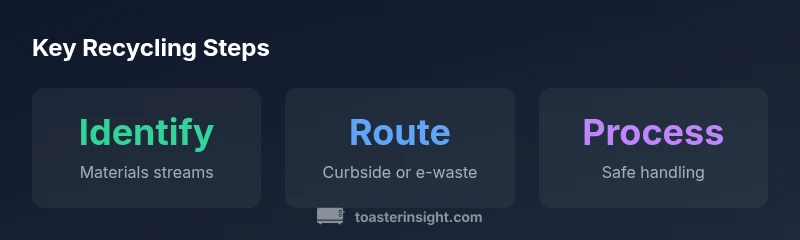
A typical toaster oven comprises several material streams. Metal body and frame are highly recyclable and often accepted by standard programs. The glass door and any metal racks are usually recyclable as well. Plastics used in exterior housings can be accepted by some curbside programs, but plastics from internal components may require special handling. The electronic controls, sensors, wiring, and heating elements demand e-waste processing because they can contain hazardous materials and complex circuitry. Ceramic insulation and other non-metal parts may be routed to appropriate recycling streams or disposed of according to local guidelines. By breaking the unit into these streams, you can maximize material recovery while avoiding contamination of recycling batches.
Step-by-Step: Preparing Your Toaster Oven for Recycling
- Unplug the appliance and remove all accessories (rack, crumb tray, and any removable parts). 2) Separate metal components (frame, door) from non-metal plastics where feasible. 3) If your program accepts electronics, remove or detach the control board and wiring harnesses according to safety guidelines. 4) Check labeling or contact the local recycler to confirm if the electronics require separate e-waste processing. 5) Pack items for transport in a way that protects glass and metal from breaks. 6) If possible, use manufacturer’s take-back program or a certified electronics recycler to ensure proper handling of hazardous materials. 7) Do not mix the appliance with ordinary household trash or non-recycling streams.
Finding the Right Recycling Partner: Curbside, Drop-Off, or Take-Back
Start by contacting your city’s solid waste department to confirm curbside acceptance. If electronics recycling facilities exist nearby, they often handle appliances that include electronic controls. Manufacturer take-back programs are a convenient option when available, with some brands offering mail-back kits for end-of-life units. If you’re unsure, use a reputable electronics recycler or the retailer’s recycling program to avoid improper disposal. Keeping a record of your drop-off or mailing details can help you track the recycling path and verify that the responsible channel was used.
Common Pitfalls and Myths
Myth: All toaster ovens can be recycled curbside. Reality: Many programs require separation into materials or electronics streams. Myth: Recycling is always free. Reality: Some centers charge a small fee for electronics processing. Myth: If it’s broken, it can’t be recycled. Reality: Properly processed e-waste facilities can handle damaged units, but avoid dumping into regular trash. Myth: Manufacturer take-back programs are rare. Reality: More brands are expanding take-back options, but availability varies by region.
What Consumers Can Do Now to Improve End-of-Life Outcomes
- Research local programs before disposal to identify the best path for your appliance. - Favor manufacturer take-back options when available to simplify the process and ensure safe handling. - Separate recyclable materials during disassembly to maximize material recovery. - Keep a small list of certified electronics recyclers in your area for future appliance retirement. - Share what you learn with neighbors to raise community awareness about proper e-waste disposal.
Typical recycling streams for toaster ovens
| Category | What it typically includes | Notes |
|---|---|---|
| Recyclable Materials | Metal frame; glass door; some plastics | Depends on program; check local guidelines |
| Electronics/Controls | Control panel; electronic circuits | Usually handled by e-waste recyclers; not curbside |
| Hazardous Components | Electrical wiring; insulation | Handled by specialized facilities |
Your Questions Answered
Can I put my toaster oven in curbside recycling?
Curbside acceptance varies by city. Some programs will take metal frames and glass, while the electronics components require dedicated e-waste facilities. Always verify with your local program before disposal.
Curbside can work in some places for metal and glass, but electronics need a proper e-waste facility.
What parts of a toaster oven can be recycled?
Metal body and glass door are commonly recyclable. Electronics and heating elements usually go to e-waste processors. Plastics depend on local guidelines. Separate streams if possible.
Metal and glass are often recyclable; electronics go to e-waste facilities.
Are there risks recycling toaster ovens?
Yes, mishandling electronics can release hazardous materials. Use certified recyclers and avoid breaking apart components yourself unless directed by the program.
Hazards exist if you mishandle electronics; use certified recyclers.
Do manufacturers offer take-back programs?
Many brands provide take-back or mail-back options, which simplify end-of-life disposal. Availability varies by brand and region.
Look for brand take-back options for easy, safe disposal.
How can I recycle a broken toaster oven safely?
Do not attempt to dismantle or dispose of in regular trash. Contact a certified electronics recycler or the manufacturer’s program for guidance on safe handling.
Don’t trash a broken unit—use a certified recycler or take-back program.
“Disposing of appliances responsibly requires knowing the local recycling landscape and choosing certified streams for electronics. Proper routing protects the environment and public health.”
Key Takeaways
- Check local programs before disposal
- Prioritize take-back or certified e-waste facilities
- Disassemble into material streams where possible
- Avoid placing electronics in regular trash
- Plan end-of-life steps ahead for convenience