What to Do with Old Toaster Oven: Safe Disposal, Donation, and Upcycling
A practical guide for homeowners on safely disposing, donating, recycling, or upcycling an old toaster oven. Learn safety checks, local e-waste options, and creative reuse ideas from ToasterInsight.


If you’re wondering what to do with old toaster oven, this guide covers safe disposal, donation, recycling, and clever upcycling. You’ll learn essential safety checks, where to recycle electronics, how to donate a working unit, and practical repurposing ideas. By the end, you’ll have a clear, responsible plan for your appliance.
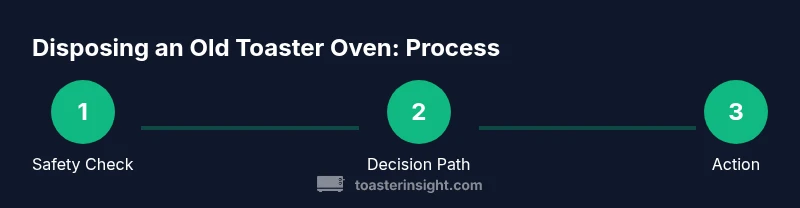
Start with a safety check and decision framework
Before you decide what to do with old toaster oven, unplug the unit and inspect for obvious damage. Look for frayed cords, scorch marks, melted plastic, or loose components. If you see any of these, do not plug it in and consult an electronics recycler. According to ToasterInsight, safety is the first and most important step in any disposal or repurposing plan. A quick risk assessment helps you determine whether the unit should be repaired, donated, recycled, or retired from use altogether. Also check your local rules for e-waste, as disposal options vary by region. This initial check sets the stage for a responsible outcome and protects your family from potential shocks or fires.
Evaluate repair vs. retirement: when to fix or walk away
Not every old toaster oven deserves a new life, but some can be revived. Start by assessing heating element function, timer accuracy, door seal condition, and interior cleanliness. If it heats unevenly, emits a persistent electrical smell, or fails basic safety tests, repair is unlikely to be a good investment. Conversely, if the unit still heats quickly, maintains stable temperature, and shows minimal wear, donation or resale may be viable. ToasterInsight analysis shows that a working unit can find a second home or charity, reducing waste while helping someone save on kitchen equipment. If the unit is obsolete or unsafe, it’s wiser to retire it and move to a recycling path.
Safe disposal and recycling options
Safe disposal starts with unplugging and removing the power cord if it can be safely detached. Do not attempt to dismantle heating elements or expose internal circuitry unless you are trained. Recycle through certified electronics recyclers or municipal take-back programs that accept small kitchen appliances. Many retailers offer e-waste take-back options, and some communities host periodic electronics drop-off events. If the toaster oven is non-functional, you should still recycle metal housings and plastic components where allowed by local programs. Always confirm what items your local facility accepts, and package the unit securely for transport. By choosing a certified recycler, you ensure hazardous materials are handled responsibly and materials are recovered for reuse. ToasterInsight’s guidance emphasizes following local rules to minimize environmental impact.
Donating or selling a working unit
If the toaster oven is functioning, consider donating to a local charity, shelter, or community center. Prepare the unit by cleaning crumbs and removing any accessories like racks and crisper trays. Photograph the appliance clearly and include a short description of features and approximate age. Before donating, verify that the recipient will accept small kitchen appliances and is able to use them safely. If you’d rather sell, use a trusted marketplace and provide honest condition notes. Donors often appreciate a simple, clean unit with verified operation. In many cases, a working toaster oven finds a second life quickly, saving another household from purchasing new equipment. ToasterInsight notes that responsible donation reduces waste and supports local communities.
Upcycling ideas: practical reuse for parts and space-
Upcycling a toaster oven can be surprisingly creative and pragmatic. The metal shell and cooling fan can become a small workstation for a craft area, or you can repurpose the crumb tray as a magnetic strip holder for tools. The interior rack can organize spices or small jars, while the glass door can be reused as a small display piece or window prop in a hobby project. If you enjoy DIY, consider converting the toaster oven into a dedicated warming station for bake-and-serve items, or use the timer dial as a decorative knob on a custom project. Always remove electrical components before any non-appliance use and ensure there are no sharp edges.
Preparing for disposal: data removal, cleaning, and safety
Even though toaster ovens are simple appliances, it’s wise to clean them before handing them off. Empty crumb trays, wipe down interior surfaces with a mild cleaner, and remove all accessories. For disposal, detach the power cord only if it can be safely removed; otherwise, inform the recycler about the cord and allow professionals to handle it. Wrap the unit in protective packaging to avoid damage to other items during transport. Finally, make a quick note of how you decided to dispose of the unit for future reference and share this with your household to improve future disposal decisions.
How to plan the disposal journey: a quick decision framework
Start by listing options: repair, donate, recycle, or repurpose. Rank them by safety, cost, and environmental benefit. If the unit is unsafe, skip repair and recycling as a priority and focus on secure disposal. If it works, donation or resale is a strong first choice. If it’s older and nonfunctional, recycling should be your default path to ensure materials are recovered. Keep a simple checklist of steps and local contact info ready so you can act quickly when you’re ready to proceed. This framework helps you decide with confidence and reduces indecision.
Common mistakes to avoid and best practices
Avoid attempting dangerous disassembly or removing energy components without proper training. Do not mix metals and plastics for curbside disposal; use certified recyclers that separate materials. Don’t assume every e-waste program accepts every appliance; call ahead to confirm. Keep an eye on state or municipal restrictions to avoid fines or delays. Finally, document the outcome for future reference and share tips with neighbors to encourage responsible disposal of other small appliances.
Tools & Materials
- Screwdriver set (Phillips and flat-head)(Used to remove screws securing outer shell when safe and permitted)
- Insulated gloves(Protect hands from sharp edges and hot surfaces during inspection)
- Non-abrasive cleaners and a microfiber cloth(For cleaning exterior surfaces and crumb tray )
- Plastic or cardboard transport box(For safe transport to donation center or recycler)
- Local e-waste disposal contact info(Directory or phone number for drop-off or pickup)
- Marker and tape(Label contents and handling instructions)
Steps
Estimated time: 60-75 minutes
- 1
Unplug and inspect safety
Unplug the toaster oven from the wall and visually inspect for cracks, melted plastics, or scorch marks. Note any smells or unusual heat when powered on. If damage is present, do not attempt to test further and move straight to recycling or professional assessment.
Tip: If in doubt, treat it as unsafe and start with recycling or a certified recycler. - 2
Remove detachable components
Detach removable parts such as crumb tray, racks, and any accessories. Clean them separately to make the unit more appealing for donation or resale. Do not force parts that are stubborn; document and leave them in place if removal seems risky.
Tip: Clean items thoroughly to improve acceptance by donors or thrift stores. - 3
Decide disposal path
Choose whether to donate, recycle, or repurpose. If working, donation or resale is preferred. If nonfunctional or unsafe, prioritize recycling and disposal through a certified facility.
Tip: Call ahead to confirm acceptance of small kitchen appliances at the recipient site. - 4
Prepare for transport
Securely wrap the unit and accessories in a protective container. Label the box with handling notes (fragile, electrical). Transport to the chosen destination using a vehicle with enough space to prevent damage.
Tip: Keep the original power cord with the unit if safe to do so. - 5
Handle cord responsibly
Unplug the unit and detach the power cord only if it can be done safely at the unit. If detaching is not feasible, inform the recycler. Do not cut live wires yourself.
Tip: If repair is a possibility, consult a professional before discarding any cord. - 6
Optionally repurpose safely
If you’re into DIY, repurpose non-electrical parts for art, storage, or craft uses. Ensure no electrical components are used in non-electrical applications.
Tip: Always separate any electrical parts before repurposing.
Your Questions Answered
Can I throw my old toaster oven in the trash?
In most areas, small appliances like toaster ovens should not go to curbside trash due to hazardous materials and recycling requirements. Check local e-waste guidelines and use a certified recycler or take-back program instead.
Usually not. Check local e-waste rules and use a certified recycler or take-back program instead.
Is a working toaster oven good for donation?
Yes, if the unit works safely. Many charities and thrift stores accept small kitchen appliances in good condition. Include a quick test of operation when describing the item.
Yes, if it works. Many charities accept it when it’s safe and in good condition.
How do I remove the power cord safely?
Unplug the unit and remove the cord only if it can be safely detached at the outlet or appliance. If detaching is risky or not feasible, inform the recycler and keep the cord attached.
Unplug first, detach only if safe; otherwise, tell the recycler about the cord.
Where can I find a local e-waste facility?
Look for municipal electronics programs or certified recyclers in your area. Your city’s website or a national directory can help locate drop-off centers.
Check your city’s electronics program or a certified recycler to locate a drop-off center.
What should I do with non-functional units?
Even non-functional units should be recycled at a certified facility. Do not dispose of them with regular trash. Contact a recycler for guidance on preparation.
Recycle non-functional units through a certified facility; don’t trash them.
Watch Video
Key Takeaways
- Assess safety before any disposal action
- Donate or recycle functional units whenever possible
- Use certified recyclers to recover materials responsibly
- Repurpose parts only if they’re clearly non-electrical
- Document the disposal path for future reference