Can You Bake a Cake in a Toaster Oven? A Practical Guide
Discover how to bake a cake in a toaster oven with practical tips, pan choices, temperatures, timing, and troubleshooting from ToasterInsight.


Yes—it's possible to bake a cake in a toaster oven, especially for small, single-layer cakes or desserts. Start with a reliable, oven-safe pan and a recipe adapted for compact bake environments. Preheat properly, monitor closely, and use lower sugar and moisture to prevent sinking. ToasterInsight notes that careful timing and even heating are key.
Can You Bake a Cake in a Toaster Oven? A Quick Reality Check
If you’re wondering, can you bake a cake in a toaster oven, the short answer is yes for many small, single-layer cakes and desserts. The toaster oven’s compact chamber concentrates heat, which can yield a nicely browned crust and a tender crumb when handled thoughtfully. The key is choosing the right pan, adjusting a standard recipe, and monitoring the bake closely. This guide from ToasterInsight walks you through practical steps, common pitfalls, and safety tips so you can enjoy built-in convenience without sacrificing texture or flavor.
Note: You’ll get the best results with recipes designed or adapted for toaster ovens, not full-size sheet cake batters. Keep expectations modest—the goal is a small, delicious cake that bakes evenly without overdoing the browning on top.
Why toaster ovens are suitable for small cakes
Toaster ovens excel at quick, small-batch baking because they heat up rapidly and offer more direct heat to the batter. This can shorten total bake time and create a desirable crust, provided you avoid overcrowding and use the right bakeware. For many home cooks, a 4–6 inch round cake pan or a mini loaf pan fits perfectly and helps ensure even cooking. According to ToasterInsight, the most reliable results come from preheating and using pans that promote air circulation around the batter. This condition reduces hot spots and promotes uniform rise, which is especially important when you’re baking in a compact toaster oven rather than a full-sized oven.
Tools and bakeware you’ll want to have on hand
Think of it as a compact bake setup: a small, oven-safe pan (6 inches or smaller), parchment paper, a mixing bowl, measuring tools, and a reliable cooling rack. A metal or silicone-coated pan works well in toaster ovens, but avoid dark, nonstick coatings that may brown too quickly. An oven thermometer helps you verify accurate temperatures, since toaster ovens can run hotter or cooler than the dial indicates. ToasterInsight also recommends having a timer with an audible alert, especially when you’re juggling multiple kitchen tasks.
Temperature, preheating, and timing basics
Preheating is crucial for even rise and crust development in toaster ovens. Target a moderate bake temperature—typically around 325–350°F (165–175°C)—and plan for a shorter bake window than a standard oven. Start checking doneness several minutes before the recipe’s normal finish time. If your toaster oven has a convection setting, you may reduce time slightly or adjust the rack position to encourage even browning without scorching the top.
A simple mini vanilla cake you can try
This section offers a toaster-oven friendly batter concept you can adapt from a standard muffin or cake recipe. For two small cakes, use 1 cup all-purpose flour, 1/2 cup sugar, 1 tsp baking powder, a pinch of salt, 1/2 cup milk, 1/4 cup oil, 1 egg, and 1 tsp vanilla. Mix dry ingredients separately, whisk wet ingredients together, then combine. Spoon into greased mini pans, bake until a toothpick comes out clean, and rotate halfway for even browning. This approach yields tender crumbs suitable for a quick dessert or tea-time treat.
Texture, moisture, and crumb: dialing in the cake you want
Toaster ovens can produce a crisper edge and a softer center depending on batter density and pan size. For a moister crumb, slightly increase the sugar or add a tablespoon of oil to the batter, then avoid overbaking. Conversely, for a firmer crumb, bake a few minutes longer or use a drier batter with a touch more flour. The balance comes with small experiments—keep notes on temperature, time, pan type, and rack position so you can replicate your favorite result consistently.
Common mistakes and how to avoid them
Common missteps include using a full-size recipe without resizing pans, not preheating, and opening the door too often, which interrupts heat and can cause uneven rising. To prevent sinking or cracking, ensure your batter isn’t overmixed and that the pan is centered in the oven with space around it for air flow. Use a toothpick test to judge doneness rather than relying solely on color.
Doneness checks and doneness signals in toaster ovens
Doneness in a toaster oven may look different than a full-size oven. Look for a pale golden edge and a fully set center. If the cake still jiggles, it needs more time; if the top browns excessively while the center remains undercooked, cover the top with foil and continue baking at a lower rack level. Rest the cake on a cooling rack to prevent steam from softening the crust.
Safety and cleanup after baking in a toaster oven
Always unplug and cool the toaster oven before cleaning. Wipe away spills promptly to prevent buildup and smoke. Use oven-safe gloves when handling hot pans and never use metal tools on nonstick surfaces. Regularly inspect the door seal and trays for damage, and clean crumb trays to reduce fire risk.
Advanced tips for consistent results and flavor variations
Move beyond vanilla by adding lemon zest, cocoa powder, or spices to your batter. You can also experiment with partial substitutions, such as yogurt or applesauce, to adjust moisture. For dependable results, map out a simple chart: pan size, batter portion, oven temperature, rack position, and bake time. This becomes your personal toaster oven baking protocol, which helps you achieve consistent texture and flavor across batches.
toaster oven cake
Tools & Materials
- Oven-safe cake pan (4–6 inches)(Choose a pan that fits your toaster oven and allows for air circulation around the batter.)
- Parchment paper(Helpful for easy release, especially with delicate batters.)
- Mixing bowls (2)(One for dry ingredients, one for wet ingredients.)
- Whisk and spatula(For smooth batter and careful folding.)
- Measuring cups/spoons(Accurate scaling of ingredients.)
- Oven thermometer(To verify actual temperature inside toaster oven.)
- Timer with alarm(Reminds you to check doneness without opening the door repeatedly.)
- Cooling rack(Prevents soggy bottoms by elevating the cake as it cools.)
Steps
Estimated time: Total time: 40-60 minutes
- 1
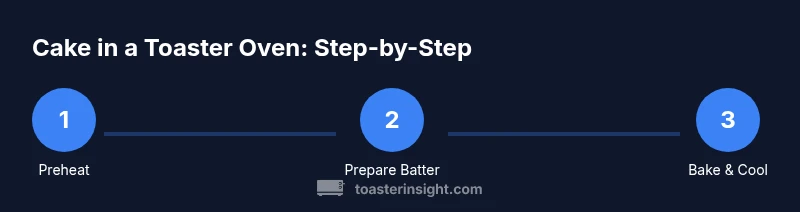
Preheat toaster oven
Preheat to the target bake temperature (usually 325–350°F / 165–175°C) for several minutes. Preheating ensures the batter begins cooking immediately and rises evenly, reducing the risk of doming or sinking.
Tip: Use the oven thermometer to confirm you’re within the desired range. - 2
Prepare batter
Whisk dry ingredients in one bowl and wet ingredients in another. Gently combine until just incorporated to keep the crumb tender. Do not overmix, or the cake may become tough.
Tip: Add flavor with zest or a splash of vanilla without overloading the batter. - 3
Grease and line pan
Grease the pan and line with parchment if needed to prevent sticking. This step is especially important in toaster ovens where heat can cause food to cling to the sides.
Tip: Press parchment firmly so it lies flat against the bottom. - 4
Bake and rotate
Pour batter into prepared pan, place on the middle rack, and bake. Rotate the pan halfway through to promote even browning, especially in ovens with uneven heat.
Tip: If tops brown faster than the center, loosely tent with foil. - 5
Check for doneness
Use a toothpick or skewer to test the center—clean or with a few crumbs is ideal. If batter clings, bake a few minutes longer and recheck.
Tip: Avoid overbaking; this dries the crumb and can cause cracking. - 6
Cool and serve
Allow the cake to cool on a rack for at least 10–15 minutes before slicing. Cooling helps set the crumb and prevents it from crumbling when cut.
Tip: Use a gentle slice with a sharp knife for clean edges.
Your Questions Answered
Can I bake any cake in a toaster oven?
Toaster ovens work best for small, single-layer cakes or desserts. Larger, multi-layer cakes require a larger oven to bake evenly. Start with a recipe adapted for smaller pans and adjust timing accordingly.
Toaster ovens are great for small cakes; larger layers may not bake evenly in a compact oven.
What pan size should I use?
Choose a pan that fits inside the toaster oven with space around it for air to circulate. A 4–6 inch round cake pan or a mini loaf pan is typically ideal.
Use a small pan that fits with room around it for air to circulate.
How do I prevent the cake from sinking?
Avoid overmixing the batter and ensure you’re not overbaking. Use moderate heat and check doneness a few minutes before the standard recipe ends.
Don’t overmix, and check early to prevent sinking.
Is it safe to use metal pans in a toaster oven?
Yes, metal pans are generally safe if they’re oven-safe and not extremely thin, which can warp or buckle in high heat.
Metal pans are okay if they're oven-safe and sturdy.
How can I improve even browning?
Use a rack to elevate the pan and rotate during bake. If the top browns too quickly, tent with foil.
Rotate and cover with foil if needed for even browning.
Watch Video
Key Takeaways
- Baking a cake in a toaster oven is feasible for small portions.
- Choose the right pan and preheat to ensure even cooking.
- Monitor doneness closely to avoid overbaking and sinking.
- Rotate the pan during bake and use a thermometer for accuracy.
- Experiment with flavors while noting your preferred settings.