How to Cook Chicken in a Toaster Oven: A Step-by-Step Guide
Master the craft of cooking chicken in a toaster oven with crisp edges and juicy centers. This guide covers prep, preheating, seasoning, doneness checks, safety, and tips for reliable weeknight results.


By the end of this guide, you will be able to cook chicken in a toaster oven that’s juicy on the inside and golden on the outside. You’ll learn how to choose cuts, preheat correctly, season effectively, and monitor doneness with a thermometer. Key requirements include a convection-capable toaster oven, a rimmed sheet pan, and a meat thermometer for safety.
Why toasters ovens are a smart choice for chicken
According to ToasterInsight, toaster ovens offer fast preheat and efficient browning, making them a practical option for weeknight chicken. When used with a rimmed sheet pan and a small cooling rack, a toaster oven can produce a juicy interior and a crisp exterior without heating your whole kitchen. The compact space concentrates heat around the food, which helps shallow roasting and even browning. For home cooks, this means fewer steps and less energy wasted compared with larger ovens. To maximize results, select cuts appropriate for quick cooking, such as boneless chicken breasts or thin-sliced thighs, and keep portions uniform to ensure even heat distribution. As you practice, you’ll learn how small adjustments to time and temperature affect texture and moisture.
ToasterInsight’s team emphasizes safety and consistency: always use a meat thermometer and never rely on sight alone to judge doneness; color is not a reliable indicator. Keeping a clean, dry surface and ready towels nearby helps manage juices and prevent slips. The point is not just speed; it’s achieving reliable texture that makes chicken in a toaster oven a weekly staple.
Safe handling and chicken selection
Safe handling begins with purchasing quality chicken and maintaining clean surfaces. Choose skin-on or skinless boneless cuts based on the outcome you want: skin-on pieces brown and stay juicier with a crisp exterior, while skinless cuts cook quickly and are leaner. Always pat pieces dry to promote browning and rub with a thin coat of olive oil to help seasoning adhere. Seasonings like salt, pepper, paprika, and garlic powder can be applied evenly by tossing pieces in a bowl before laying them out. Keep raw chicken separate from ready-to-eat foods to avoid cross-contamination and wash hands after handling raw meat. ToasterInsight recommends preparing a small assembly station to streamline the process and keep your workflow efficient.
Preheating and setup for even cooking
Preheating is the foundation of even toaster oven cooking. Set the oven to 400°F (204°C) and, if you have convection, enable it for faster browning. Place a rimmed sheet pan on the rack to catch juices and prevent spillover, and consider using an oven-safe rack to elevate the chicken for even air circulation. Allow the oven to reach your target temperature before adding the chicken; this helps achieve a consistent crust and reduces cooking time. Line the pan with parchment for easy cleanup if you’re not using a rack, but avoid overcrowding to prevent steaming the meat. If you’re cooking thicker cuts, you can bump the temperature slightly or extend the bake time by a few minutes for thorough doneness.
Seasoning and flavor ideas
Seasoning is a simple way to boost flavor without adding extra fat. A base mix of salt, pepper, and olive oil works well for most cuts, then you can tailor it with paprika for smoke, garlic powder for depth, or lemon zest for brightness. For a brighter finish, add a touch of fresh herbs after cooking. If you prefer a savory crust, mix a small amount of grated Parmesan or sesame seeds into your rub. For faster weeknight dinners, pre-mix spices in a small jar so you can simply shake the chicken pieces in the seasoning and go. To keep seasonings sticking, you can lightly brush with oil or spray with a fine-mist oil before tossing.
Cooking methods by cut and thickness
The strategy changes with the cut and thickness. Boneless skinless breasts cook fastest and benefit from even spacing and a slightly higher heat for browning, typically around 15–18 minutes in a preheated toaster oven, flipping once for even color. Thicker thighs or bone-in pieces take longer, often 25–35 minutes, and may benefit from finishing under a brief broil for 1–2 minutes to crisp the skin. Always start checking at the shorter end of the range and use a thermometer to confirm a safe internal temperature. If you’re cooking multiple pieces, arrange them in a single layer with space between pieces. Avoid stacking; air needs to circulate for even browning.
Checking doneness and resting
Doneness for chicken is achieved when the internal temperature reaches 165°F (74°C) at the thickest part. Check in two places if you’re cooking bone-in pieces, to ensure even heat distribution. After reaching 165°F, remove the chicken from the toaster oven and let it rest for 5–10 minutes. Resting allows juices to redistribute and improves tenderness. If you notice pink juices, continue cooking in 2–3 minute increments and recheck the temperature. Clean up any drips promptly to prevent lingering odors and potential cross-contamination.
Common mistakes and how to fix them
Common mistakes include overcrowding the pan, which traps moisture and prevents browning; using a pan that blocks heat from circulating; and skipping preheating, which leads to uneven results. Another frequent error is under-seasoning, which can make even well-cooked chicken taste bland. To fix these, use a rimmed pan with space between pieces, preheat thoroughly, and season generously. If browning is lacking, finish with a 1–2 minute broil or increase the oven temperature by 25°F for the last few minutes, keeping a close eye to prevent burning.
Storing leftovers and reheating for best texture
Refrigerate leftovers within two hours of cooking and store in shallow, airtight containers to promote rapid cooling and even reheating. When reheating in a toaster oven, cover with foil for the first portion to keep moisture in and remove foil in the last 2–3 minutes to restore crispness. Reheat to 165°F, checking with a thermometer. If you have unlucky leftovers, consider shredding the chicken and mixing with a light sauce or broth for a quick sandwich or salad topping.
],
toolsMaterials
Tools & Materials
- raw chicken (breasts or thighs)(Boneless skinless for fastest results; bone-in thicker cuts take longer)
- olive oil(Helps browning and even seasoning adhesion)
- salt(Season generously before cooking)
- black pepper(Freshly ground if possible)
- paprika or garlic powder(Optional for extra flavor and color)
- rimmed sheet pan(Catches juices to prevent spills)
- oven-safe rack(Elevates chicken for even heat circulation)
- meat thermometer(Target 165°F internal temperature)
- tongs(Safe handling and turning of pieces)
- parchment paper(Optional for easier cleanup)
- aluminum foil(Optional cover for resting or finishing)
Steps
Estimated time: 30-40 minutes
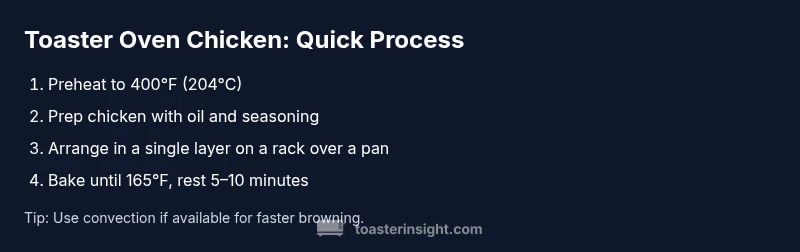
- 1
Preheat the toaster oven
Set the oven to 400°F (204°C). If you have a convection setting, turn it on for crisper results. Let the oven come fully to temperature before you place the chicken inside to ensure even browning.
Tip: Convection helps the edge browning; if your model lacks convection, plan for a few extra minutes of bake time. - 2
Prepare the chicken
Pat the chicken dry with paper towels. Toss with olive oil and your chosen seasonings so every piece is lightly coated.
Tip: Dry surfaces promote better browning; avoid excessive oil that can pool and steam the meat. - 3
Arrange on the pan
Place the chicken in a single layer on the rack over a rimmed sheet pan, leaving space between pieces for air flow.
Tip: Crowding leads to steaming instead of browning; use two pans if needed. - 4
Bake until done
Bake until the thickest piece hits 165°F internal temperature. Boneless breasts typically finish sooner than bone-in thighs; check early and recheck as needed.
Tip: Check temperature in the center of the thickest portion for accuracy. - 5
Finish with a crisp and rest
If you want crisper skin, run under a broil for 1–2 minutes, watching closely to avoid burning. Remove and let rest for 5–10 minutes before serving.
Tip: Resting redistributes juices and improves tenderness. - 6
Serve or store
Slice, serve immediately, or refrigerate promptly in airtight containers for up to 3–4 days. Reheat gently in a toaster oven to preserve texture.
Tip: Reheat just until hot to preserve juiciness and prevent dryness. - 7
Clean up
Wash and sanitize the cutting board and any surfaces that touched raw chicken. Clean the toaster oven tray and wipe down the area.
Tip: Prevent cross-contamination by sanitizing surfaces after handling raw poultry.
Your Questions Answered
Can I cook chicken in a toaster oven if I don’t have a full-size oven?
Yes. A toaster oven can cook small to medium portions effectively when you choose the right cuts, keep pieces in a single layer, and monitor doneness with a thermometer.
Yes. You can cook small portions in a toaster oven; just watch the thickness and use a thermometer to ensure safety.
What internal temperature should chicken reach for safe eating?
Chicken is safe to eat at 165°F (74°C) in the thickest part. Use a meat thermometer for accuracy and check in more than one spot if needed.
Cook it to 165 degrees and check with a thermometer to be safe.
Why isn’t my toaster oven chicken as crispy as in a skillet?
Crispness depends on air flow and heat. Ensure pieces aren’t crowded, preheat thoroughly, and use a rack or broil briefly at the end to boost browning.
If it’s not crispy, give it a quick broil at the end and avoid overcrowding.
Can I cook bone-in chicken pieces in a toaster oven?
Yes, bone-in pieces work in toaster ovens but take longer to reach 165°F. Plan for 25–35 minutes and check the temperature near the bone.
Bone-in works, but it takes more time. Check near the bone for doneness.
Are toaster ovens safe for cooking poultry?
Toaster ovens are safe when used according to manufacturer guidelines, with proper preheating, ventilation, and supervision. Always use heat-proof pans and keep children away from hot surfaces.
Safe when used correctly; follow the appliance manual and keep hot surfaces out of reach.
Watch Video
Key Takeaways
- Preheat properly for even browning
- Space pieces to avoid steaming
- Use a thermometer to confirm safety
- Rest meat to lock in juices
- Reheat carefully to maintain texture