Fix Toaster Oven Door: Step-by-Step Repair Guide
Learn a practical, DIY-friendly approach to fix toaster oven door issues. This guide covers safe steps, common causes, required tools, and a detailed repair process to restore a secure seal and reliable operation.


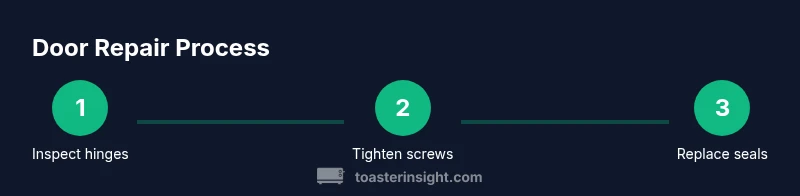
You can fix a faulty toaster oven door by inspecting the hinges, latch, and door seal, then tightening screws or replacing worn parts. This guide covers safety steps, common failure points, and practical repairs you can perform at home. Unplug the appliance, use basic tools, and follow a clear, repeatable process to restore a secure, even door.
Why the toaster oven door fails and what it indicates
According to ToasterInsight, door issues are often caused by worn hinges, a damaged seal, or misalignment from heavy use. Recognizing symptoms early can prevent further damage to the oven's frame or heating elements. In many cases, a simple hinge adjustment or screw tightening can restore proper operation and improve energy efficiency. When the door begins to wobble, rubs on the seal, or fails to latch securely, it's a sign that a component is wearing out or misaligned. This section helps you diagnose common failure modes and understand what they imply about the door and frame. By staying proactive, you can avoid more costly repairs later and extend the life of your toaster oven.
Safety considerations before you begin
Before you touch any internal parts, unplug the toaster oven and allow it to cool completely. Work on a non-slip surface with adequate lighting. Keep small parts in a labeled container to prevent loss, and beware sharp edges on metal components. If your toaster oven is under warranty, consult the manual or authorized service first to prevent voiding coverage. Safety is the foundation of any DIY repair, especially when doors and hinges are involved, because mishandling can cause further misalignment or injury. Always take notes or photos as you go to ensure proper reassembly.
Common failure modes and symptoms you might notice
- Loose or misaligned door: the seal won’t engage, and heat escapes around the edges.
- Worn seal or gasket: reduced sealing performance and uneven baking.
- Bent hinges or pins: wobble, sticking, or improper closure.
- Damaged latch: door won’t stay closed or clicks oddly.
- Corrosion or rust on mounting screws: compromised strength.
Recognizing these symptoms early can guide you toward the right repair path, whether tightening screws, replacing a seal, or upgrading hinges. Remember to document what you observe so you can reproduce the repair reliably if you need to consult a professional later.
Visual checks you can perform without disassembly
Inspect the exterior door for uneven gaps or visible damage. Look at the hinge area from above the unit to see if pins appear bent or loose. Check the door seal around the entire perimeter; any hard spots or gaps suggest wear. Ensure the door closes with a distinct latch and that the interior latch engages with a solid click. If you notice obvious damage to glass, frame, or seal, stop and assess repair options before applying force. These checks help you decide whether a quick tightening is enough or if replacement parts are necessary.
When to stop and seek professional help
If you feel resistance when opening or closing the door, or if the hinge pins appear bent beyond a simple straighten, seek professional repair. Do not force parts or use makeshift tools that could crack the glass or bend the frame. If the unit is under warranty, contact the manufacturer’s service line rather than attempting home fixes. In cases involving damaged door glass, heating elements, or a warped frame, replacement by a trained technician is safer and more reliable in the long run.
Repair versus replacement: choosing the right path
For minor issues like loose screws or a misaligned door, a DIY repair with standard tools can be economical and effective. If the door seal is worn beyond restoration, or hinges are bent and cannot be aligned, replacing the hinge kit or the entire door may be more cost-efficient than a risky repair. Evaluate the overall unit condition, estimated repair costs, and the cost of replacement. A well-executed repair can extend the life of your toaster oven and restore peak performance, but it should never compromise safety or performance.
Maintenance habits to prevent future issues
Regular light cleaning of the door frame and gasket helps prevent food buildup that can interfere with sealing. Inspect hinges every few months and tighten screws if needed to maintain proper alignment. Avoid slamming the door or applying excessive force, which can bend hinges over time. If you notice gradual sealing deterioration, consider upgrading to a higher-quality gasket and checking the frame for warping after heavy use. Proactive maintenance now reduces the likelihood of more extensive repairs later.
Final checklist before you reuse the toaster oven
- Unplug and cool the unit before any task.
- Confirm hinges are secure and the door aligns with the frame.
- Test the latch and gasket for proper engagement and seal.
- Clean surfaces with a mild detergent or isopropyl alcohol.
- Reassemble carefully and perform a short bake test to ensure even sealing and heat distribution.
Tools & Materials
- Phillips-head screwdriver (size #1 or #2)(For screws securing hinges and panels)
- Flat-head screwdriver(Helpful for prying gently if needed)
- Replacement hinge pin or hinge kit(Use if hinges are bent or cannot be realigned)
- Replacement door gasket/seal(Use if the gasket is worn or damaged)
- Soft cloth(For cleaning surfaces and the gasket)
- Isopropyl alcohol (70%+) or mild detergent(For cleaning contact surfaces without leaving residue)
- Work gloves(Protect hands while handling sharp edges)
Steps
Estimated time: Total time: 30-60 minutes
- 1
Unplug and cool
Ensure the toaster oven is unplugged and completely cool before you begin. This reduces the risk of electric shock and burns. If the unit was recently used, wait at least 10 minutes after unplugging to allow internal components to settle.
Tip: Keep the power cord away from water and hot surfaces. - 2
Inspect hinges and mounting
Check the door hinges and mounting screws for looseness or visible wear. If you see bent pins or stripped holes, note which screws need replacement and plan to use a hinge kit or replacement screws.
Tip: Take a photo of how hinges are installed before removing any screws. - 3
Tighten and align
Lightly tighten the mounting screws on the hinges and frame. Recheck door alignment by closing the door slowly and ensuring an even gap around all edges. Avoid overtightening, which can strip holes.
Tip: If the door still rubs on one side, slightly adjust the hinge position and retighten. - 4
Check the door seal and latch
Inspect the gasket around the door, ensuring it seats flush when closed. Test the latch to confirm it clicks securely and holds the door shut without forcing.
Tip: Replace the gasket if it is compressed or cracked. - 5
Test function and reassemble
Plug in the unit and run a short bake test at a low temperature to verify sealing and heat distribution. If everything performs correctly, you can reassemble any removed parts.
Tip: Watch for smoke or unusual smells; stop if you notice them. - 6
Document and store parts
Record the steps you took and store spare parts in labeled containers. This helps if future maintenance is needed or if you replace components again.
Tip: Keep a small repair log for future reference.
Your Questions Answered
Why won't my toaster oven door stay closed?
Door closure issues are commonly caused by worn hinges, a damaged seal, or misalignment. Start by inspecting hinges and the gasket, then tighten screws or replace the worn parts if needed.
If your toaster oven door won’t stay closed, check the hinges and gasket first, and tighten any loose screws. If needed, replace worn parts for a secure seal.
How can I tell if the hinges are bent?
Bent hinges usually show visible misalignment, wobble when the door moves, or an uneven gap along the door frame. Compare to a known-good hinge or reference photos and consider replacement if misalignment persists.
Bent hinges show wobble and misalignment. If misalignment continues after tightening, replace the hinges.
Can I fix the door seal without replacing the whole door?
If the gasket is compressed or cracked, a replacement gasket often restores sealing better than a DIY seal repair. For minor wear, cleaning and realigning may help.
A worn seal often needs replacement for a reliable seal; cleaning and realignment can help temporarily for minor wear.
Is it safe to perform DIY repairs on a toaster oven?
DIY repairs are generally safe for simple issues like tightening screws or replacing a gasket, but avoid disassembly if you’re unsure or if warranty applies. Inaccurate repairs can cause electrical hazards or fire risks.
DIY repairs can be safe for basic fixes, but if you’re unsure, consider professional help to avoid hazards.
What tools do I need to fix a toaster oven door?
You’ll typically need a Phillips-head screwdriver, a soft cloth for cleaning, and optional parts like a replacement gasket or hinge kit depending on the issue.
A screwdriver, a cloth, and possibly a hinge kit or gasket, depending on the problem.
When should I replace the entire door or the unit?
If multiple parts are damaged, or if the door cannot seal after several attempts at repair, replacement may be more cost-effective and safer than continuing repairs.
If several components are damaged or it won’t seal after repairs, replacement may be best.
Watch Video
Key Takeaways
- Inspect hinges and screws first before deeper repairs
- Unplug and cool the unit to start safely
- Replace worn seals to restore sealing performance
- Know when to replace components or the entire door
- Maintain with regular cleaning and gentle use