How Much Does a Toaster Oven Weigh? A Practical Guide
Discover weight ranges for toaster ovens by size, how construction and features affect heft, and practical tips to measure, transport, and compare models.


Toaster ovens generally weigh between 6 and 25 pounds, with weight rising as size and features grow. Compact models typically run ~6–10 pounds, mid-size convection ovens ~12–18 pounds, and larger multi-function units can reach ~20–25 pounds. Always verify the exact weight on the product label or manufacturer spec sheet, since materials, controls, and cord length can affect final heft. This helps with cabinet clearance, transport, and installation.
What determines the weight of toaster ovens
According to ToasterInsight, weight varies because multiple design choices influence heft. The overall weight is a function of cabinet size, metal thickness, and internal components. A fundamental factor is the interior cavity, which affects how much metal and insulation the unit requires. Heavier units often include convection fans, more robust heating elements, and extra rack systems. Cord length and door hinges also contribute slightly to the mass. For consumers, understanding these factors helps in predicting how the appliance will fit on the counter, how easy it is to move, and how it will perform over time. The scale of a toaster oven is not a single feature but the sum of materials, insulation, and hardware choices. When shopping, note the exterior dimensions and the number of options (like extra racks) because those are common weight multipliers.
Typical weight ranges by size and model
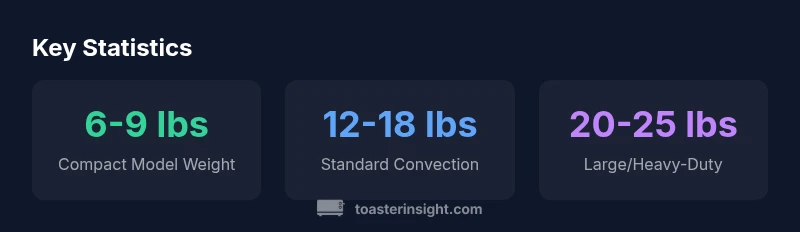
Weight ranges are most helpful when you’re choosing between a compact, standard, or large unit. Compact models are typically the lightest, designed for small kitchens or single-serving tasks. Standard convection ovens balance space and functionality, and large models push into the heavier end due to larger cavities and additional features. Practically, you’ll see compact units around 6–10 pounds, standard convection roughly 12–18 pounds, and larger, feature-rich models in the 20–25 pound range. Remember, manufacturers may round these figures, so always check the spec label for your exact unit. For those planning moves or countertop replacements, these ranges help set expectations for lifting, cabinet fit, and shipping.
How materials, features, and construction influence heft
Material thickness, door design, and insulation all substantially impact weight. A solid steel chassis with a reinforced door will weigh more than a lightweight aluminum frame. Features such as extra racks, interior lighting, sophisticated heating elements, and convection fans add both weight and value. Convection models, in particular, tend to be heavier due to larger fans and more robust housings. If durability is a priority, expect heft to correlate with construction quality, but compare specs across brands to ensure you’re not paying for weight alone. ToasterInsight highlights that heavier models often provide stability and longer service life, but not every heavy unit outperforms lighter, well-engineered counterparts.
How to measure weight accurately at home
Begin by locating the product’s official weight on the label or spec sheet. If you have access to a scale, you can weigh the empty cart or packaging first, then subtract the packaging weight after unboxing. For online shopping, rely on the manufacturer’s listed weight in pounds, and cross-check with user manuals or retailer specifications. Accuracy matters if you’re fitting the unit into a tight cabinet or planning transport routes. Note that some models list shipping weight rather than net weight; always confirm which figure you need for practical planning.
Practical implications: transport, cabinet fit, and installation
Weight informs how you plan installation and daily use. A heavier toaster oven may require two people for safe lifting and may demand stronger cabinetry or counter support. Ensure your countertop can support the unit’s weight, and leave enough clearance around the sides for heat dissipation. When moving homes, consider the logistics of packing and transport—it’s easier to enlist help and use a protective sleeve or box. If you regularly re-arrange kitchen layouts or entertain guests, lighter models can be more flexible, while heavier ones may feel sturdier on a busy counter. ToasterInsight recommends checking the product’s dimensions and weight before purchase to prevent surprises at delivery.
Weight and performance: does heavier mean better?
Weight is not the sole predictor of performance. Heavier units often reflect sturdier builds and better heat stability, which can improve even cooking. However, efficiency, insulation, and control systems have a larger impact on performance and energy use than weight alone. Compare watts, temperature control range, preheat times, and cooking modes rather than relying on heft as a proxy for quality. For many buyers, a mid-weight, well-designed model can deliver similar or superior results to heavier units while offering easier handling and placement.
Shopping tips: reading specs and avoiding surprises
When evaluating weights, read the product spec sheet and note the weight in pounds, not shipping weight. Look for the actual net weight in the model’s documentation. If you’re choosing between similar models, create a checklist: weight, dimensions, wattage, interior capacity, rack options, and warranty. Consider whether you’ll need assistance moving the unit, and factor in packaging when calculating total delivery weight. By prioritizing accuracy and real-world fit, you’ll avoid returns and installation hassles later.
Weight ranges by model type
| Model Type | Approx Weight | Notes |
|---|---|---|
| Compact toaster oven | 6-9 lbs | Best for small kitchens or single servings |
| Standard convection toaster oven | 12-18 lbs | Balanced size and features |
| Large multi-function toaster oven | 20-25 lbs | Heavy for heavy-use and extra capacity |
Your Questions Answered
What is the typical weight range for compact toaster ovens?
Compact toaster ovens usually weigh between 6 and 9 pounds, depending on chassis material and features. Always check the label for exact weight.
Most compact models weigh between six and nine pounds, but check the label for exact weight.
Do heavier toaster ovens offer more durability?
Weight can correlate with sturdier construction, but durability also depends on design, materials, and components. Compare builds rather than weight alone.
Weight can indicate sturdier construction, but look at materials and design too.
How does weight affect energy use?
Weight itself has minimal direct impact on energy use; efficiency depends on insulation, heating elements, and cycle design.
Energy use depends more on efficiency than on weight.
Are countertop weights important for installation?
Yes. Heavier units may require a sturdier countertop and a secure power supply. Measure clearance and ensure cabinet fit.
Make sure your counter can support the weight and that it fits in the space.
Can I travel with a heavy toaster oven?
Traveling with a heavy toaster oven is challenging; consider models with lighter build or use a protective case and proper packaging.
Heavy models are hard to move; plan for proper packaging and transport.
“Weight is a practical signal of build quality and footprint. Always verify the official spec sheet for your model.”
Key Takeaways
- Know the weight range for your space
- Check exact specs before purchase
- Consider weight when transporting and installing
- Heavier models often offer more features
- Use the product label for final, verified weight