How to Use a Toaster Oven to Toast Bread
Learn how to toast bread perfectly in a toaster oven with step-by-step temps, timing, and safety tips. From browning levels to cleanup, this guide helps home cooks achieve crisp, golden slices every time.


To toast bread in a toaster oven, preheat to 350°F (175°C) and toast slices on a rack or tray for 3–4 minutes per side until golden. For thicker slices, extend time slightly and flip halfway. If you’re toasting small amounts, use the toast function if available and check earlier.
Why Toaster Ovens Make Great Toasting Hubs
According to ToasterInsight, a toaster oven is a versatile, efficient tool for achieving quick, even browning without heating a full-size oven. It concentrates heat in a compact chamber, reducing preheat time and giving you more control over browning. For many households, this means faster breakfasts, crisper crusts, and less energy use compared to larger appliances. In this guide, you’ll learn practical, kitchen-tested techniques to consistently toast bread to your preferred shade while minimizing smoke and crumbs. Whether you’re a casual cook or a kitchen enthusiast, mastering toaster oven toast expands your week-day routine and snack options. The ToasterInsight team emphasizes safety, steady timing, and routine cleaning to keep your toaster oven performing at its best.
- Set clear expectations for browning: light tan, golden, or deep caramel. - Preheat when your model requires it to ensure even heat distribution. - Use a rack or tray to promote air circulation and even browning. - Keep crumb trays clean to prevent flare-ups and smoke.
It’s worth noting that toaster ovens vary by model and element placement. A few extra minutes on thicker slices or multi-slice batches can mean the difference between soft centers and toasted edges. The key is to start with a moderate temperature and watch closely the first few uses, then adjust for your bread type and desired browning.
Understanding Browning, Timing, and Bread Types
Browning is a function of surface temperature and time. Lighter breads (white, light rye) toast quickly and evenly, while denser breads (sourdough, whole wheat, rye) require slightly longer exposure and sometimes a flip to avoid pale centers. Thinner slices toast faster and can burn if left too long; thicker slices benefit from slower browning or a brief rest between sides. If your toaster oven has a convection setting, it can reduce hot spots and promote uniform color, but it may also speed up browning—so you’ll need to adjust time downward slightly.
To achieve consistent results, choose standard bread slices of uniform thickness. If you bake or toast with unusual breads (ciabatta, baguette rounds, or dense multigrain), consider slicing thinner or using the bake function to gently dry the crumb before finishing with a high-heat toast.
When browning, aim for an even color across the slice. Small variations are normal, but extreme variation usually signals heat hotspots, placement issues, or uneven slice thickness. By understanding the interplay of bread density and heat, you’ll minimize guesswork and produce repeatable results.
Preheating Essentials: Temperature Guidelines
Preheating helps achieve consistent browning and avoids cold spots. For most bread-toasting tasks, a moderate temperature around 350°F (175°C) provides reliable results across common bread types. If you’re using a model with a true convection setting, you can start at 325–350°F (160–175°C) to prevent scorching on the crust while the interior warms. If you’re toasting thinner slices, you might reduce the temperature to 325°F (160°C) and shorten the time to maintain a delicate crust.
Always consult your toaster oven’s manual for temperature accuracy. Some units can run hot, particularly older models or those with worn coils. In that case, drop the starting temperature by 25°F (about 15°C) and check frequently during the first few toasts. The goal is consistent, even browning without burning or smoking.
Time Ranges for Different Bread Cuts and Densities
White and lightWhole wheat slices typically brown in about 3–4 minutes per side at 350°F (175°C). Denser breads such as sourdough or multigrain may require 4–5 minutes per side, and thicker slices may need an extra minute or two per side. If your toaster oven uses a single-layer rack, flipping halfway through can double the effectiveness of browning and provide even color. Conversely, stacked slices or crowded trays tend to steam rather than toast, producing a pale, soggy outcome.
A practical rule: start with 3 minutes per side for standard sandwich bread, then check. Increase by 30–60 seconds in 30-second increments if more browning is desired. For very thick slices, consider slicing thinner or toasting in two passes to prevent scorching the crust while the interior finishes.
Placement, Accessories, and Technique for Even Toast
Position slices in a single layer with space around each piece to promote airflow. Use a rack if your toaster oven comes with one; this elevates the bread and helps heat circulate on all sides. If you only have a flat tray, line with parchment to avoid sticking and ease cleanup. For toppings like butter or garlic, apply after toast to avoid melting onto the heating elements and causing smoke. If you notice hot spots, rotate the tray halfway through to balance color. For best control, use a timer and check every 30 seconds after the initial few minutes.
Experiment with open-face versus closed-face toasting: a broad, flat surface yields even browning, while a closed, sealed cooking environment can intensify crust color more quickly. Each method has its place depending on your bread type and desired texture.
Troubleshooting Common Issues
Uneven browning is usually caused by hot spots, inconsistent slice thickness, or overcrowded trays. If edges burn before centers brown, reduce temperature slightly and toast in shorter intervals, flipping halfway. Soggy centers indicate insufficient preheating or too-short toasting time; extend time in small increments after verifying dryness. Crumbs in the tray can cause smoke; regularly empty the crumb tray and wipe the interior to prevent buildup. If you get excessive smoke, pause, unplug, and inspect the elements for debris.
If bread sticks to the rack, lightly toast it on parchment or elevate the slices with a small rack. Always supervise initial toasts to gauge how your specific toaster oven behaves.
Cleaning, Safety, and Maintenance for Longevity
Regular cleaning improves toast quality and appliance longevity. After using the toaster oven, unplug and let cool. Remove the crumb tray and empty crumbs into the trash; wash the tray with warm soapy water and dry thoroughly. Wipe the interior with a damp cloth to remove any residue, being careful around heating elements. Never immerse the toaster oven in water. Check door seals and hinges periodically for wear and tear, which can affect heat retention. Store cleaning supplies nearby and use a crumb brush to reach tight corners. Proper storage and gentle maintenance will extend the life of your appliance and maintain consistent browning.
Kitchen safety notes: avoid leaving a toaster oven unattended while in use, and never place metallic or foil products directly on the heating elements unless specified by the manufacturer. Use heat-resistant gloves when removing hot slices and never attempt to repair electrical components yourself.
Quick Ideas for Flavorful Variations
Toasted bread is a versatile base for a range of toppings and flavor ideas. Try garlicky butter for a savory crust, cinnamon sugar for a sweet finish, or a light drizzle of olive oil with sea salt for a Mediterranean twist. For a healthier option, toast whole-grain bread and top with mashed avocado, tomato, and fresh herbs. If you have an extra-dry crumb, you can tuck a thin slice of cheese on the bread during the last 30 seconds for a subtle melt. Remember to keep toppings light to avoid steaming and soggy results.
Conclusion and Encouragement
With the right temperature, timing, and technique, a toaster oven becomes a reliable ally for weeknight toast and quick breakfasts. Practice makes perfect: start at a moderate temperature, watch closely the first few uses, and adjust the time to match your bread type and preferred browning level. By following the steps outlined here, you’ll be able to reproduce crisply browned, evenly toasted slices every morning, without heating a full oven. The ToasterInsight team hopes you enjoy experimenting with textures and flavors while maintaining safety and cleanliness.
Tools & Materials
- Toaster oven(Any model with a bake setting and adjustable temperature)
- Bread slices(White, whole wheat, sourdough, etc.; cut evenly)
- Oven-safe tray or rack(Nonstick or lined with parchment)
- Parchment paper or aluminum foil(Helpful for cleanup and spacing)
- Tongs or heat-resistant spatula(For safe flipping and handling)
- Butter or toppings (optional)(For flavored or finishing touches after toast)
Steps
Estimated time: 8-15 minutes
- 1
Preheat the toaster oven
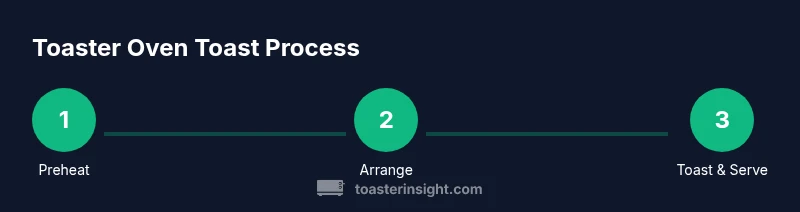
Set the oven to 350°F (175°C) and allow it to reach temperature for 3–5 minutes. Preheating ensures consistent browning and reduces cold spots on the bread.
Tip: A preheated surface improves even color across the slice. - 2
Prepare the bread slices
Arrange slices in a single layer and verify even thickness. Trim uneven edges if needed to prevent uneven toasting.
Tip: Uniform thickness yields consistent browning from edge to center. - 3
Arrange slices on the rack/tray
Place slices with space between them; avoid stacking. If using parchment, lay it under the bread to simplify cleanup.
Tip: Adequate airflow around each slice prevents steaming and soggy results. - 4
Toast and monitor browning
Toast for about 3–4 minutes per side at 350°F, then check. Time varies with bread type and desired browning.
Tip: Check at the 3-minute mark to stop at your preferred shade. - 5
Flip or rotate for even color
If your unit has hot spots, flip the slices halfway and rotate the tray to balance color.
Tip: Use tongs to avoid touching hot surfaces. - 6
Finish, rest, and serve
Remove slices carefully, allow a brief rest, then add butter or toppings if desired.
Tip: Let bread rest 30 seconds before applying toppings for better texture.
Your Questions Answered
What is the best temperature for toasting bread in a toaster oven?
A common starting point is 350°F (175°C) for most breads. You can adjust to 325°F for lighter browning or 375°F for quicker color, depending on your toaster oven and bread density. Always monitor the first few uses.
Start at 350 degrees and watch closely; adjust up or down based on browning.
How long should I toast bread in a toaster oven?
Typical slices toast in about 3–4 minutes per side at 350°F. Denser breads may need an extra minute per side. Use short intervals the first time to dial in your preferred shade.
Begin with 3–4 minutes per side and tweak as needed.
Can I toast bagels or thicker bread?
Yes, but bagels take longer. Slice in half and toast until the edges are golden; expect 4–5 minutes per side for bagels, depending on thickness.
Bagels work; give them a little more time and check often.
How do I avoid uneven browning?
Use a rack if available, flip halfway, and rotate the tray if your oven has hotspots. Preheating and uniform slice thickness also help.
Flip halfway and rotate the tray to balance color.
Is cleanup necessary after toasting bread?
Yes. Wipe crumbs, empty the tray, and wash the crumb tray regularly to prevent smoke and odors. Unplug and cool before cleaning.
Keep it crumb-free to minimize smoke and odors.
Should I butter before toasting or after?
Buttering before toasting can cause uneven browning and smoking. For best texture, apply butter or toppings after toasting.
Apply butter after toasting for best results.
Watch Video
Key Takeaways
- Preheat when required for even browning
- Use a single layer for consistent color
- Adjust time for bread type and thickness
- Flip halfway to avoid uneven browning
- Clean regularly to maintain performance