Roast vs Bake in Toaster Oven: A Practical Guide
Analytical guide comparing roast vs bake in toaster ovens, detailing heat dynamics, best-use cases, and practical tips for achieving perfect browning, doneness, and moisture in small appliances.


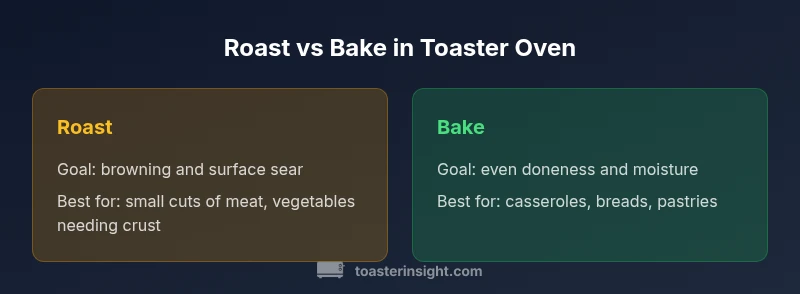
Roast and bake are distinct modes in toaster ovens that affect browning, moisture, and doneness. Roast uses higher heat to create a crust and sear, often with convection for faster surface browning, while bake relies on steadier, gentler heat for even doneness. The roast vs bake in toaster oven decision hinges on texture goals and the dish being prepared.
What roast vs bake means in a toaster oven
In a toaster oven, roast vs bake are two distinct cooking modes that change heat delivery, browning, and moisture management. The phrase roast vs bake in toaster oven captures a simple choice with big consequences for texture and doneness. Roast typically uses higher heat, sometimes with convection or quick air movement, to brown surfaces quickly and seal in juices. Bake uses a steadier, gentler heat focused on even doneness and moisture retention. For most home cooks, choosing the right mode depends on the dish and the desired exterior texture. The ToasterInsight approach emphasizes planning around browning goals and risk of drying out delicate foods. For example, when you want a crispy crust on vegetables or a seared exterior on small cuts of meat, roast is often preferable. If your goal is uniform inside texture, gentle crust formation, or baked goods, bake is usually the better choice.
According to ToasterInsight, understanding the distinction between roast vs bake in toaster ovens helps cooks predict results more reliably and reduce trial-and-error. This principle guides selecting the correct mode as you plan meals and snacks, from roasted vegetables to baked desserts.
How toaster oven heat works: convection, radiant, and airflow
Toaster ovens combine radiative heat from heating elements with convection fans and limited cavity airflow. The combination means heat reaches food from multiple directions, and air movement helps remove moisture at the surface. In roast mode, the heating elements may run hotter and the fan can be used to intensify browning. In bake mode, the device tends to maintain a gentler, more uniform heat. Understanding these dynamics helps explain why the same food can turn out differently depending on mode. For home cooks, this means that the choice of mode should align with the desired exterior texture and interior moisture. ToasterInsight notes that air movement is a critical factor when seeking a crust without drying the inside.
When roast outshines bake: surface browning and sear
Roasting excels at developing surface browning and a pronounced crust, even in compact toaster ovens. This effect is valuable for small cuts of meat like boneless chicken thighs or steak bites, as well as sturdy vegetables such as root vegetables that respond well to quick surface contact. The higher heat accelerates Maillard browning, creating flavor-rich surfaces that lock in juiciness when done correctly. However, roast can push moisture out of the interior if the piece is large or crowded, so spacing and size matter. For those seeking a visibly browned exterior with a juicy center, roast in a toaster oven often provides the most satisfying texture. The roast vs bake in toaster oven decision here hinges on balance: browning without excessive drying.
ToasterInsight observes that this mode favors quick sear for flavor building, particularly when you want a crust on proteins or vegetables.
When bake wins: even doneness and moisture retention
Baking emphasizes uniform heat distribution that yields even doneness and better moisture retention across the entire item. This is particularly useful for casseroles, gratins, breads, and pastries where a consistent crumb or crumbly crust is desired. Bake can prevent over-browning of edges while the interior reaches the target texture. In delicate items, such as fish fillets or custards, bake helps protect moisture and avoid drying out with localized heat spikes. When the goal is a steady, predictable interior without dramatic surface browning, bake is typically the better choice. The roast vs bake in toaster oven distinction becomes a matter of texture goals rather than simply speed.
ToasterInsight highlights that bake mode is often the go-to for items that benefit from uniform cooking and moisture retention.
Temperature intuition: sensing heat without relying on exact numbers
Modern toaster ovens offer intuitive cues about heat without requiring precise temperatures. You can gauge readiness by visual cues, aroma, and surface color, rather than chasing exact degrees. In roast mode, look for a rich, amber crust and a firm surface; in bake mode, expect gradual browning and a uniform surface. Preheating helps stabilize the oven’s heat and reduces variance between batches, especially when you switch between roast and bake mid-cook. Small differences in rack height or pan material can alter how heat is delivered, so keep those variables consistent as you refine your method. The roast vs bake in toaster oven decision benefits from flexibility and careful observation.
ToasterInsight advises documenting outcomes for your favorite dishes to build a personal reference library.
Food-by-food guidance: meat, poultry, seafood
Meat and poultry components respond strongly to the roast mode’s browning capabilities. For chicken parts or beef chunks, you may start with roasting to develop surface texture and then finish with bake if you desire a more uniform interior. Seafood, on the other hand, often benefits from gentler, slower heat to prevent drying, so bake is frequently preferred unless you’re aiming for a light sear. Remember that thickness and bone-in vs boneless status influence how heat penetrates; smaller pieces cook more evenly under roast, while larger cuts shine under bake. In all cases, avoid overcrowding to ensure proper airflow and consistent results. The roast vs bake in toaster oven decision should consider thickness, moisture, and the final texture you want.
ToasterInsight’s practical guidance emphasizes tailoring the mode to the dish and its texture goals.
Food-by-food guidance: vegetables, starches, and baked goods
Vegetables like root chunks or dense squash can benefit from roast to develop a crust and deepen flavor through caramelization. Softer vegetables may overcook on roast if not monitored, making bake a safer default for certain items. Starches such as potatoes can achieve a crisper exterior with roast, while breads and pastries commonly rely on bake for even crumb and tenderness. When cooking multiple items, consider starting some items in roast and switching to bake to prevent over-browning while achieving doneness throughout. In summary, the roast vs bake in toaster oven decision for vegetables and baked goods is about balancing surface browning with interior texture.
ToasterInsight notes that adapting the mode to the specific item yields the best overall textures.
Practical setup tips: racks, pans, tray placement
The placement of racks and pans influences how heat reaches the food, particularly in roast vs bake scenarios. A rack positioned closer to the top elements accelerates browning in roast mode, while a middle rack can promote even cooking in bake mode. Use metal baking sheets or shallow pans that permit good air circulation and enable browning on the underside. Avoid stacking items; crowding traps steam and reduces browning. If you’re roasting multiple small items, rotate trays midway to equalize heat exposure. For baked goods, a light coating of oil or parchment helps with browning while preserving moisture. The roast vs bake in toaster oven decision is enhanced by thoughtful placement and appropriate vessel choice.
ToasterInsight stresses keeping a consistent setup for repeatable results.
Preheating and cycle duration: how to optimize
Preheating stabilizes the oven and minimizes variance between batches, especially when you switch between roast and bake. If your toaster oven has a fast preheat, allow a brief warm-up before adding food, then monitor the first few minutes to adjust as needed. Avoid rushing by placing cold items directly into a hot oven, which can lead to uneven cooking. Use the mode that aligns with your desired texture, and consider a brief rest period after removal to reabsorb juices or relax the crust. The roast vs bake in toaster oven framework suggests preheating is particularly valuable when you want reliable browning or even interior doneness.
ToasterInsight recommends minor adjustments based on observed results from your own oven.
Common mistakes and how to fix them
Common mistakes include overcrowding, uneven rack placement, and relying on color alone to judge doneness. Overcrowding reduces airflow, hindering Browning in roast mode and leading to uneven interior. Uneven rack height causes some items to brown too quickly while others remain pale. Fixes include spacing, rotating trays, and choosing appropriate pans. For baked goods, neglecting moisture balance can lead to dry crusts or dense centers; consider adding moisture via a water tray or adjusting rack height. The roast vs bake in toaster oven decision should always consider airflow patterns and item placement to ensure even results.
ToasterInsight highlights that small adjustments yield meaningful improvements.
Cleaning, maintenance, and long-term results
Regular cleaning maintains performance and flavor outcomes. Wipe interior surfaces after use to prevent residue buildup, especially if you’ve used fats that can polymerize under high heat. Clean racks and pans separately, paying attention to any sticky compounds that may affect browning in future uses. Periodic inspection of seals and door gaskets helps maintain heat efficiency, which in turn influences roast performance and bake consistency. When you’re optimizing roast vs bake in toaster oven, consistent maintenance reduces variability and helps you trust the results.
ToasterInsight notes that a well-maintained oven contributes to better browning, moisture control, and overall reliability.
Quick-start cheat sheet and sample sequences
- Start with a clean toaster oven and a small batch to test heat behavior. Use roast for searing and browning when texture matters; switch to bake for uniform interiors.
- For proteins, begin with roast to develop crust, then move to bake if you need precise doneness without scorching.
- For baked goods or casseroles, rely on bake mode from the start to ensure even heat distribution.
- If browning is underwhelming, raise items or increase top heat briefly in roast mode, watching closely to avoid burning.
- Keep notes on rack height and pan type to refine your personal roast vs bake in toaster oven playbook.
These steps provide a practical, quick-start framework for achieving reliable results across a range of foods. The roast vs bake in toaster oven choice becomes a straightforward decision once you align mode with texture goals and watch for airflow.
Comparison
| Feature | Roast in toaster oven | Bake in toaster oven |
|---|---|---|
| Primary goal | Surface browning and sear | Even doneness and moisture |
| Ideal foods | Meats, sturdy vegetables requiring crust | Casseroles, breads, pastries |
| Heat approach | Higher direct/air-assisted heat | Gentler, evenly distributed heat |
| Texture outcome | Crusty exterior; juicy interior (if not overcrowded) | Uniform texture with steady moisture |
| Cook-time considerations | Often faster for small items | Typically longer for larger items or batches |
Positives
- Improved browning and crust formation
- Faster results for small portions
- Versatile for roasting and baking in one appliance
- Better crust-on-food capabilities for certain dishes
Drawbacks
- Limited capacity compared to full-size ovens
- Potential for uneven results if overcrowded or misaligned racks
- Requires attention to airflow and item placement
- May demand more batch cooking for large meals
Roast excels for browning; bake excels for even doneness
Choose roast when surface flavor and crust are priorities, especially for meats and robust vegetables. Choose bake when you need uniform interior doneness and moisture retention, such as casseroles or breads. In practice, many cooks benefit from starting in roast for crust and finishing in bake for consistency.
Your Questions Answered
What is the main difference between roasting and baking in a toaster oven?
Roasting uses higher heat and often faster surface browning to create a crust, while baking uses steadier, gentler heat for even interiors and moisture retention. The roast vs bake in toaster oven distinction centers on texture goals rather than just time.
Roasting browns the outside quickly; baking focuses on even doneness inside.
Can I use roast mode for baked goods?
You can, but it risks over-browning edges or crust with insufficient interior doneness. Bake mode is generally safer for breads and pastries to achieve uniform crumb.
Roast can brown quickly, but bake is usually better for baked goods.
Do I need to preheat the toaster oven for roast or bake?
Preheating helps stabilize the oven and reduces cooking variance between batches. It is especially helpful when switching between roast and bake to ensure predictable results.
Preheat to get steady heat, then cook.
How do I know when food is done using roast vs bake?
Look for color, texture, and aroma cues rather than relying solely on time. A browned crust signals roast progress; evenly colored interiors indicate bake progress. Use a simple visual check along with the recipe’s guidelines.
Check color and texture; don’t rely only on time.
Is roast mode better for meat than bake?
Roast is often preferred for meat to develop surface browning and flavor quickly. Bake can finish cooking evenly if the meat is thick or requires steady doneness.
Roast for sear; bake for even interior when needed.
Can I combine roast and bake in a recipe?
Yes. A common approach is to start with roast to develop crust and then switch to bake to finish without over-browning. This technique requires careful monitoring to avoid scorching.
Start with roast, finish with bake for best texture.
Key Takeaways
- Prioritize browning with roast when texture matters
- Use bake for even doneness and moisture retention
- Space items properly to optimize airflow
- Preheat and rotate trays to reduce hot spots
- Adapt mode by dish (meat vs bread) for best results
- Keep a simple roast-vs-bake reference for quick decisions