Toast in Toaster Oven: A Practical Guide
Learn how to perfectly toast in a toaster oven with step-by-step instructions, timing tips, and safety notes from ToasterInsight. Get energyefficient browning for everyday breakfasts.


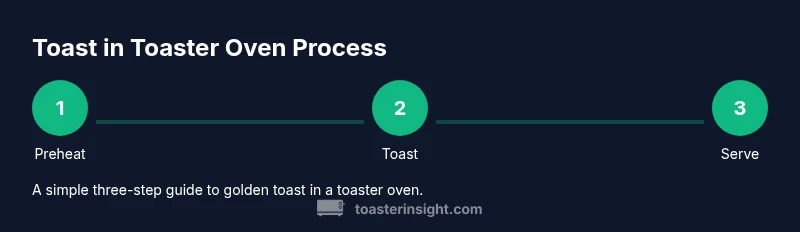
To toast in a toaster oven, preheat, choose a browning setting, and watch closely. Place bread on the rack or a small baking tray, then bake for 2–6 minutes, flipping once if needed. The result is quick, even browning with less heat than a conventional oven. For best results, use medium-thick bread.
Why toast in toaster oven is convenient
For many households, the toaster oven is the unsung hero of quick breakfasts and snack days. It saves energy versus firing up a full-size oven and produces toast with crisp edges and a tender crumb. When you toast in toaster oven, you can control browning with a small range of temperatures and built-in settings, which reduces the risk of scorching bread. This makes it especially appealing for homeowners who want consistent results without babysitting a full oven. At ToasterInsight, we see everyday cooks lean on toaster ovens for fast, reliable lunches and leisurely weekend projects. Because the cavity is smaller, heat reflects quickly; as a result, you can achieve golden toast in minutes rather than tens. In our tests, toast in toaster oven setups often browns more evenly than slices toasted in a standard countertop toaster, especially with denser breads like sourdough or multigrain. The goal is to approximate a traditional toast texture while using a compact appliance on a busy morning. According to ToasterInsight, the convenience comes from precise radiant heat and a compact chamber that makes toast in toaster oven predictable and fast.
Preheating and temperature basics
Preheating a toaster oven is a simple ritual that pays off in even browning. Start by selecting a moderate temperature, typically between 325°F and 450°F, depending on the bread type and desired result. If your model has a dedicated toast or bake setting, use it to simplify the process. Allow the oven to reach the chosen temperature before you slide the bread inside, because starting from a cold chamber can lead to uneven color. Toast in toaster oven works best when you give the interior enough heat to bloom the crust while keeping the interior soft. As you gain experience, you’ll learn the sweet spot for your favorite loaf. For most household breads, 2–4 minutes yields light browning, while 4–6 minutes delivers a deeper, toasty color. Toaster ovens respond quickly to changes in temperature, so you can adjust on the fly if browning isn’t to your taste.
Choosing the right bread and thickness
The bread you choose and its thickness greatly influence the final texture when you toast in toaster oven. For most slices, aim for about 1/2 inch (roughly 1.25 cm) thick; anything much thinner can burn quickly, while thicker slices may stay doughy in the middle. denser loaves like whole wheat, sourdough, and multigrain need a touch more time or a slightly lower temperature to achieve a balanced crust and crumb. For bagels and English muffins, consider cutting or halving to expose more surface area to the heat—this helps achieve an even browning. If you’re using toast in toaster oven, consider a bread that already has a good crust to ensure crisp edges without drying out the interior.
Positioning and rack settings
Where you place the bread inside the toaster oven matters. Position the rack so the bread sits about 1–2 inches (2.5–5 cm) from the heating element for quick browning, or closer for more intense heat when you want a darker crust. If your model has a broil or high-heat option, reserve it for finishing touches rather than the initial toast. Rotating or flipping the slice halfway through can lead to more even browning and prevent one side from browning too fast. On some machines, placing bread directly on a baking sheet gives a crisper bottom; on others, a wire rack lets heat circulate for uniform color. Remember: small changes in rack height can significantly affect results when you toast in toaster oven.
Time guidelines for different browning levels
Toasting times vary by bread type and oven, but you can use these general ranges as starting points when you toast in toaster oven. For light browning, aim for about 2–3 minutes at a moderate temperature. For a medium toast with a golden crust, 3–4 minutes usually works well. For a deep, crisp brown, push toward 4–6 minutes, watching closely to avoid burning. When you start, use shorter intervals and check frequently to dial in your preferred shade. If your slices are frozen, add an extra minute or two and slightly lower the temperature to avoid scorching while the interior warms through. The key is to monitor and adjust rather than rely on a single time.
Using butter, toppings, and toppings safety
Many people prefer butter or spreads on hot toast, but fat can burn if exposed to high heat for too long. To toast in toaster oven with toppings, apply a thin layer of butter or a meltable spread after toasting, unless you want a toasted edge that browns under a low-to-medium flame. For toppings like jam or cream cheese, add after removing the toast from the oven to avoid burning. If you do add toppings before toasting, use light coatings and consider lower temperatures to prevent scorching. Always keep a close eye on delicate toppings and never leave the toaster oven unattended while in use.
Reheating vs fresh toast
Toast in toaster oven isn’t just for fresh slices; you can revive day-old bread with a quick reheat. Place slices on the rack or sheet and re-toast for 1–3 minutes to bring back some crispness. For longer refrigeration or freezing, you may need to extend the time a bit, but check often to prevent over-browning. Reheating can help revive the texture, but avoid overdoing it, or your toast will become dry and crumbly. If you have leftover toppings, consider a light reheat to warm them slightly before serving.
Cleaning and maintenance after toasting
Regular cleaning helps maintain even browning and prevents flavor transfer between uses. After toasting in toaster oven, unplug and let it cool. Remove the crumb tray and shake out crumbs; wipe the interior with a damp cloth if needed, avoiding the heating elements. A quick wipe down prevents the buildup that can burn and smoke when you toast in toaster oven. Keep racks clean to prevent sticking and improve air circulation. For sticky residues, a light scrub with a non-abrasive sponge can remove residue without scratching the surface.
Energy efficiency and safety tips
Toaster ovens are inherently more energy-efficient than full-size ovens for small jobs like toast. They heat up quickly and reach the target temperature faster, which reduces total energy use. To maximize efficiency, preheat for only as long as needed and avoid leaving the appliance on if you’re not actively toasting. Always use oven mitts when handling hot racks or trays, and never block vents or place the unit near flammable materials. ToasterInsight’s analyses indicate that mindful use of a toaster oven can save energy over time while delivering reliable browning.
Common mistakes and how to fix
A few common missteps when you toast in toaster oven include using too-thick bread, overcrowding the rack, or setting the temperature too high. These lead to uneven browning or burnt edges. If your toast browns unevenly, lower the temperature slightly and toast longer with a mid-rotation. If the bottom browns faster, move the rack higher or flip the slice sooner. Remember to monitor closely the first few times you try a new bread loaf to establish a reliable baseline.
Advanced techniques: bagels, English muffins, and specialty breads
Bagels and English muffins require a firmer browning and a bit more heat to get a crisp exterior while keeping the centers soft. Slice bagels to expose the interior and place them cut-side up, then toast in toaster oven until the crust is deeply golden. For specialty breads like sourdough, consider lowering the temperature by 25°F and extending the time slightly to avoid over-crisping. Exploring different breads teaches you how to tailor your toaster oven to achieve restaurant-like results at home.
Troubleshooting and quick fixes
If a batch comes out underdone, give it another minute or two, but check frequently to avoid over-browning. If the crust is too dark while the center remains pale, reduce the temperature a bit and toast in shorter intervals. A squeaky rack or crumb buildup can cause uneven browning; keep the interior clean and free of debris. If smoke or burning occurs, turn off the oven, remove the tray carefully, and assess ingredients for spills that may have heated unevenly. With practice, you’ll master toast in toaster oven with minimal risk of error.
Tools & Materials
- Toaster oven(Essential appliance for this guide)
- Bread slices (1/2 inch thick)(Standard sandwich bread or bakery loaf slices)
- Baking rack or small baking sheet(For even heat exposure and easy handling)
- Oven mitts(Heat-resistant for safe handling)
- Cooling rack(Optional to prevent soggy crust after toasting)
- Butter knife or spreader(If applying butter or toppings before serving)
Steps
Estimated time: 25-40 minutes
- 1
Preheat the toaster oven
Power on and set the toaster oven to a mid-range temperature, typically 350°F. Let it preheat for 3–5 minutes so the interior reaches an even heat. This reduces cold spots that can leave bread underdone.
Tip: Preheating is especially important for thicker slices and denser breads. - 2
Choose the bread
Select slices roughly 1/2 inch thick for best browning and texture. Denser loaves like sourdough may require a touch more time; lighter breads toast faster and can burn if left unattended.
Tip: Cut thicker slices evenly to prevent uneven browning. - 3
Position the bread
Place the bread on a rack or baking sheet so hot air can circulate. Position 1–2 inches from the heating element for even browning. If your toaster oven has a convection mode, consider using it for uniform heat distribution.
Tip: Avoid stacking slices; give each piece space for even browning. - 4
Set browning level
Choose a browning setting or set the temperature to 350–450°F depending on the bread. For lighter toast, start around 350°F and a short 2–3 minute window. For darker toast, increase time in small increments.
Tip: Start low and check frequently to prevent over-toasting. - 5
Toast and monitor
Toast for 2–6 minutes, checking mid-way. Rotate slices if your toaster oven has uneven heat distribution to achieve even color across surfaces.
Tip: Keep an eye on the color change; small changes have big effects. - 6
Finish and add toppings
If adding butter or spreads, do so after removing the toast from the oven to avoid burning. For toppings that melt, like cream cheese, apply once the toast is warm.
Tip: Even a thin layer of butter enhances flavor without overpowering the crust. - 7
Serve promptly
Let the toast rest for a minute on a cooling rack if possible to finish crisping. Serve immediately for best texture and flavor.
Tip: Crumbly or soft texture is less satisfying when left to sit. - 8
Clean up
Once cooled, remove crumbs and wipe the interior if needed. Regular cleaning prevents smoke and keeps browning consistent.
Tip: Regular maintenance reduces future browning errors.
Your Questions Answered
Can I toast directly on the oven rack without a tray?
Yes, you can place slices directly on the rack, but crumbs will fall through and cause a mess. Using a rack or thin baking sheet helps collection and airflow, promoting even browning. Always supervise the process to prevent burning.
Yes, you can toast directly on the rack, but crumbs can fall and burn. A rack or tray helps with cleaning and even browning.
Is it safe to toast with butter or toppings before toasting?
Butter or spreads can burn if exposed to high heat for too long. It’s safer to apply butter after toasting or use a light coating before if you’re aiming for a buttery edge. Toppings like jam are best added after toasting.
Butter is best added after toasting to avoid burning. Apply jams and creams after toasting for best texture.
What should I do if bread browns unevenly?
If browning is uneven, try lowering the temperature slightly and toasting in shorter bursts with a midway flip. Ensure even bread thickness and avoid crowding. A convection setting can also help promote uniform browning.
Lower the heat and toast in short bursts, flipping the bread halfway to even out the color.
Can I toast frozen bread in a toaster oven?
Yes, you can toast frozen bread, but you’ll need extra time and may want to start at a lower temperature. Give the slices a few extra minutes, checking often to prevent over-browning. Let the slices thaw slightly for more even browning if possible.
Definitely. Start with a lower temperature and add a few extra minutes; check often for even browning.
Can I toast bagels or English muffins in a toaster oven?
Bagels and English muffins toast well in a toaster oven, especially when cut to expose more surface. They may need a touch more time than sliced bread. Keep an eye on browning to prevent burning.
Bagels and muffins work great—cut them to expose more surface, and watch closely as they toast.
How do I clean the crumb tray after toasting?
Remove and empty the crumb tray after the toaster oven cools. Wipe the interior with a damp cloth if necessary and dry before the next use. Regular cleaning helps maintain even browning and reduces smoke.
Empty the crumbs after cool-down, wipe the interior gently, and dry before next use.
Watch Video
Key Takeaways
- Preheat and monitor to achieve even browning.
- Choose the bread thickness for best texture in a toaster oven.
- Use a rack or tray to promote even heat exposure.
- Rotate slices for uniform color across surfaces.
- Clean the crumb tray regularly to maintain performance.