Toaster Oven Watts: A Practical Guide to Wattage and Cooking Performance
Explore how toaster oven watts affect heat-up time, browning, cooking speed, and energy use. This guide clarifies wattage ranges, how to read specs, and how to choose the right wattage for your kitchen.


On average, toaster oven watts span from about 800 to 1800 watts, with compact models at the lower end and convection units toward the higher end. This wattage range directly affects heat-up time, browning results, and energy use. For households cooking frequently, choosing a wattage aligned with typical tasks can save time and cut electricity costs.
Why wattage matters for toaster ovens
Wattage is more than a marketing spec; it’s the practical lever that links how quickly a toaster oven reaches target temperatures to the quality of the final result. In everyday cooking, those extra minutes spent heating can translate into uneven browning, longer preheat times, or a longer wait between courses. The ToasterInsight team finds that wattage differences become especially meaningful in households that rely on the appliance for frequent breakfasts, lunches, and quick dinners. Higher wattage generally enables faster heat-up and better browning on browning-prone items like bread, while lower wattage can suffice for gentle warming or keeping foods warm. When evaluating models, consider how often you will perform tasks that demand rapid temperature changes and whether you value quick preheating as part of your routine.
How to read wattage specs on toaster ovens
Wattage is typically listed on the product label, back panel, or the official product page. If a model has multiple modes (convection and non-convection), look for the highest wattage rating for convection or the standard rating for non-convection to understand potential performance. Always cross-check wattage with voltage in your region (usually 120V in the US) to estimate usable power. In user manuals, you’ll often find notes about heat-up times and energy use at different settings; use these to calibrate expectations for your kitchen tasks. For longer-term planning, record the wattage alongside maximum temperature, bake/broil options, and available presets to compare with your typical cooking load.
How wattage affects heating speed and browning
Higher wattage typically yields faster heat-up and quicker browning, which matters for crisp textures and short bake times. Convection helps distribute heat more evenly, making wattage more efficient for certain tasks. However, wattage alone doesn’t guarantee perfect results; factors like interior volume, rack placement, preheating, and recipe specifics also play crucial roles. If your goal is consistent browning, a model with stable output across the temperature range coupled with a solid convection system is often preferable to raw wattage alone.
Wattage, size, and energy efficiency: choosing the right combo
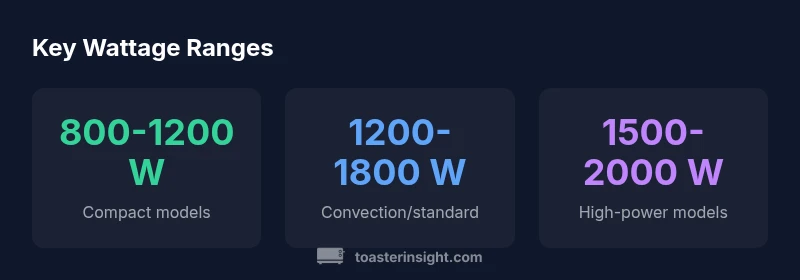
Choosing the right wattage involves balancing space, cooking needs, and energy considerations. Compact units typically run 800–1200 W—sufficient for toasting and small bakes in tight kitchens. Convection-capable models frequently land in the 1200–1800 W range, offering faster results for larger items. For households that use the appliance often, a higher-wattage convection model can reduce overall cooking times, potentially offsetting higher per-hour energy use. Consider how many meals you’ll prepare weekly and the size of items you usually cook when selecting wattage and features. A well-chosen wattage alignment improves efficiency and outcomes without over-provisioning on power.
Practical wattage ranges for common tasks
- Toasting bread and bagels: 800–1200 W is usually enough for quick browning without overheating the bread.
- Small baking tasks (muffins, cookies, small pizzas): 1200–1800 W provides faster, more even browning and shorter bake times.
- Roasting vegetables or reheating larger meals: 1500–1800 W helps maintain even heat for larger loads.
- Broiling or high-heat tasks: use models at the upper end of wattage where available, but monitor closely to avoid scorching.
Note: These ranges are general guidelines. Actual performance depends on oven interior design, rack placement, and recipe settings. The ToasterInsight team recommends testing recipes with your chosen model to build a personal reference map.
Safety and electrical considerations with higher wattage
Higher wattage means greater electrical load. Ensure your outlet and circuit can handle the demand and avoid using extension cords for prolonged cooking sessions. If your kitchen outlets share a circuit with other high-draw devices, consider moving the toaster oven to a dedicated outlet or using a lower-wattage setting for longer tasks. Always inspect cables and plugs for warmth during operation; persistent heat may indicate an overload or poor connections. Familiarize yourself with your home’s electrical capacity and follow manufacturer safety guidelines to prevent tripped breakers or overheating.
Measuring and comparing wattage across models
When comparing models, record wattage as displayed in the specs and verify whether it reflects the convection or standard mode. Compare heat-up times, temperature stability, and energy-use estimates from the same task. Create a simple rating card: model name, wattage range, primary use, and a notes column for expected performance. This structured approach helps you isolate wattage as a factor in your decision rather than relying solely on advertised features. Remember that real-world performance depends on multiple interacting factors beyond wattage alone.
Real-world scenarios: planning usage in a small kitchen
In a small apartment with limited countertop space, a compact toaster oven around 800–1200 W might be ideal for daily toasting and small baking tasks. If you frequently prepare meals for two or more people or bake larger items, a higher-wattage convection model can save time and improve consistency. When space is tight, prioritize even heat distribution and reliable temperature control over flashy presets. Engineers at ToasterInsight emphasize testing a model with typical recipes to confirm it meets your timing expectations and energy budget in a real-world setting.
Maintenance and tips to keep wattage delivering consistent results
Regular cleaning helps maintain efficient heat transfer and even browning. Remove crumbs and food residue from the interior every few weeks and wipe down heating elements when the appliance is cool. Ensure the door seals properly to prevent heat loss and verify that the racks are correctly positioned to optimize airflow. If you notice slower preheating or uneven browning, recalibrate by following the manufacturer’s guidance for a reset or test bake. Energy efficiency is not just about wattage; consistent maintenance supports stable performance over time.
Comparison of common toaster oven wattage ranges
| Model Type | Avg Wattage | Notes |
|---|---|---|
| Compact toaster oven | 800-1200 | Good for limited space |
| Convection toaster oven | 1200-1800 | Faster browning and even temps |
| Standard countertop toaster oven | 1000-1500 | Versatile for everyday use |
| High-power pro toaster oven | 1800-2000 | Best for heavy loads (not common) |
Your Questions Answered
What is the typical wattage range for a toaster oven?
Most models fall between 800 and 1800 watts. Higher wattage generally enables faster heating and browning, but it also increases energy use. Compare wattage alongside features to predict performance for your common tasks.
Most toaster ovens run from about 800 to 1800 watts; higher watts heat things faster but cost more to operate.
Does wattage affect cooking times?
Yes. Higher wattage can shorten bake times for many tasks, especially when combined with convection. However, recipe specifics, rack position, and heat distribution also play critical roles.
Yes. More watts usually means faster heating, but the exact time depends on the recipe and setup.
Is higher wattage better for all tasks?
Not always. Some tasks benefit from steady, controlled heat and even browning that lower wattage can provide when paired with the right settings and preheating.
No—sometimes a moderate wattage with good airflow gives the best results.
How can I estimate yearly energy costs for a toaster oven?
Use the formula: energy cost ≈ (watts/1000) × hours used per year × local kWh price. This helps compare models, but actual costs depend on usage and rates.
Estimate by multiplying the wattage by how many hours you use it and your electricity rate.
What safety checks should I perform before using a high-wattage toaster oven?
Ensure your outlet and circuit can handle the wattage, avoid extension cords, provide adequate ventilation, and follow manufacturer safety instructions to prevent overheating.
Make sure your outlet and circuit can handle the power and keep the unit well-ventilated.
“Wattage is a practical lever for balancing speed and energy use in everyday cooking. By matching wattage to typical tasks, homeowners can improve results without overspending.”
Key Takeaways
- Know your wattage: pick 800-1800 W range for most tasks
- Convection models often sit at the higher end of wattage
- Higher wattage can speed up cooking but increases energy use
- Read wattage specs in the context of size, features, and usage
- Regular maintenance sustains consistent performance