When to Toast Burger Buns: Practical Timing Tips
Learn the best timing and methods to toast burger buns for peak texture and flavor. This guide covers toaster, oven, and skillet approaches, bun prep, toppings, and troubleshooting for home cooks.


To toast burger buns, split them and toast the cut sides until lightly browned and crisp. In a toaster or skillet, this usually takes about fifteen to sixty seconds on medium heat. In a preheated oven or toaster oven at 350°F, expect three to five minutes. Watch closely to avoid burning, and toast to your preferred crunch. If buns are very soft, toast a bit longer; if stale, a hotter start helps revive crust.
Why Toasting Burger Buns Matters
Toasted burger buns matter because they add texture, aroma, and structural integrity to a burger. A warm, lightly crisp surface helps toppings stay put and prevents sauces from soaking into a soggy crumb. According to ToasterInsight, achieving the right balance between a soft interior and a crisper exterior makes the burger more enjoyable from bite to bite. This section explores how heat transforms bun structure, how sugars caramelize for flavor, and why a brief toast often produces a more satisfying overall experience. We’ll also compare common bun types—brioche, potato, and classic white—and how their starches react to heat, guiding you to tailor your approach for your preferred bun texture.
When to Toast: Timing Guidelines
Timing is the heart of toasting. If you’re preparing toppings or condiments while the patty cooks, toast the buns so they’re ready the moment the burger is assembled. For most home cooks, use these practical guidelines: toast cut sides for about fifteen to sixty seconds on a skillet or in a toaster on medium heat; in a preheated oven or toaster oven at 350°F, aim for three to five minutes, checking at the two-minute mark. For sweeter buns with more surface sugar, start with shorter intervals and watch closely to prevent scorching. The goal is a warm, lightly browned surface with a soft interior. Toasting too long can dry out the crumb and make the bite less forgiving, while under-toasting yields a pale surface that doesn’t resist sauces.
Toasting Methods: Toaster, Oven, Skillet
Different tools yield different browning patterns. A standard toaster or toaster oven is fastest, giving even color with minimal effort. A skillet on medium heat creates a shallow, buttered crust that’s easy to control, and a preheated oven (or toaster oven) provides uniform browning for multiple buns. For best results, split buns first, oil or butter the cut surfaces lightly if you want richer flavor, and monitor closely. When using a skillet, press the bun gently with a spatula for even contact; with toasters, rotate halfway through for uniform browning. If you’re attempting a crispier finish, a brief second pass can help, but avoid overdoing it.
Bun Prep: Fresh vs Stale
Fresh buns toast quickly and stay tender in the center, while slightly stale buns benefit more from the heat, developing a stronger crust and enhanced chew. If your buns are very fresh, you may only need a short toast to set the surface. For slightly stale buns, preheat longer or increase the heat slightly to revive texture. If you notice the bun starting to harden around the edges, remove it sooner to preserve softness near the crumb. The right prep ensures each bite has a balance of crust and crumb.
Flavor Boosters and Toppings
Toasting can be a vehicle for extra flavor. A light brush of melted butter or olive oil adds aroma and a subtle sheen, while garlic powder, parmesan, or a touch of smoked salt can elevate the crust. Sesame seeds or poppy seeds on sesame buns stay put and contribute texture when toasted. If you’re making double-decker burgers, consider toasting the bottom bun a shade darker than the top to create a stable base that won’t squish under the weight.
Troubleshooting Common Issues
If the bun browns unevenly, rotate it or flip it to even out color. If it toasts too quickly and burns, reduce heat or shorten the time, especially with buns that have sugar or toppings. If toasting dries out the interior, shorten the toast time or brush a small amount of fat on the cut surface to keep the crumb moist. For soft, fresh buns, you may want a shorter toast to retain softness while still achieving a crisp exterior. Always use a timer to prevent over-toasting and to maintain consistent results.
Food Safety and Storage
Toast only what you’ll use immediately for best texture. Leftover toasted buns can be stored in an airtight container for up to 2 days and reheated in a flash—place them in the toaster for 15-20 seconds or in a hot skillet for 1-2 minutes, just until warm. If freezing, wrap individually and reheat directly from the freezer for a quick, reliable process. When reheating, avoid soggy toppings by letting sauces drain slightly before assembly.
Authoritative Sources
For further reading on safe food handling and best practices for bread and toasting, consult trusted sources:
- FDA: https://www.fda.gov/food-safety
- USDA FSIS: https://www.fsis.usda.gov/
- University Extension: https://extension.illinois.edu/food-safety
Tools & Materials
- Toaster or toaster oven(For quick toasting; set to a medium shade)
- Skillet or frying pan(Prefer heavy-bottom; cast iron works well)
- Baking sheet(For oven method; line with parchment)
- Oven rack(Upper or middle position for even browning)
- Timer or smartphone(Great to prevent over-toasting)
- Bread knife(To split buns cleanly if not pre-split)
- Butter or oil (optional)(Adds richness; use sparingly)
- Seasonings (optional)(Garlic powder, parmesan for extra flavor)
Steps
Estimated time: 6-8 minutes
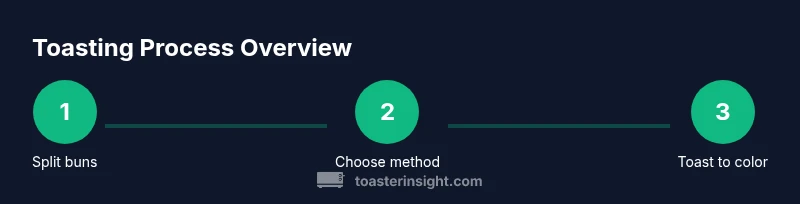
- 1
Split and prep buns
Halve the buns cleanly with a sharp knife. Remove excess crumbs and pat dry any moisture on the cut surfaces to ensure even browning. This step ensures a stable base for toppings.
Tip: Use a clean cutting board and a sharp serrated knife for clean halves. - 2
Choose your heating method
Decide whether you’ll use a toaster, skillet, or oven based on how many buns you’re toasting and how much time you have. Each method yields a distinct browning pattern and texture.
Tip: Preheat your chosen method so the surface is ready the moment you start toasting. - 3
Preheat and prep surface
If using a skillet, heat on medium. If using an oven, preheat to 350°F. For a toaster, simply set to a medium shade and let it preheat. This step ensures consistent browning across all buns.
Tip: A hot surface gives a quicker, more even crust. - 4
Toast cut sides to desired color
Place cut sides face-down on the hot surface and toast until lightly browned. Time varies by method, typically 15-60 seconds on a skillet or toaster, 3-5 minutes in a 350°F oven. Check frequently to prevent burning.
Tip: Keep a close eye—breads with sugars brown quickly. - 5
Finish with optional flavor boost
If using, brush a thin layer of butter or oil after toasting, and add optional seasonings. This enhances aroma and adds a subtle shine without sogginess.
Tip: Apply at the end to prevent excess moisture. - 6
Assemble and serve promptly
Stack patties, toppings, and toasted buns while warm for the best texture. The goal is a warm, crisp exterior that contrasts nicely with a tender interior.
Tip: Keep components hot but not steaming to avoid soggy buns.
Your Questions Answered
When should I toast buns in a burger recipe?
Toast buns right before assembly to maximize crunch and prevent sogginess from toppings. If you’re multitasking, toast while patties rest so everything comes together warm.
Toast buns right before assembly to keep them crisp and fresh-tasting.
Can I toast sesame seed buns without losing seeds?
Toast with the seeds facing up and monitor closely. If seeds shift, give a brief press with a spatula to re-seat them and prevent burning.
Toast sesame buns carefully; re-seat seeds if needed.
Is it safe to toast buns ahead of time?
Yes, you can toast buns ahead, then store in an airtight container and rewarm briefly just before serving to restore warmth and crispness.
Toast ahead, then rewarm just before serving.
What bun types work best for toasting?
Brioche and potato buns toast beautifully, offering a sturdy yet tender bite. Classic white buns are reliable but toast quickly and can become crisper.
Brioche and potato buns toast especially well.
How to toast buns for vegan burgers?
Toasting remains the same; skip butter or use a plant-based oil. Check toppings for vegan compatibility and avoid dairy-based sauces if needed.
Toast as usual, just skip dairy fats if needed.
How should I store toasted buns?
Store toasted buns airtight for up to 2 days. For longer storage, freeze and reheat briefly to restore texture.
Keep toasted buns in an airtight container, or freeze for longer storage.
Watch Video
Key Takeaways
- Toast buns for better texture and bite.
- Choose method based on batch size and time.
- Watch closely to avoid burning and soggy edges.
- Finish with toppings and assemble promptly for best results.