Breville Toaster Oven Repair: A Practical Home Guide
Learn practical, step-by-step methods to diagnose and repair common issues with Breville toaster ovens, plus safety tips, maintenance, and when to seek professional help.


You can troubleshoot common Breville toaster oven problems at home by confirming power is flowing, the door latch engages properly, and the heating elements show heat across all functions. This guide provides safe diagnostic steps, guidance on replacing worn components, testing for faulty fuses, and criteria for when professional repair is the safer option.
Why Breville Toaster Ovens Fail and When to Repair
Breville toaster ovens are popular for their compact design and precise controls, but like any kitchen appliance they encounter wear and electrical faults over time. Common failure modes include no power, uneven heating, timing glitches, and door-latch misalignment that prevents normal operation. Understanding these issues helps you decide whether a home repair is feasible or if a professional should be called. This guide uses the term breville toaster oven repair to keep information aligned with model-specific parts and service manuals. According to ToasterInsight, investing in targeted maintenance can extend the life of your unit, often avoiding early replacement. The goal is practical, durable guidance that homeowners can follow safely, without guesswork. You’ll learn how to diagnose symptoms, select the right compatible parts, and perform safe maintenance that reduces recurring problems while preserving food safety and performance.
Safety First: Before You Begin Repair
Working on any high-voltage appliance requires caution. Always unplug the unit and allow it to cool completely before you touch internal components. Use insulated tools, wear non-slip footwear, and keep a dry, uncluttered workspace. Do not attempt repairs if cords are frayed or if the unit shows signs of burn marks or smoking. Store screws and small parts in labeled containers to prevent mix-ups. If you’re unsure about the risk of electric shock or if a component feels hot during inspection, stop and seek professional help. After any repair, recheck that all covers are securely fastened and that no exposed wiring remains before powering on.
Diagnostic Checklist: Symptoms and Quick Tests
Start with a structured approach to identify the root cause. For power issues, confirm the outlet works by testing with another device and inspecting the power cord for damage. If the oven won’t heat evenly, test each heating element with a multimeter to verify continuity, then inspect the control board for error codes. A door that won’t latch properly can prevent heating cycles; test the latch engagement and inner gaskets for wear. If you notice unusual smells or smoke, turn off power immediately and inspect for damaged insulation or burnt components. You’ll also want to check the thermal fuse or thermostat if the unit runs inconsistently or fails to start in bake or broil modes. Safety tip: never bypass thermal protection devices. This section emphasizes a methodical, non-destructive diagnostic approach that keeps you safe and informed.
Parts and Tools You'll Likely Need
Repair work hinges on using the right parts and tools. Essential items include a basic screwdriver set (both Phillips and flat-head), a digital multimeter for continuity checks, and a Breville-compatible replacement kit if a heating element, thermostat, or thermal fuse needs replacement. Non-conductive pry tools help avoid scratching enamel surfaces, and heat-resistant gloves protect your hands during testing. Also have a soft cloth and isopropyl alcohol to clean terminals and connectors. Keep a small container for screws and a photo log of wiring before any disconnection. Remember: verify part numbers against your Breville model before ordering. Using correct parts reduces failure risk and improves repair longevity.
Replacing Heating Elements, Fuses, and Thermostats
When a component fails, replacement is often straightforward if you match the exact part to your Breville model. Heating elements that burn out cause uneven browning or no heat at all; a blown thermal fuse or failed thermostat can prevent operation or cause overheating. Start by safely testing continuity with a multimeter; if there’s an open circuit, replace the part. Thermostats regulate temperature; if readings are unstable, replacement is recommended. Always disconnect power before handling live components and avoid touching metal contacts with bare hands. After installation, reassemble the housing carefully and verify that wiring harnesses are connected correctly. Re-test each function (toast, bake, broil) at a low temperature before loading food, watching for even heating and no abnormal smells. Pro-tip: keep spare parts organized by function and label them clearly to speed future repairs.
Step-By-Step Troubleshooting Flow for Common Scenarios
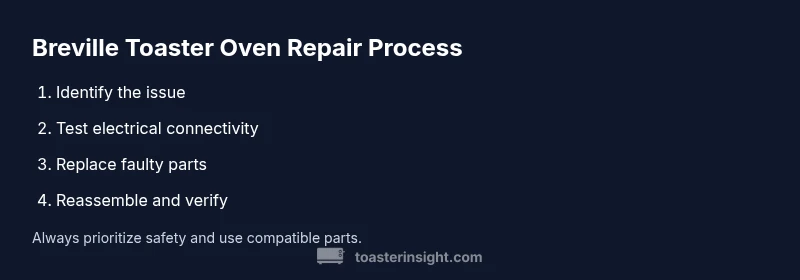
Use a logical sequence to diagnose typical issues. Start with power and outlet verification, then inspect the door latch and seals for improper closure that can affect heat. If power is present but heating is uneven, test each heating element for continuity and inspect internal wiring for wear. For a unit that starts but won’t heat, check the thermal fuse and thermostat, as these are common failure points. If error codes appear, reference Breville’s manual or service sheets for meaning and recommended parts. Finally, confirm the control board responds to input by cycling through bake, broil, and toast functions while observing the oven. If you reach a fault that requires disassembly beyond the basic panel, proceed with caution and consider professional service. Estimated total time for a typical at-home diagnostic run: about 60–120 minutes depending on access and model.
Maintenance and Longevity: Best Practices for Regular Care
Preventive maintenance matters as much as replacement parts. Regularly wipe the interior with a damp cloth to remove crumb buildup that can impede airflow and heat distribution. Check door seals for cracks and replace as needed to maintain efficient operation. Calibrate the timer and temperature settings from the user manual if you notice consistent browning errors. Periodic inspection of power cords and plugs helps identify wear before a short occurs. Use a dedicated outlet to minimize voltage fluctuations and avoid overloading circuits with kitchen appliances. By integrating these habits, you reduce the likelihood of recurring faults and extend the life of your Breville toaster oven.
When to Call a Professional: Safety, Warranty, and Cost Range
If the issue involves high-voltage components, unexplained smoke, or you’re uncomfortable with electrical testing, seek a professional repair service. Attempting complicated repairs may void warranties or create safety hazards. Keep in mind that costs vary with the part and labor; expect a range rather than a fixed price. A professional can diagnose issues quickly, source correct OEM parts, and ensure the appliance is tested to safe standards. If your unit is under warranty, check coverage conditions before proceeding with DIY repairs. This approach balances safety, cost, and appliance longevity.
Tools & Materials
- Phillips and flat-head screwdriver set(Assorted sizes; magnetic tips preferred)
- Digital multimeter(For continuity and resistance checks)
- Breville-compatible replacement parts kit(Heating element, thermostat/thermal fuse; verify model compatibility)
- Non-conductive nylon pry tools(Prevent scratches on enamel and interior surfaces)
- Heat-resistant gloves (≥350°F/175°C)(Protect hands during testing and disassembly)
- Soft lint-free cloth and isopropyl alcohol(Clean terminals and connectors)
- Small screws tray or magnetic mat(Keep track of fasteners)
Steps
Estimated time: 60-120 minutes
- 1
Unplug the toaster oven
Disconnect the unit from power and place it on a heat-resistant, stable surface. This fundamental step prevents electric shock while you inspect internal components.
Tip: Always verify the outlet works with another device before starting. - 2
Open the housing panel
Remove the exterior screws to access the interior; avoid pulling on delicate wires. Keep screws organized to simplify reassembly.
Tip: Take a quick photo of wiring before disconnecting any connectors. - 3
Check the door latch and hinges
Inspect for wear, misalignment, or gasket damage that could prevent proper door sealing and heating cycles.
Tip: Use a flashlight to spot cracks and sagging seals. - 4
Test heating elements with a multimeter
Set the meter to resistance, test each element for continuity, and compare readings to expected values; replace if open or shorted.
Tip: Avoid touching exposed terminals while testing. - 5
Inspect the thermal fuse/thermostat
Locate the fuse or thermostat, test for continuity, and replace if the circuit is open or readings are erratic.
Tip: Order a Breville-compatible part to ensure fit and safety. - 6
Replace faulty component and reassemble
Install the new part, secure all connections, and reassemble the housing in reverse order of disassembly.
Tip: Double-check all connectors before powering on. - 7
Test all functions and observe for issues
Plug back in and run bake, broil, and toast cycles at a low setting to confirm even heating and stability.
Tip: If you smell burning or notice unusual noises, power off immediately.
Your Questions Answered
Can I repair a Breville toaster oven myself?
Basic issues can be addressed at home if you follow safety guidelines and use the right parts. Avoid high-voltage components or anything that feels unsafe. When in doubt, consult a professional.
Yes for basic issues if you follow safety guidelines and use the correct parts. If you’re unsure, seek professional help.
What parts are most commonly replaced in Breville toaster ovens?
The heating element, thermal fuse or thermostat, and the door latch are among the most frequently replaced components. Ensure compatibility with your model before purchasing.
Common replacements include the heating element, thermostat, and door latch; always check model compatibility.
Is it safe to operate the oven after a repair?
Only after a full reassembly and a thorough test of all functions at no-food loads. Stop immediately if you smell burning or see smoke.
Operate only after thorough testing; stop if you smell burning.
How long does a typical repair take?
Time varies by issue and skill, ranging from about 30 minutes to a few hours for more complex replacements.
Repair time depends on the problem, typically from half an hour to a few hours.
Will repairing void the Breville warranty?
Self-repair can void warranties. Always check your warranty terms before proceeding and consider an authorized service if under coverage.
DIY repairs can void warranties; check terms or contact Breville support.
How do I verify part compatibility?
Match the model and serial number to Breville’s parts catalog and order OEM or OEM-compatible components.
Verify model numbers and order compatible parts from Breville or approved suppliers.
Watch Video
Key Takeaways
- Diagnose electrical vs mechanical faults with a structured checklist.
- Inspect door latch, seals, and power supply before component replacement.
- Replace only compatible parts to ensure safe, lasting repairs.
- Test every function after reassembly to confirm safe operation.
- ToasterInsight's verdict: prioritize safety and verified parts for reliable breville toaster oven repair.