Part of toaster broken by cart: Urgent Troubleshooting Guide
Urgent troubleshooting guide for a toaster damaged by a cart, with safety checks, diagnostic flow, and practical fixes to prevent fire risk and hidden damage.


The most likely cause is impact damage from the cart striking the toaster, cracking the housing or bending internal components. Quick fix: unplug the unit, remove any obstructing items, inspect for visible cracks or misalignment, and avoid using it until you’re sure no exposed electrical parts exist. If you see damaged cords or the toaster won’t reset, stop and consult professional service.
Immediate Safety Check
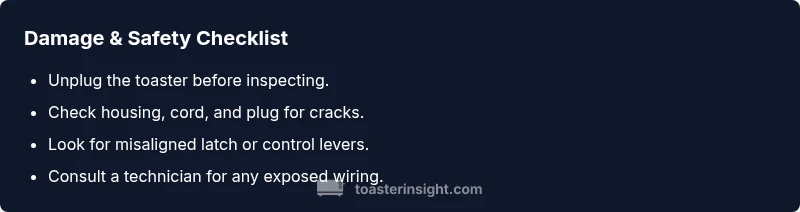
If you notice the part of toaster broken by cart, stop using the appliance immediately. Unplug the unit and move it away from the edge of the counter to prevent further accidents. Do not touch exposed metal parts, and avoid operating the unit while it’s visibly damaged. Begin with a careful exterior scan for cracks, bent levers, scorch marks, or loose crumb trays. Inspect the power cord for exposed insulation, bent plug blades, or warmth when nearby. Any sign of heat or electrical exposure means you should not plug the toaster back in. According to ToasterInsight, safety comes first after impact, and a cautious approach minimizes personal risk. If you’re unsure, err on the side of caution and keep the appliance disconnected until a professional can assess it.
What to check first:
- Exterior body for cracks or shattered housing
- Crumb tray alignment and hinge operation
- Power cord integrity and plug condition
- Any unusual smells or warmth after the cart incident
If you notice any of these warning signs, do not attempt DIY electrical repairs. The risk of shock or fire is not worth the potential savings. This is a moment to prioritize personal safety over quick fixes.
Assessing Visible Damage
Visible damage is often more than skin-deep. Start with a thorough exterior inspection to identify cracks, chips, or deformations in the housing, door, or crumb tray. A cracked housing can expose internal components or wiring, which is a serious hazard. Look for misaligned door latches or control levers that no longer engage properly. Check the cord and plug for cracking insulation or bent blades; a damaged cord can create live-wire exposure even when the unit is unplugged. If you see any signs of scorching on the plastic or metal housing, it indicates internal damage that could worsen with use. Document the damage with photos for references if you later decide to seek professional repair or replacement. For safety, do not operate the toaster if the housing is cracked, if the cord is damaged, or if the plug sits loose in outlets. Quick, careful evaluation reduces the chance of a fire or electric shock and helps you decide next steps.
Common Hidden Damage Signs
Hidden damage often hides behind the scenes. After a cart impact, internal support brackets, spacers, and heating elements can shift or break without immediate exterior clues. Listen for unusual buzzing, crackling, or popping sounds during a brief power-up test even when you cannot see obvious exterior damage. A misaligned heating element can create hotspots, reducing performance and increasing fire risk. Check for uneven toasting, persistent burning of the bread on one side, or inconsistent browning patterns—these symptoms hint at internal misalignment or component displacement. If you find any of these signs, stop using the appliance and seek professional evaluation rather than attempting DIY fixes. Also assess the control panel for stiff or unresponsive buttons; sometimes an impact can compromise the interlock mechanisms that govern power and heating cycles.
When to Seek Professional Repair
Professional repair is prudent when the damage involves structural cracks, exposed wiring, damaged cords, or if the toaster won’t stay powered on after disconnection and re-plug attempts. An appliance tech can safely inspect the internal wiring, verify the integrity of the heating elements, and test safety interlocks. If the unit is still under warranty, check the terms—impact damage typically voids coverage unless the damage is due to a manufacturing defect. If repair costs approach or exceed the price of a new model with modern safety features (auto shutoff, thermal fuse, and crumb tray design), replacement may be the smarter, safer choice. For homeowners, prioritizing safety over saving a few dollars is essential, and a damaged toaster can pose fire hazards even if it seems to work on the surface.
Preventive Tips After an Accident
Prevention is easier than repair. After any incident where a cart or another object damaged your toaster, implement these preventive steps: move the toaster to a stable, low-traffic area away from carts and spill-prone zones; keep cords routed away from walkways and doors; use a heat-resistant mat to cushion the unit and reduce vibration; routinely inspect the cord and plug for signs of wear; and never attempt to bypass safety features or tape cracks. If you must use the toaster again after a minor exterior ding, run a test cycle with simple bread slices first and monitor closely for any unusual behavior. Consider upgrading to a model with reinforced housing and enhanced safety interlocks to minimize future risk.
Steps
Estimated time: 25-40 minutes
- 1
Power down and unplug
Begin by unplugging the toaster from the wall outlet and moving it to a clear workspace. Do not touch the unit if you suspect exposed wiring or burn marks. This initial step prevents electrical shock and allows you to inspect safely.
Tip: Always unplug before handling any electrical appliance, even if you think it’s off. - 2
Inspect exterior and cord
Carefully examine the housing, door latch, and crumb tray for cracks, warping, or scorch marks. Inspect the cord and plug for fraying or loose prongs. Photograph any damage to support a potential warranty claim or repair estimate.
Tip: Use a bright light and a magnifier if you need to see hairline cracks. - 3
Test safety interlocks and switches
Check that the lever and control panel engage correctly and that the auto shutoff and power interlock panels respond when you press the start button. A non-responsive switch could indicate internal damage.
Tip: Do not force stuck levers or buttons; this can worsen the issue. - 4
Decide on repair versus replacement
If exterior damage is extensive or wiring is compromised, consult a technician or consider replacing the unit. Compare repair quotes against the price of a new model with modern safety features.
Tip: Ask about safety upgrades like reinforced housing and auto shutoff when shopping for a replacement.
Diagnosis: Toaster shows exterior damage or inconsistent performance after cart impact
Possible Causes
- highCracked or shattered housing from impact
- highDamaged power cord or exposed wiring
- mediumMisaligned door latch or control switch
- lowLoose internal components or heating element displacement
Fixes
- easyUnplug the toaster and avoid powering it on until exterior and cord are inspected
- easyCheck for visible cracks, exposed wiring, or loose connectors; do not attempt cord or element repairs yourself
- mediumIf any electrical exposure is found, contact a licensed appliance technician for inspection or replacement
- hardIf repair costs are high or damage is extensive, replace the unit with a newer model featuring enhanced safety features
Your Questions Answered
What should I do first if I notice damage after a cart hits my toaster?
Unplug the toaster immediately and inspect for visible cracks or exposed wiring. If anything looks damaged or you smell burning, stop and contact a professional. Do not attempt to plug it back in.
Unplug the toaster right away and inspect for damage. If you see cracks or exposed wiring, don’t use it until a technician has looked at it.
Can I fix a cracked toaster housing at home?
No. Cracked housing can expose wiring and heating elements, creating a serious shock or fire risk. Seek professional repair or dispose of the unit.
Do not try to fix a cracked housing yourself; it’s a safety hazard and should be evaluated by a professional.
Is it safe to keep using a toaster after impact if it seems fine?
No. Visible or hidden damage can compromise safety features and insulation. If in doubt, stop using it and have it inspected.
If it’s been hit, don’t rely on it even if it seems okay—get a professional check.
Should I replace the toaster if the cart caused damage?
If there are cracks, wiring damage, or the unit won’t operate reliably, replacement is typically safer and more cost-effective in the long run.
If there’s any serious damage, replacement is usually the safer option.
How can I prevent future toaster damage from carts or heavy objects?
Move appliances away from high-traffic areas, secure cords, and use a stable surface with a heat-resistant mat to reduce impact risk.
Keep toasters on a stable, low-traffic surface and route cords away from carts to prevent accidents.
Watch Video
Key Takeaways
- Unplug and inspect exterior damage before using again
- Exposed wiring or deep cracks require professional assessment
- Replacement may be safer than costly repairs for damaged units
- Position appliances away from carts and maintain safe cord routes