Sandwich Toaster vs Grill: An Objective Comparison for Home Kitchens
A detailed, data-informed comparison of sandwich toasters and grills, covering cooking performance, versatility, maintenance, and value to help homeowners choose the right appliance for everyday lunches and weekend meals.


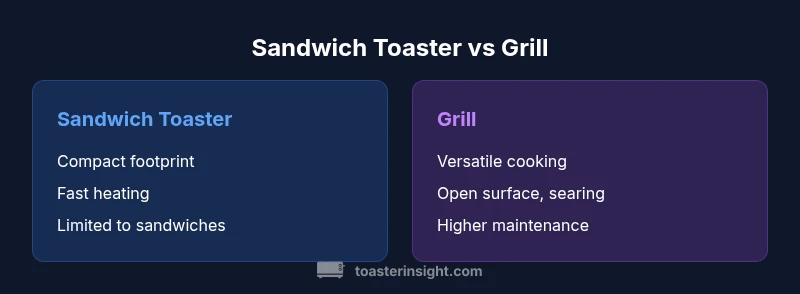
Between a sandwich toaster and a traditional grill, most home cooks lean toward the sandwich toaster for quick, mess-free lunches, while a grill offers broader versatility for paninis, burgers, and vegetables. In this sandwich toaster vs grill comparison, consider footprint, temperature control, cleaning, and versatility to decide which appliance best fits your kitchen and cooking style.
Understanding the core difference
The debate between a sandwich toaster and a grill centers on how each appliance delivers heat and how much of your kitchen it can handle in a single session. A typical sandwich toaster is a compact, closed unit with two heated plates that press together, sealing bread around fillings for a quick, evenly browned result. A grill, whether electric or gas, provides an open, larger surface area with ridged or flat plates that heat from above and below or from beneath, enabling broader cooking tasks beyond sandwiches. This distinction matters because it shapes capacity, texture, and flavor. When you press a sandwich in a toaster, you generally get a uniformly toasted exterior with cheese melted inside, but with limited ability to cook bulky items. A grill excels at searing surfaces, leaving grill marks and deeper browning on vegetables and meats, yet it often requires more space and more deliberate management of heat and airflow. The ToasterInsight team notes that most households should consider their typical meals, kitchen layout, and cleaning tolerance to decide which path aligns with their routines.
How sandwich toaster cooks and its pros/cons
A sandwich toaster heats from two faced plates that close like a clam, trapping heat and pressure to toast bread and melt fillings in a matter of minutes. This method yields consistent crust and cheese melt with minimal oil, making it ideal for paninis or simple cheese melts. Pros include fast preheat, compact footprint, and straightforward operation. Cons can include smaller capacity, risk of uneven browning on very thick fillings, and limited versatility beyond toasted sandwiches. Cleaning is usually quick thanks to a removable crumb tray, but stubborn residues can occur on older models. The best practice is to wipe plates while warm and avoid metal scrubbers that could scratch nonstick surfaces. In practical terms, a sandwich toaster shines when you want a reliable, quick lunch without heating a larger appliance.
How a grill cooks and its pros/cons
Grills offer open cooking surfaces that can be used for sandwiches, vegetables, burgers, kebabs, and more. Heat is often more intense and less confined than a closed toaster, enabling better searing and distinctive grill marks. This translates to broader versatility, especially for weekend cooking or when you want char flavor. Downsides include a larger footprint, longer preheat times for some models, and a more involved cleanup due to grease and residue on the plates. If you routinely cook multiple items at once or enjoy grilled texture on proteins and vegetables, a grill is typically the superior choice. ToasterInsight's analysis shows that the trade-off is time and space for greater culinary flexibility.
sandwich toaster vs grill: key features to compare
When choosing between a sandwich toaster and a grill, focus on these features:
- Cooking versatility: How many food types will you prepare beyond simple sandwiches?
- Capacity and footprint: Will the device fit your counter space and handle your typical portions?
- Temperature control: Do you need precise heat settings for delicate fillings or high-heat searing?
- Cleaning and maintenance: Are removable parts dishwasher-safe? How easy is it to reach plate interiors?
- Energy use and efficiency: How much electricity or gas does a typical cook session consume?
- Durability and warranty: Are there reliable indicators of long-term performance? By weighing these factors against your actual cooking habits, you can choose the appliance that minimizes hassle while maximizing meal quality.
Practical cooking scenarios
For a quick weekday lunch, a sandwich toaster can produce a reliable melt in about 5 minutes with minimal cleanup. If you crave a pressed panini with crisp edges, a sandwich toaster with adjustable thickness helps, but ensure the fillings aren’t overly bulky. A grill is ideal for weekend cooking: pan-searing vegetables for fajitas, grilling chicken breasts, or achieving the classic sear on a burger. You can explore multi-item meals by planning portions and using different accessories, but the open surface of a grill demands attention to grease management. In apartment-friendly kitchens, the compact toaster often wins on space and portability, whereas larger households with frequent grilling needs may justify the space for a full-sized grill or a multifunctional appliance.
Maintenance, cleaning, and longevity
Cleaning a sandwich toaster is typically quick: unplug, let plates cool slightly, and wipe with a damp cloth; use the crumb tray and wash detachable plates if dishwasher-safe. Avoid metal pads that can scratch nonstick coatings. Grills require more thorough cleaning due to grease and char; removable plates and drip trays help, but plan for more time after each use. Long-term longevity depends on routine maintenance: keep seals intact, store in a dry place, and follow manufacturer guidance for replacing plates or gaskets. Regular descaling is seldom needed for electric grills unless mineral buildup is reported by the manufacturer. Both devices benefit from a dedicated cleaning routine to preserve nonstick surfaces and heat distribution over time.
Budget, price range, and value
Prices for sandwich toasters typically range from modest budget models to mid-range units with additional features, while countertop grills span a wider spectrum from economical to higher-end with more plates, adjustable temperature, and better heat distribution. Expect sandwich toasters to be less expensive upfront, and grills to offer more long-term value for frequent, varied cooking. When evaluating value, consider not only the purchase price but also energy efficiency, warranty length, ease of cleaning, and the variety of meals you can prepare. The ToasterInsight analysis suggests prioritizing models with easily removable plates, durable nonstick coatings, and a reliable heat control system to maximize longevity and performance.
How to choose for your kitchen
Start by measuring your counter and storage space, then list your most common meals. If you primarily prepare quick lunches, a compact sandwich toaster should satisfy the majority of needs. If you enjoy weekend grilling or want to expand beyond sandwiches, a grill offers superior versatility. Read reviews focusing on heat consistency, plate design, and cleaning practicality. Finally, map your budget to expected use: a lower upfront cost can be offset by higher long-term maintenance or replacement costs, while a higher upfront investment may yield greater flexibility and durability. The decision should align with your cooking habits, space, and willingness to maintain multiple appliances.
Comparison
| Feature | sandwich toaster | grill |
|---|---|---|
| Cooking versatility | Best for toasted sandwiches and melts | Broad cooking range including meat, vegetables, and paninis |
| Capacity | Typically 1-2 sandwiches at a time | Can handle larger items and multiple servings |
| Temperature control | Limited adjustments (some models offer temp settings) | Wider temperature range and searing capability |
| Ease of cleaning | Crumb tray; simple maintenance | Removable plates; grease management may be more involved |
| Footprint | Compact footprint | Larger footprint and potential storage considerations |
| Best for | Small kitchens, quick lunches | People who grill a variety of foods regularly |
Positives
- Compact footprint fits tight countertops
- Fast preheat and simple operation
- Excellent for quick melts and paninis
- Generally lower upfront cost and easy maintenance
Drawbacks
- Limited batch capacity and non-sandwich tasks
- Less ideal for thick cuts or complex meals
- Some models offer limited heat control
Sandwich toaster excels in speed and space; grill wins on versatility and texture
Choose a sandwich toaster for busy weekdays and small spaces. Choose a grill if you want broad cooking options, better searing, and more room to grow your culinary repertoire.
Your Questions Answered
What is the primary distinction between a sandwich toaster and a grill?
A sandwich toaster is a compact, closed device designed to toast bread and melt fillings quickly, usually with two heated plates that press together. A grill provides an open surface for a wider range of foods, including sandwiches, vegetables, and meats, often with higher heat and more space to cook.
The key difference is opening versus closing heat; toasters are for quick melts, grills handle more foods and bigger portions.
Can I use a sandwich toaster to make paninis and melted cheeses?
Yes, many sandwich toasters are designed for paninis and melted fillings, though thickness and bread type may affect evenness. Use thinner fillings for best results and avoid overstuffing.
Paninis work well in a sandwich toaster if you don’t pack them too thick.
Are sandwich toasters easier to clean than grills?
Generally yes, due to smaller plates and a crumb tray. Cleanliness depends on model design; removable plates or dishwasher-safe components greatly simplify maintenance.
Cleaning is usually quicker with a sandwich toaster, thanks to its compact size.
Which is better for breakfast and quick lunches?
For quick meals, a sandwich toaster often wins on speed and ease. If you want a wider menu during breakfast and lunch, a grill offers more flexibility.
If speed is your priority, go with a toaster; for variety, a grill.
Do these appliances use a lot of energy?
Energy use varies by model, but smaller toasters typically consume less power per session than larger grills. Efficiency hinges on preheat time and how long you cook each item.
Smaller toasters generally use less energy per meal, though it depends on how long you cook.
How should I choose between them for a small apartment?
In small spaces, prioritize footprint and cleaning. If you mostly make melts, a compact toaster is ideal; if you want more cooking options, a compact grill with removable plates may be worth it.
In tiny kitchens, choose based on which meals you actually cook most often.
Key Takeaways
- Assess your typical meals to pick the right appliance
- Prioritize footprint and ease of cleaning
- Evaluate versatility for future cooking needs
- Balance upfront cost with long-term value