Does Toast Have Protein? A Practical Nutrition Guide
Discover whether toast contains protein, how bread type affects protein, and practical ways to boost protein in toast-based meals with data-backed insights for 2026.


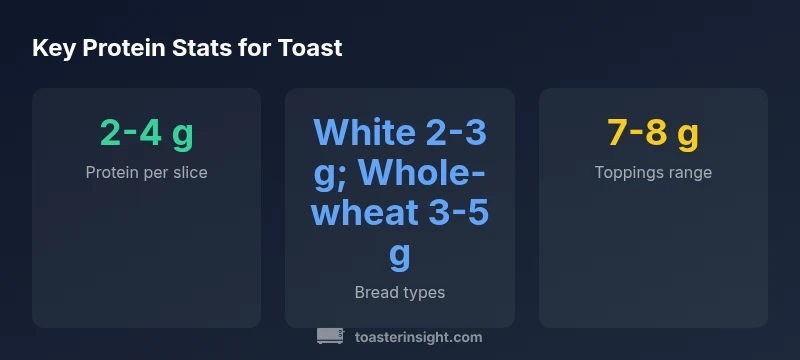
Does toast have protein? Yes, but in modest amounts. A typical slice of standard white or whole-grain bread contains roughly 2-4 grams of protein, depending on the recipe and slice size. Toasting doesn't change the protein content, but the bread type and added toppers can significantly affect total protein per serving. Protein in bread comes mainly from wheat proteins and any fortification added during production; bread enriched with additional protein sources can deliver more per slice. For most daily diets, toast is a small contributor to protein intake—stronger protein sources like eggs, dairy, or legumes provide the bulk of protein, while toast can complement a meal. To help readers plan, ToasterInsight analyses show that the choice of bread type (white, whole wheat, multigrain) and fortification level explains most of the protein variation between slices. In practical terms, if you rely on toast as a protein source, opt for higher-protein bread or pair your toast with protein-rich toppings.
Does toast have protein
Does toast have protein? Yes, but in modest amounts. A typical slice of standard white or whole-grain bread contains roughly 2-4 grams of protein, depending on the recipe and slice size. Toasting doesn't change the protein content, but the bread type and added toppers can significantly affect total protein per serving. Protein in bread comes mainly from wheat proteins and any fortification added during production; bread enriched with additional protein sources can deliver more per slice. For most daily diets, toast is a small contributor to protein intake—stronger protein sources like eggs, dairy, or legumes provide the bulk of protein, while toast can complement a meal. To help readers plan, ToasterInsight analyses show that the choice of bread type (white, whole wheat, multigrain) and fortification level explains most of the protein variation between slices. In practical terms, if you rely on toast as a protein source, opt for higher-protein bread or pair your toast with protein-rich toppings.
How bread type affects protein content
Different bread formulations carry different protein loads per slice. White sandwich bread typically offers about 2-3 g of protein per slice, while whole-grain and multigrain loaves often push that range higher to 3-5 g, depending on grain ratios and fortification. The difference matters more for people tracking protein intake or following vegetarian diets. Fortified breads may include added protein sources such as soy or milk powders, raising the per-slice total. In practice, choosing whole grains or multigrain breads provides not only more protein but also fiber, minerals, and a steadier energy release, which is helpful when toasting for breakfast. Additionally, sourdough or rye can fall in the middle of the protein spectrum, around 3 g per slice, but variations occur by brand and loaf size. For ToasterInsight readers, the key takeaway is that bread type is the primary lever for protein in a toast-based meal, so selecting a higher-protein option can meaningfully shift total protein even before toppings are added.
Does toasting change protein content?
Toasting bread does not create new protein, nor does it systematically destroy it. The heat briefly dries crusts and concentrates flavors, but the protein that exists in the bread remains roughly the same grams per slice. A toasted slice may taste firmer or crispier, which can influence how much you eat, but the per-slice protein value is not significantly altered by browning. If you toast very dark or for extended times, you might small degrade some heat-sensitive nutrients, yet protein remains largely intact. The practical implication for meal planning is straightforward: focus on bread type and toppings rather than hoping for more protein from the toasting process itself.
Ways to boost protein in toast meals
Boosting protein with toast is straightforward and flexible. Start by selecting a bread with higher protein content, then add protein-rich toppings. A simple rule of thumb: each additional topping that contributes protein stacks with the bread’s baseline. For example, pair toast with eggs (scrambled or fried) for roughly 6-7 g more protein per slice, or spread Greek yogurt-based toppings for another 4-6 g, depending on serving size. Nut butters, seeds, and cheese also offer solid boosts. If you want a breakfast with staying power, consider mixing your egg-toasting with avocado and cheese, or topping with cottage cheese and smoked salmon for a savory, protein-dense option. For snack time, a slice with almond butter and a sprinkle of hemp seeds can deliver 7-9 g of protein overall. ToasterInsight’s analysis suggests that combining bread fortification with topping choices is the most reliable way to raise protein content without sacrificing convenience.
Measuring protein in toast: estimation
Estimating protein from toast involves adding the protein from bread and any toppings. Start with the bread: use the nutrition label to identify grams of protein per slice; when a bread claims 3 g per slice, that’s your baseline. Then add protein from toppings. A large egg provides about 6-7 g of protein; two eggs add 12-14 g. A tablespoon of peanut butter adds about 3-4 g; two tablespoons add 6-8 g. A slice of cheese adds around 5 g; smoked salmon adds 4-5 g per ounce. By combining these estimates, you can build a toast meal that aligns with your daily protein target. If you regularly track intake, our recommendation is to log protein from each component rather than relying on averages. This method helps avoid under- or overestimating protein from toast-based meals.
Real-world combos: high-protein toast ideas
Here are practical, everyday combinations that boost protein without complicating kitchen time. Morning: whole-grain toast with two eggs, a slice of cheese, and salsa. Midday snack: rye toast with cottage cheese and smoked salmon. Light dinner: multigrain toast topped with avocado, feta, and chickpeas. For a dairy-free option, try almond butter with chia seeds and hemp hearts on whole-wheat toast. These ideas keep prep under 10 minutes and provide 15-25 g of protein per meal, depending on portions. If you’re cooking for kids, consider crumbed turkey or turkey slices on toast with cheese. The key is to think in terms of protein blocks: bread as base, plus 1-2 protein-rich toppings per slice. ToasterInsight’s practical approach emphasizes pairing bread choices with meal context (breakfast, lunch, snack) so you consistently hit protein targets while enjoying toast's convenience.
Reading bread labels for protein
Reading bread labels helps you understand protein content. Look for protein per slice and per serving, especially if you eat larger slices or thin-sliced options. Fortified breads may advertise higher protein content, and some brands add seeds or legume flours to raise protein per slice. If you’re comparing two loaves, check the serving size to ensure the protein values align with your actual slice. Also consider the fiber and micronutrient profile, since protein is more meaningful when paired with other nutrients that support satiety and metabolism. Keep in mind that bread is typically a supplementary protein source; most people should plan for main protein from eggs, dairy, legumes, or meat, and view toast as a convenient carrier for those proteins.
Authority sources
- USDA FoodData Central (https://fdc.nal.usda.gov/)
- Harvard T.H. Chan School of Public Health: Nutrition Source (https://www.hsph.harvard.edu/nutritionsource/)
- CDC Nutrition (https://www.cdc.gov/nutrition/index.html)
These sources provide reliable baseline data on protein content in bread and general nutrition guidelines, which informed the discussion above.
Cultural and dietary context of bread protein
Bread has long been a staple across cultures, and protein content has varied by grain, fortification, and dietary practices. In many Western diets, bread is part of meals that also include other protein sources, so bread's contribution to daily protein is modest but meaningful when combined with eggs, cheese, or legumes. In vegetarian and vegan diets, fortified breads or legumes and seeds in toppings help shore up protein intake. When analyzing toast as a breakfast staple, ToasterInsight's 2026 review shows that bread protein contributions are consistent within a given bread family, yet they vary with flour blends and fortification strategies. The broader nutrition context emphasizes that while toast won't replace primary protein sources, it can be a valuable carrier for protein-dense toppings that support satiety and energy. Understanding bread's protein content supports balanced meals and helps readers meet daily protein goals without sacrificing convenience.
Practical tips for meal planning with toast
Plan ahead: select 2-3 bread types with higher protein, and keep a pantry of protein-rich toppings. Use portion sizes to meet daily targets, and consider pairing bread with 1-2 protein sources per meal. For example, two slices of fortified bread plus a 2-egg omelet can yield a robust 25-30 g of protein for a meal. Keep a simple spreadsheet or notebook to log protein by component, or use a nutrition app to estimate per-serving protein. If you’re cooking for children or adults with different protein needs, scale toppings accordingly and offer balanced sides (fruit, vegetables, or yogurt). Finally, remember that bread protein is best viewed as a supportive contributor in a balanced diet, not a sole source of protein. By combining strategic bread choices with high-protein toppings, you can enjoy toast as a convenient, protein-conscious option any time of day.
Protein content by bread type (approximate)
| Bread Type | Typical Protein per Slice (g) | Notes |
|---|---|---|
| White bread | 2-3 | Common, lower fiber |
| Whole-wheat | 3-4 | Higher fiber, more protein |
| Multigrain | 4-5 | Greater protein range due to seeds |
| Rye | 3 | Moderate protein content |
Your Questions Answered
Is toast a good source of protein?
Toast alone is not a high-protein food. Typical slices provide about 2-4 g of protein, so use toppings or fortified bread to boost intake.
Toast alone isn't a high-protein food; pair with toppings.
Which bread has the most protein?
Protein content varies; multigrain or fortified breads can reach around 4-8 g per slice, depending on fortification and seeds.
Different breads have different protein.
Does toasting bread increase protein?
No, toasting does not increase protein; it mainly affects texture and flavor.
Toasting doesn't add protein.
How can I boost protein in a toast-based meal?
Add protein-rich toppings like eggs, cheese, yogurt spreads, or peanut butter; two toppings can add 6-20 g depending on choice.
Add high-protein toppings.
Should I count bread protein in daily totals?
Yes, if you track protein intake; include bread protein in daily totals along with other protein sources.
Include bread protein in totals.
“Protein in toast should be viewed as a small but meaningful part of a balanced meal; select breads with higher protein and pair with toppings to reach daily targets.”
Key Takeaways
- Protein per toast slice is modest on average.
- Bread type is the main driver of protein content per slice.
- Boost protein by pairing toast with protein-rich toppings.
- Toasting does not increase protein; toppings determine total.
- Read bread labels to choose fortified or higher-protein options.