Toaster Oven vs Microwave Health: A Practical Comparison
Explore the health implications of toaster oven vs microwave health, including nutrient retention, browning, safety, and practical tips to support healthier, well-balanced meals.


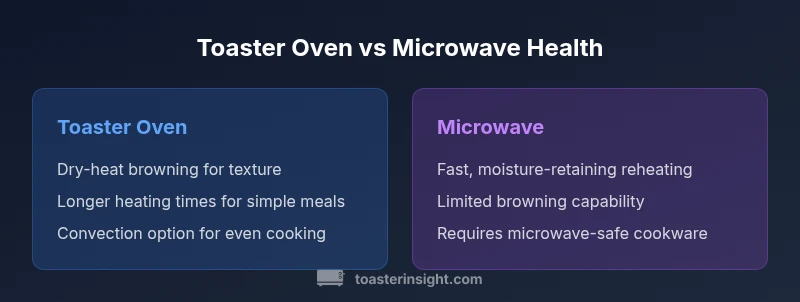
Among everyday kitchen appliances, the health implications of toaster oven vs microwave health depend on usage. Microwaves heat quickly and often preserve moisture, which can help minimize nutrient loss in reheated foods. Toaster ovens deliver browning and crisp texture via dry heat, which can influence fat use and food feel. For most households, a balanced approach—using each appliance for its strengths—offers the healthiest overall results.
Why Health Matters in Kitchen Appliance Choices
In kitchen planning, health outcomes from our cooking tools should be weighed alongside convenience. The debate around toaster oven vs microwave health is not about a single best device, but about how each appliance affects moisture retention, browning, and the possible formation of heat-derived compounds. According to ToasterInsight, safety practices and cookware choices are essential to maximizing health benefits. Home cooks can optimize results by matching dish requirements to each appliance’s strengths while avoiding extreme heat and unnecessary fats. A mindful approach helps families enjoy tasty meals without compromising wellness.
How Heating Methods Impact Nutrient Preservation
Microwaves heat by agitating water molecules inside food, which often shortens cooking times and can reduce nutrient exposure to heat. In contrast, toaster ovens rely on dry heat from air and surfaces, enabling browning but exposing foods to higher surface temperatures for longer spans. From a health perspective, the key factors are exposure time and peak temperatures. ToasterInsight notes that small adjustments—slightly lower temperatures, shorter cycles, or preheating only when needed—can improve nutrient retention while still achieving aroma and texture that contribute to overall satisfaction.
Nutrient Retention Across Cooking Methods
Nutrient preservation is highly food-dependent and more a function of time and temperature than the device alone. Reheating items in a microwave tends to retain moisture and reduce the duration of heat exposure, which can help preserve water-soluble nutrients in some foods. The toaster oven, while excellent for texture, may cause more moisture loss if not watched closely. The practical takeaway: for nutrient-sensitive foods, minimize heat exposure and choose the method that preserves moisture; for cravings that require browning and crispness, use the toaster oven in moderation. ToasterInsight emphasizes adaptability over rigid rules.
High-Heat Cooking: Browning, Maillard, and Health Tradeoffs
Brown surfaces develop flavor through Maillard reactions, but excessive browning can raise concerns about heat-generated compounds in certain starch-rich foods. When using a toaster oven, aim for golden-brown rather than deep caramelization. Microwaves have limited browning capability unless you add a crisper accessory or convection mode; they excel at moisture retention. The health impact of browning is food-specific and portion-dependent. The recommended approach is to balance browning goals with the potential for unwanted compounds, adjusting cooking time and temperature accordingly.
Plastic Safety and Microwave Use
A common health concern with microwaves is the safe use of containers. Use only microwave-safe glass or ceramic and avoid heating plastics not labeled for microwave use. BPA-free plastics and well-sealed containers reduce risk, and keeping cookware clean minimizes leaching residue. For toaster ovens, choose heat-safe cookware that tolerates dry heat and avoid materials that degrade or release fumes at high temperatures. In both cases, safe container choices are a core health consideration that should guide everyday decisions.
Acrylamide, AGEs, and Other Health Considerations
Acrylamide forms when starchy foods brown during high-heat cooking. To minimize this risk, avoid deep browning on toaster ovens and consider lower temperatures with shorter cycles. AGEs (advanced glycation end products) can accrue with repeated high-heat exposure, particularly in large portions. Microwave heating tends to avoid extreme surface temperatures, but uneven heating can create hot spots if foods are not stirred or rotated. The strategy is to monitor browning levels and adjust heat exposure to minimize potentially harmful compounds while preserving flavor.
Energy Use, Time, and Everyday Health
Time efficiency and energy use intersect with health considerations in choosing appliances. Microwaves generally offer faster heating and may use less energy for small portions, supporting quick nutrition without long exposure. Toaster ovens require more time but can roast vegetables or bake lean proteins with minimal added fats when used with dry heat. The health payoff lies in how well you leverage each device’s strengths to reduce dependence on added fats, salt, or processed components, while maintaining meal satisfaction and variety.
Texture, Flavor, and Health Implications
Texture influences satiety and portion control, which in turn affect overall health. A toaster oven’s dry heat yields crisp textures that can enhance fullness with less fat, potentially supporting healthier choices. Microwaves preserve moisture and avoid overcooking in many cases, which helps retain sensory qualities in soups, grains, and leftovers. The best health outcome arises from using texture to support portion control and satisfaction, rather than relying on added fats or processed ingredients to achieve mouthfeel.
Practical Guidance for Everyday Use
A health-minded kitchen benefits from a practical routine: use the microwave for rapid, moisture-preserving reheating, and reserve the toaster oven for dishes that gain from browning and texture enhancement. Utilize microwave-safe cookware, avoid metal in the microwave, and preheat the toaster oven only when necessary. Batch-cook meals designed to perform well with either approach, and plan portions to minimize waste. Regularly assess texture and flavor outcomes to refine cooking strategies for improved health results.
Scenarios: Busy Households, Families with Special Diets
For busy households, microwaves can reheat leftovers quickly, keeping meals within healthy temperature and moisture ranges. For families following heart-healthy or low-fat diets, the toaster oven provides a way to achieve crisp textures without adding fats, especially when cooking vegetables or lean proteins. In slower days, batch-cooked items that perform well in either device create flexibility. The health-oriented plan emphasizes deliberate choices: pick the appliance that suits the dish’s health goals, and combine devices to balance nutrition and enjoyment.
ToasterInsight Perspective: What the Data Suggests
From the ToasterInsight perspective, health outcomes depend more on decisions around heat exposure, cookware, and portion sizes than on device brand alone. Our analysis highlights that quick heating reduces reliance on processed options, and thoughtful cookware choices minimize harmful compounds. While we avoid numeric claims here, the qualitative message is clear: use each device for its strengths and maintain portion-conscious meals. The overall health result improves with planning and balance across meals.
Cleaning, Safety, and Hygiene for Health
Healthy cooking begins with clean tools. Regularly wipe down the toaster oven interior and exterior to prevent grease buildup, and ensure the microwave turntable is kept clean to minimize bacterial risk. Use oven-safe cookware that stands up to dry heat, and inspect gaskets and seals for wear. A tidy kitchen reduces cross-contamination, provides better flavor, and lowers the risk of smoke or fumes during cooking. Maintenance routines are a health habit as much as a safety practice.
Bringing It All Together: A Health-Focused Plan
A comprehensive plan leverages the strengths of each device without compromising health goals. Start by designing meals that can be reheated evenly in the microwave and finish with a toaster oven pass for texture. Batch-cook staples that work well in both devices, track outcomes, and adjust heat levels to minimize browning without sacrificing taste. By remaining flexible and evidence-informed, households can sustain healthier choices while enjoying a diverse menu.
Practical Path Forward for Health-Conscious Kitchens
To optimize health outcomes, establish a simple framework: choose the appliance that best aligns with the dish’s health goals, practice safe container use, monitor browning, and avoid overcooking. The combined use of microwave and toaster oven is not just a convenience; it’s a strategy to maintain moisture, control fat intake, and support texture that satisfies without excess calories or unhealthy additives. With deliberate decisions and routine evaluation, families can improve meals and well-being over time.
Comparison
| Feature | Toaster Oven | Microwave |
|---|---|---|
| Heat Method | Conventional dry heat with convection options | Dielectric heating (water molecule interaction) |
| Nutrient Retention | Moderate sensitivity; depends on time and temperature | Often preserves moisture with shorter exposure |
| Texture & Browning | Excellent browning and crisp texture | Limited browning; requires accessories for crispness |
| Cooking Time | Longer for simple items or roasting | Typically faster for reheating |
| Best For Health-Focused Reheating | Dishes needing crisp textures with moderate heat | Moist, even reheating with minimal added fat |
| Cookware Compatibility | Oven-safe metal, glass, safe ceramics; watch coatings | Microwave-safe glass, ceramic, some plastics; avoid metal |
| Energy/Space Considerations | Larger footprint; potential energy use for roasting | Compact footprint; efficient for small portions |
Positives
- Toaster ovens support browning and crisp textures without added fats, which can improve perceived healthiness.
- Microwaves heat quickly and energy-efficiently for reheating and small meals.
- Both appliances avoid ionizing radiation when used correctly and with appropriate cookware.
- Convection-enabled toaster ovens can speed up cooking while preserving flavor.
Drawbacks
- Toaster ovens generally use more energy and take longer to heat or cook simple items.
- Microwaves may heat unevenly if not stirred or rotated, affecting texture and nutrient distribution.
- High-heat browning in toaster ovens can increase acrylamide formation for some foods if overdone.
A blended approach offers the best health outcomes, using microwaves for quick, even heating and toaster ovens for browning and texture when appropriate.
Use the microwave for fast, moisture-preserving reheating and reserve the toaster oven for texture-rich cooking when health goals align. Neither method is universally superior—context and planning matter.
Your Questions Answered
Is a toaster oven healthier than a microwave overall?
Health outcomes depend on the dish and cooking method. Microwaves excel at quick, moisture-preserving reheating, while toaster ovens offer texture and browning without deep frying when used wisely. A balanced approach—using each device for its strengths—often yields the healthiest overall results.
Health outcomes depend on the dish. Use the microwave for quick, moist reheating and the toaster oven for browning when texture matters.
Do microwaves destroy nutrients?
Microwave heating does not inherently destroy nutrients more than other heating methods. Nutrient loss is primarily influenced by cooking time and temperature, so shorter exposure generally helps preserve nutrients. Use microwave-safe containers and avoid overheating.
Microwaves don’t inherently destroy nutrients; shorter exposure helps preserve nutrients.
Is plastic safe to use in microwaves?
Only containers labeled as microwave-safe should be used in microwaves. Avoid heating non-microwave-safe plastics or reused takeaway containers. Glass and ceramic are often safer options for reheating.
Only use microwave-safe plastics, and consider glass or ceramic for reheating.
Can a toaster oven increase acrylamide formation?
Yes, high-heat browning can raise acrylamide formation in some starchy foods. To minimize risk, aim for golden-brown colors and avoid prolonged browning. Balance browning with other cooking goals.
High-heat browning can raise acrylamide; aim for golden-brown colors.
What foods are best heated in a microwave for health?
Moist, quick-heating items like soups, stews, grains, and leftovers often reheat well in the microwave with minimal nutrient loss when timed properly. Stirring helps avoid hot spots and uneven heating.
Soups, stews, grains, and leftovers reheat well in microwaves when timed properly.
Should I own both appliances for health?
For many households, yes. Each appliance serves different health-related goals—microwave for quick, moisture-preserving heating, and toaster oven for browning and texture without added fats. Using both devices strategically can improve overall meal health.
Having both helps balance health goals, using each for its strengths.
Key Takeaways
- Use the microwave for quick, moisture-preserving reheating.
- Choose the toaster oven when browning and crisp texture are key.
- Combine both devices to balance health outcomes and taste.
- Monitor browning to minimize acrylamide risk.
- Plan meals to leverage each appliance’s strengths.