Baking in a Toaster Oven for Beginners: A Step-by-Step Guide
A comprehensive, beginner-friendly guide to baking in a toaster oven. Learn preheating, bakeware, timing, and safe handling for reliable results with small batches.


You will learn how to bake confidently in a toaster oven for beginners, including how to choose the right bakeware, set proper temperatures, and time cooking for small batches. This guide covers preheating, rack placement, browning control, and safe handling, plus practical tips to avoid common mistakes and achieve consistent results. Whether you're baking cookies, reheating leftovers, or making quick bread, this step-by-step approach helps you build skills without risking burnt food or undercooked centers.
Why baking in a toaster oven for beginners is approachable
If you’re new to baking or cooking small batches, a toaster oven can be your best friend. Baking in a toaster oven for beginners is approachable because these compact appliances heat quickly, require less energy than full-size ovens, and heat food more evenly with proper placement. According to ToasterInsight, toaster ovens are well-suited for daily baking tasks, roasting vegetables, rewarming leftovers, and making quick breads in batches that suit a busy household. This guide will walk you through the basics, from choosing the right bakeware to controlling browning, with practical steps you can start today. You’ll build confidence by practicing simple recipes and adjusting based on your own kitchen, vessel, and food type. The key is to treat the toaster oven as a small laboratory: predictable, forgiving when you follow rules, and extremely responsive to temperature and position. With a little patience and the right tools, you’ll see consistent results, fewer burnt edges, and tastier outcomes in less time than you might expect. Let’s begin by understanding how toaster ovens compare to conventional ovens and why this approach makes sense for beginners.
Key differences: toaster oven vs conventional oven
Toaster ovens are smaller, heat up faster, and circulate air differently than full-size ovens. This means you’ll often see faster preheating and shorter cook times for the same dish. They also require closer monitoring due to hotter top temps and smaller interior space. Convection models can speed browning, while non-convection models give gentler, steadier browning. For beginners, this translates to easier batch control, less energy use, and a greater margin for error when you start with simple recipes. Remember: always keep the door closed while baking to maintain temperature and prevent heat loss. A well-chosen tray or sheet pan can dramatically improve evenness and reduce scorching on edges.
Essential tools and equipment for beginners
Before you bake, gather a few key items: a reliable toaster oven with simple controls, a few shallow baking sheets or pans that fit, parchment paper or a silicone baking mat for easy release, an oven-safe thermometer if your model lacks a built-in one, kitchen tongs and oven mitts for safety, and a cooling rack for even cooling. Start with a basic metal sheet pan and a silicone mat; these minimize sticking and make cleanup easier. Labeled silicone mats stay flat and resist heat, helping you achieve uniform browning. Keep a small timer handy to track multiple items at once, especially when you’re juggling different recipes in small batches.
Temperature and time basics for common items
In toaster ovens, aim for moderate heat and shorter times than a full-sized oven. As a starting point, use a general range of medium heat and monitor closely. For simple cookies or small pastries, think in the 325–375°F range and check for doneness after 6–10 minutes. For toasting bread or warming leftovers, shorter times at 350–400°F often work best, with edges browning quickly but centers staying moist. If you’re baking small vegetables or mini casseroles, 375–425°F is typical; begin checking at the 10–15 minute mark and adjust as needed. Always observe the first batch of a new recipe to fine-tune your times for your specific toaster oven.
How to prep your toaster oven for baking
Clean the interior before you start, removing crumbs and any residue from previous bakes. Place a sheet pan or rack to create space for air to circulate. Preheat only when your recipe calls for it, avoiding unnecessary preheating for quick reheat tasks. Line pans with parchment or use a silicone mat to prevent sticking and reduce cleanup. Avoid overcrowding; leave space between items for even browning. If your toaster oven has multiple rack positions, start with the center rack for most baking tasks and adjust in future bakes based on results.
Step-by-step baking workflow (example: chocolate chip cookies)
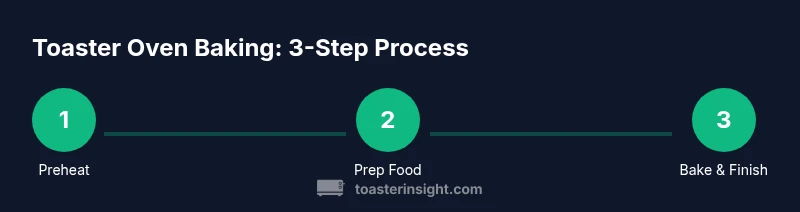
- Preheat the toaster oven to the recommended temperature and arrange a rack in the center. 2) Prepare a small batch of cookie dough, shaping evenly sized cookies. 3) Place dough on a lined sheet pan with space between each piece. 4) Bake, rotating halfway if your oven heats unevenly and watching for edges to turn golden. 5) Remove when centers are set but still soft, then cool on a rack. 6) Clean the pan after cooling to prevent residue from affecting future bakes. 7) Store leftovers in an airtight container. 8) Reheat gently to restore texture when serving later.
Troubleshooting common issues
Uneven browning is common in toaster ovens; rotate trays and adjust position between bakes. If food browns too quickly on the outside while the inside remains undercooked, lower the temperature by about 25°F and extend the bake time slightly. Excess smoke usually means residue on the heating elements; turn off, unplug, and wipe the interior after cooling.
If food dries out too fast, cover loosely with foil or reduce baking time while increasing moisture retention with a small water bath or pan nearby. For sticky pastries, ensure you have parchment or a non-stick mat and not overly greased pans. Finally, if you notice a burnt edge, shift to a lower rack position or reduce the heat for subsequent batches.
Safety, energy efficiency, and maintenance
Always unplug the toaster oven when not in use and never leave it unattended during operation. Use heat-resistant mitts when opening hot doors, and avoid placing plastics near the heating elements. For energy efficiency, batch multiple small items together when possible, and preheat only as long as necessary. Regularly clean crumbs and oil splatter from the interior to prevent smoke and odors from lingering. Periodically inspect the door gasket for a tight seal to maintain even heat.
Quick-start checklist and next steps
- Gather essential tools and a few basic bakeware pieces. - Check your toaster oven’s manual for rack positions and safe temperature ranges. - Start with simple items like cookies or reheated leftovers before tackling more complex bakes. - Keep a timer, thermometer, and oven-safe tray handy for precise results. - Track your results with notes so you can adjust temperatures and times for future batches.
Tools & Materials
- Toaster oven with basic bake/broil settings(Choose a model that fits your most used bakeware and has reliable temperature control.)
- Baking sheets or shallow pans(Fit your toaster oven interior; enamel or aluminum pans work well.)
- Parchment paper or silicone baking mat(Prevents sticking and eases cleanup.)
- Oven-safe thermometer (optional)(Helpful for checking actual oven temperature.)
- Tongs and heat-resistant oven mitts(Important for safe handling of hot trays.)
- Cooling rack(Promotes even cooling and prevents sogginess.)
- Paper towels or cloth for quick cleanups(Keep your area tidy and safe.)
Steps
Estimated time: 45-60 minutes
- 1
Choose the right bakeware
Select a shallow, uniform sheet or pan that fits the toaster oven interior. Dark or light finishes can influence browning; avoid overly thick pans that block heat.
Tip: Use lighter pans for lighter browning if you’re new to baking and want gentler color development. - 2
Preheat the toaster oven
Preheating establishes a stable baking environment and helps you time doneness more reliably. If your recipe requires it, set the oven to the target temperature before loading food.
Tip: Limit preheat time to what your recipe specifies; overly long preheats waste energy. - 3
Position the rack correctly
Center the rack for most bakes. If browning seems uneven, try the middle rack or switch rack positions halfway through.
Tip: Avoid crowding the pan; give air space for even heat transfer. - 4
Load food with space
Place items with space between them so air can circulate. Thicker items may need a longer bake time or a lower temperature.
Tip: If in doubt, bake in smaller batches to ensure doneness without scorching. - 5
Monitor and adjust timing
Start checking early and use a timer. Mini bakes often finish 2–5 minutes sooner than you expect.
Tip: Turn trays once if your oven heats unevenly. - 6
Test for doneness
Use visual cues (color, texture) and gentle pressure to confirm doneness. For cookies, edges should be lightly browned and centers set but soft.
Tip: If unsure, remove from heat a touch early; carryover heat will finish the bake. - 7
Cool and rest
Move baked items to a cooling rack to stop further cooking and prevent sogginess. Resting helps flavors settle and improves texture.
Tip: Cool cookies completely before stacking to avoid sticking. - 8
Clean up and reuse
Once cooled, wipe the interior and tray surfaces to remove oils. Store tools in a convenient place for your next bake.
Tip: Regular cleaning extends the life of your toaster oven and keeps flavors from lingering.
Your Questions Answered
Is preheating necessary for toaster oven baking?
Preheating helps establish a stable temperature and improves predictability, especially for baked goods. Some quick-reheat tasks may skip preheating, but for most baking projects, preheating is recommended.
Yes. Preheating helps your food cook evenly and predictably, especially when you’re new to toaster oven baking.
Can I bake cookies in a toaster oven?
Yes, you can bake cookies in a toaster oven. Use a small sheet, space cookies well apart, and monitor closely; cookies may finish faster than in a full-size oven.
Absolutely—start with a small batch and watch closely so they don’t burn.
What foods are best for beginners in a toaster oven?
Great starter items include cookies, small sheet pan veggies, reheated leftovers, and small baked goods like muffins or mini loaves. Start with simple recipes and avoid very large or dense items until you build confidence.
Begin with simple, small items to learn how your model behaves.
How do I prevent uneven browning?
Rotate the pan and adjust its rack position during baking. If browning is uneven, lower the temperature slightly and increase bake time modestly until results are even.
Rotate the pan and adjust position if browning is uneven.
How should I clean the toaster oven after baking?
Cool the oven completely, unplug it, and wipe the interior with a damp cloth. Remove crumbs from the tray and racks; for stubborn residue, use a non-abrasive sponge and a mild cleaner.
Cool, unplug, and wipe with a damp cloth after each bake.
Watch Video
Key Takeaways
- Preheat when required for reliable bake results
- Use appropriate bakeware to promote even browning
- Space items and monitor times for best outcomes
- Prioritize safety and cleaning to extend appliance life