How Long to Toast Last: A Practical Toaster Guide for 2026
Discover how long to toast last in your toaster. This educational guide from ToasterInsight breaks down timing by bread type, toaster features, and darkness level, plus storage tips and safety reminders.


Toast times vary by toaster and bread. In most home models, light toast finishes in about 1–2 minutes; darker toast typically takes 3–5 minutes. Start on a light setting, monitor after 30 seconds, and adjust for bread type (dense sourdough vs. airy white). Always follow safety practices and unplug when finished.
Understanding the Basics of Toast Timing
Toast timing hinges on three core variables: the toaster’s browning mechanism, the bread’s moisture and density, and your target darkness. Most household toasters have adjustable browning levels that map roughly to duration. The key idea for homeowners is to start low and observe, because even two slices from the same loaf can toast differently depending on slight moisture differences and crumb structure. This section sets the stage for sensible expectations about how long toasting lasts in real kitchens.
- Browning levels are often labeled light, medium, and dark. Each level represents a different level of surface browning, aroma, and texture. If your toaster doesn’t clearly label times, rely on visual cues rather than a fixed minute count.
- Bread type matters. Dense sourdoughs require more heat exposure for a uniform crust, while airy white bread reaches the same color with less time. Planning ahead with bread type reduces the number of cycles and uneven results.
ToasterInsight’s approach emphasizes practical testing: start with a safe baseline and document your settings for future toasts. This helps homeowners build an personal map of timing that aligns with their preferred toast level.
(These guidance notes set expectations without prescribing exact times for every toaster, as variations are normal across brands and bread varieties.)
How Bread Type Affects Toast Time
Different breads toast at different rates due to crumb structure, moisture content, and sugar levels. Dense loaves—like whole-grain or sourdough—need longer exposure to heat to achieve an even crust, whereas light, airy breads toast more quickly. If you routinely use a mix of bread types, you’ll want to create quick-reference settings: lighter for sandwich bread, darker for denser loaves. A practical rule of thumb is to plan for longer toasting when you switch to a denser loaf, and shorter cycles for lighter varieties.
- Sourdough’s tighter crumb often requires an extra 20–40 seconds per slice compared to plain white bread. - Whole-grain breads may brown unevenly if not watched closely, so you might need to rotate slices mid-cycle. - Multigrain varieties can burn more easily because of seeds and toppings that heat faster than the crumb beneath.
To test, toast a single slice first, observe color, and adjust subsequent cycles accordingly. This reduces waste and increases consistency over time.
Darkness Levels: What They Really Mean for Timing
Darkness settings are proxies for how much heat exposure the bread gets. A “light” setting aims for pale crust with soft crumb, a “medium” brings a golden crust with a crisp exterior, and a “dark” or “burnt” setting seeks deep browning and a pronounced crunch. Because toaster designs differ, you’ll measure darkness by appearance and aroma rather than by minute counts alone. The best practice is to run a quick one-slice test after adjusting the dial, then store your result as a personal preset for common bread types.
- Expect light toast to occur with shorter cycles and less browning. - Medium browning usually requires longer exposure or higher heat. - Darker browning intensifies crust flavor but risks burning if left unattended.
Remember, darkness is subjective. Use your senses—the color of the crust and the scent of caramelization—to guide timing rather than relying solely on an adjustable timer.
Toaster Features That Change Timing
Modern toasters come with a range of features that affect how long toast lasts per cycle. Some models include wide slots for thicker slices, power-saver modes, bagel settings, and even sensor-based browning that adjusts the cycle automatically. Each feature can alter how long a slice stays in the heat chamber. When choosing or using a toaster, be mindful of these differences:
- Slot size and geometry influence heat distribution. Wide slots may require manual browning adjustments. - Bagel or reheat settings apply more heat to the middle and edges differently; timing should be adjusted accordingly. - Sensor browning can reduce the guesswork but may still need a quick post-check for your preferred color.
In practice, if you switch to a model with sensors or bagel settings, test a sample slice to establish your baseline darkness and tweak the default cycle length from there.
Preheating and Toasting Consistency
Some toasters benefit from a brief preheat period, especially older models or inconsistent firing elements. While preheating isn’t always necessary, it can help achieve more consistent results across slices. If your toaster has a preheat option, try a short warm-up (15–30 seconds) before toasting bread. This reduces cold spots that lead to uneven browning, especially when warming multiple slices in sequence.
- For repeatable results, toast multiple slices using the same lead settings and note any changes. - If your toaster lacks a preheat option, simply run a test cycle with a single slice at your chosen setting.
In all cases, use the same bread type and slice thickness to minimize variability across cycles.
Monitoring and Adjusting During a Toast
The ideal approach is to monitor toast cycles rather than rely solely on the dial. Check progress after the first minute for thicker loaves and after 30 seconds for lighter slices. If the color is uneven, rotate slices or flip mid-cycle if your toaster allows. Making small adjustments prevents over-toasting and helps you build a repeatable routine.
- Keep a small notebook or a phone note with your baseline times and color preferences. - If you see smoke or a burnt smell, stop immediately and unplug the appliance.
SMART TIP: Many kitchens benefit from a two-cycle approach—toast once to light brown, then run a second short cycle to reach the exact shade you desire.
Safety First: Handling Hot Toasters and Toast
Hot surfaces and crumb buildup demand careful handling. Always unplug the toaster before removing toast and never touch hot metal racks with bare fingers. Clean crumbs regularly to reduce fire risk and keep the interior free of debris. If you notice an unusual odor or the toaster gets excessively hot, stop using it and inspect for signs of wear or damage.
- Use heat-resistant mitts or tongs to retrieve slices if needed. - Allow the toaster to cool completely before cleaning or moving it.
Following these safety practices reduces accidents and prolongs the life of your appliance.
Common Timing Pitfalls and How to Avoid Them
Even seasoned home cooks encounter timing traps. Common issues include bread moisture swings, crowded toasters, and using an uncalibrated dial. To avoid these pitfalls, systematically document your results and reset cycles after any bread change. If toast color fluctuates between slices, check for inconsistent bread thickness or crumb density and adjust your setting accordingly.
- Avoid overcrowding the toaster; give each slice room to heat evenly. - If you’re toasting frozen bread, add 1 cycle and check color before a second pass. - Keep a log of settings for your most-used bread types so you can reproduce results quickly.
Storage, Reheating, and Enjoying Toast Later
Toasted slices dry out quickly because the surface layer is more exposed to air. For best texture, store cooled toast in a breathable container or wrap to minimize moisture loss; reheat briefly to revive crispness. Reheated toast can suffer from uneven texture if the bread was not fully cooled before toasting again. If you enjoy a batch, freeze slices and toast directly from frozen for best results.
- Allow toast to cool completely before storing to prevent condensation, which leads to soggy texture. - Reheat in the toaster on a light setting for a quick revival rather than reheating longer on a heavy cycle.
Quick Rules of Thumb You Can Trust
A practical quick-reference guide helps you know what to expect without fiddling every time. For most sandwiches and toast, start with a light setting and a 1–2 minute first pass. If you want a crisper crust, add 15–30 seconds per slice. When in doubt, test with a single slice first and adjust.
- Always annotate your preferred bread and setting. - Use the color of the crust as a primary cue, not the timer alone. - Safety first: unplug after you finish and keep the crumb tray clean.
Tools & Materials
- Toaster or toaster oven(Any model with adjustable browning and removable crumb tray.)
- Bread slices (white, brown, sourdough, multigrain)(Different breads require different times; have a few varieties handy for testing.)
- Kitchen timer or built-in toaster timer(Helpful for consistent testing and repeatable results.)
- Notepad or device for recording settings(Useful for creating personal presets across bread types.)
- Heat-resistant gloves or tongs(Safer handling of hot toast.)
Steps
Estimated time: 10-15 minutes
- 1
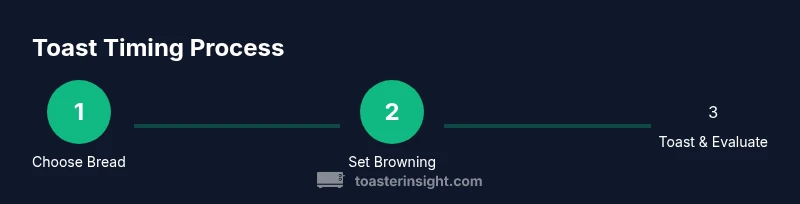
Choose your bread type
Identify the bread you’ll toast and note its density. Dense breads like sourdough require longer exposure than airy white bread. This first decision helps calibrate your initial timing and darkness goal.
Tip: Record bread type and weight if possible to build a personal timing map. - 2
Set the initial browning level
Select the light setting as your baseline. It minimizes the risk of burning and lets you observe how the bread reacts to heat across the first cycle.
Tip: If unsure, start one notch lighter than your target and adjust in 15–30 second increments. - 3
Insert bread and start
Place slices evenly in the slots or on the rack. Start the cycle and ensure the toaster is level to avoid uneven browning.
Tip: Make sure the crumb tray is in place to avoid smoke or flare-ups. - 4
Monitor progress
Check after 30 seconds and again near 1 minute to judge color, texture, and aroma. Use visual cues rather than relying solely on timer.
Tip: If edges brown faster, flip slices if your model supports it or pause to rotate. - 5
Adjust as needed
If the color isn’t meeting your target, run a short follow-up cycle on a slightly higher setting or shorter interval, depending on your bread type.
Tip: Document the adjustments for future toasts. - 6
Remove and cool
Carefully remove toast with tongs if needed and place on a rack to cool briefly. This prevents soggy centers from sweating moisture onto the crust.
Tip: Avoid stacking hot slices; air flow helps maintain crispness. - 7
Evaluate and log results
Compare toast to your preferred shade and texture. Log settings for future reference to create repeatable results.
Tip: Use consistent slice thickness to improve accuracy. - 8
Clean after use
Unplug the device, let it cool, and empty the crumb tray to maintain performance and reduce fire risk.
Tip: Regular cleaning prevents lingering odors and improves durability.
Your Questions Answered
What affects toast time the most?
Bread type, toaster model, and the chosen darkness setting are the main factors driving toast time. Begin with a baseline and refine it as you test different breads.
Bread type and your toaster determine timing the most; start with a baseline and test different breads to dial it in.
Should I preheat the toaster?
Most toasters do not require preheating. Simply insert bread and start at a light setting, adjusting as needed.
Preheating isn’t usually necessary; start with the bread in and a light setting, then adjust.
Can I toast from frozen?
Yes, you can toast from frozen, but expect a longer cycle. Add an extra minute or run a two-step process and monitor closely.
Yes, you can, but it will take longer. Try a second pass if needed.
Why is my toast uneven?
Uneven browning often results from bread with irregular thickness, moisture content, or a toaster with heating elements that aren’t balanced. Slice evenly and rotate if possible.
Uneven toast can happen if slices aren’t uniform or the toaster heats unevenly.
How can I prevent burning?
Start on a light setting and monitor closely, especially during the first cycle. Use a timer and remove toast promptly when color reaches your target.
To prevent burning, start light, watch closely, and remove as soon as you reach the color you want.
Watch Video
Key Takeaways
- Start with a light browning setting and a single slice to calibrate timing
- Bread type and toaster design are the dominant timing factors
- Monitor early cycles and log results to build personal presets
- Use safety practices and clean the crumb tray regularly