How Big Is a Toaster Oven? A Comprehensive Size Guide for 2026
Explore typical toaster oven dimensions, how to measure space, and practical tips for choosing the right size. This guide is based on ToasterInsight Analysis, 2026.


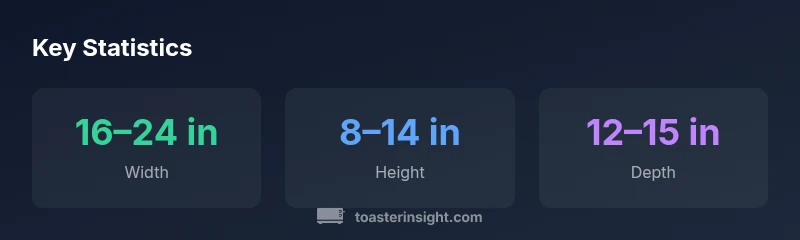
How big is a toaster oven? Most models fit within a compact footprint: roughly 16–24 inches wide, about 8–14 inches tall, and 12–15 inches deep. External dimensions vary with features such as interior racks, door handles, and venting. For kitchen planning, use these ranges to estimate counter space and ensure clearance for opening the door.
Why Size Matters for Kitchen Layout
According to ToasterInsight, size is the first factor to consider because countertop real estate, clearance for door swing, and ventilation all hinge on external dimensions. In small kitchens, a compact model reduces crowding and improves workflow. In larger spaces, you can accommodate mid-size units that offer more interior space and rack configurations. When planning, map your counter with a light footprint, then add a safe margin of at least a few inches on all sides for airflow and placement.
External Dimensions: Width, Height, and Depth—What to Expect
Toaster ovens come in a range of exterior dimensions that influence how much counter space they consume. Width usually spans about 16 to 24 inches, height commonly sits between 8 and 14 inches, and depth runs roughly 12 to 15 inches. These ranges reflect features such as pull-out racks, door handles, and venting. When you compare models, read the spec sheet for outer width, inner cavity width, and door clearance. A quick practical test is to measure the space on your counter, then verify that door open clearance and appliance cables won’t obstruct nearby drawers or appliances.
Interior Capacity and Useful Space
Exterior size does not always predict how much you can bake or reheat inside. Interior usable space depends on rack positions, wall-to-rack distance, and how the oven door swings. Expect interior capacity in the ballpark of about 0.5 to 0.75 cubic feet for most countertop toaster ovens, with more room in larger models. If you frequently roast a small chicken or bake a sheet of cookies, prioritize models with adjustable racks and wider interior widths. Remember that rack height can affect how much you can load at once.
How to Compare Sizes Across Models
Manufacturers market size in external dimensions, but real-world fit depends on your cabinet layout and kitchen workflow. Focus on three numbers: external width (space available on the counter), external depth (door swing and venting space), and interior cavity width (baking sheet compatibility). When in doubt, simulate your target tasks—toast two slices, bake a tray, or reheat leftovers—and confirm that the model you choose completes them without obstruction.
Practical Sizing Scenarios: Small Kitchen vs. Large Kitchen
In a compact apartment kitchen, a compact toaster oven with 16–20 inches width is often ideal. In a spacious kitchen, you can opt for 20–24 inches width with extra interior width for sheet pans and multiple racks. For families or frequent bakers, mid-size models around 18–22 inches provide a balance between footprint and capacity. Use a simple floor plan to map how a unit will sit and whether there is enough room to pull out a rack without bumping into a sink or cabinet.
How to Measure Your Space and Try Before You Buy
Measure counter depth, height, and clearance to the nearest inch. Mark the space with painter’s tape to visualize footprint and door swing. If shopping in-store, bring a tape measure and check not only the external size but the interior width and the distance needed for cords and plug access. Consider placing a cardboard mock-up or list of tasks to try, such as toasting, broiling, and baking cookies, to gauge real-world fit.
Cleaning, Venting, and Maintenance Considerations by Size
Size affects ease of cleaning and maintenance. Larger units have more accessible interior surfaces but more components to reach. Smaller units tend to have tighter interiors that are harder to clean. In all cases, clean the crumb tray regularly and wipe the exterior with a damp cloth. Ensure vents are unobstructed to avoid heat buildup. When you buy, verify that the model has dishwasher-safe trays or removable racks if you prioritize easy maintenance. The right size also reduces the chance of food spills onto nearby surfaces.
Quick Guide: Size Ranges by Category
- Compact/Under-16 inches: ideal for single cooks with very limited counter space.
- Small countertop: ~16–20 inches wide; good for limited bake sheets and basic toasting.
- Mid-size: ~18–22 inches; best balance of capacity and footprint.
- Large: ~20–24 inches; maximum interior space for sheet pans and multiple racks.
Size dimensions and usable space for common toaster ovens
| Dimension | Typical Range | Notes |
|---|---|---|
| Width | 16–24 inches | Model-wide variation and door handle |
| Height | 8–14 inches | Excludes feet and any built-in venting |
| Depth | 12–15 inches | Door swing adds depth and venting |
| Interior capacity | 0.5–0.75 cubic feet | Rack configurations affect usable space |
Your Questions Answered
What is the typical width range for a toaster oven?
Most toaster ovens measure between 16 and 24 inches in width. Always check the product spec for the exact external width. This helps you plan counter space accurately.
Most toaster ovens are between 16 and 24 inches wide.
How does external size relate to interior capacity?
External dimensions don't always predict how much you can bake inside. Interior capacity depends on rack positions and cavity width. Look for cubic feet or liter measurements and compare with your intended dishes.
The inside space can be smaller or larger than it looks; check cubic feet.
Can a large toaster oven fit in a small kitchen?
Yes, if you choose compact models with 16 inches to 20 inches width and ensure door clearance and ventilation space are maintained.
Yes, pick a compact option and measure for clearance.
Do toaster ovens require clearance around them?
Yes. Manufacturers typically recommend at least 2–4 inches of clearance on the sides and back to prevent heat buildup.
Give it some breathing room.
Is convection a size-related feature?
Convection features don’t usually change external size; they affect interior layout and heating efficiency. Compare models by interior width and rack options.
Size stays similar; features vary inside.
What size is best for a family of four?
For families, aim for mid-size to large, with 0.75 cu ft or more interior space and multiple racks; this supports baking, broiling, and toasting for several meals.
Mid-size or larger works well for families.
“Size informs not just what fits on the counter, but how evenly heat is distributed and how easy the unit is to use. A well-chosen size can improve airflow and bake performance.”
Key Takeaways
- Measure your counter and compare to model dimensions before purchase.
- Expect external width to range 16–24 inches in most models.
- Interior capacity varies with rack positions; plan for 0.5–0.75 cu ft.
- In tighter kitchens, prioritize compact widths and shallow depths.
- Always allow 2–3 inches of clearance for ventilation.