How Long to Cook Bacon in a Toaster Oven: A Practical Guide
Learn exact times and temperatures for cooking bacon in a toaster oven, plus prep tips, cleanup tactics, and safe handling to achieve crispy results every time.


To cook bacon in a toaster oven, aim for 375°F (190°C) and bake for about 12-15 minutes, depending on thickness and desired crispness. For even results, place strips on a rack or parchment-lined tray and flip once halfway. Start checking at 10 minutes to prevent overcooking.
Why a toaster oven is a practical choice for bacon
For many home cooks, a toaster oven offers a fast, energy-efficient way to cook bacon without heating a full-size oven. It heats quickly, concentrates browning on the meat, and minimizes splatter compared to pan frying. If you're wondering how long to cook bacon in toaster oven, this guide breaks down temps, times, and practical setups. With proper setup, you can achieve consistent crisp edges with minimal cleanup. In short, the toaster oven is a compact, reliable choice for weekday breakfasts and weekend brunches alike. Because a toaster oven uses radiant heat from top and bottom elements, you can target the fat rendering and surface browning more directly. A shorter overall cooking time also means less chance of overcooking the lean portions. For best results, start with high-quality bacon and ensure it is not overlapped on the tray, which reduces even browning. Remember that results vary with the model and venting; adjust time slightly for convection vs standard toaster ovens. This is a practical guide designed for homeowners, kitchen enthusiasts, and casual cooks who want reliable, tasty bacon without firing up a full oven.
Key variables that affect cook time in toaster ovens
Several variables determine how long bacon needs in a toaster oven. The bacon’s thickness is the most obvious factor: thin-cut slices crisp faster than thick-cut slabs. The fat content also matters; leaner bacon renders less fat but can burn sooner if left unattended. Oven temperature accuracy is crucial: an oven that runs hot will speed browning and crisping, while a cooler oven may leave fat rendering underdone. If you use convection, you’ll likely see faster browning; in a static bake, plan a bit longer. Spacing on the tray is critical: overlap leads to uneven edges, while space between slices encourages uniform heat exposure. Finally, whether you use a rack or place the bacon directly on parchment or foil tray changes the browning pattern and grease drainage. These factors can affect whether you end up with shatteringly crisp bacon or chewier edges, and they give you levers to fine-tune results for your preferred texture.
Preheating: does it matter?
Preheating a toaster oven helps ensure the heat is ready to render fat and produce even browning from the moment the bacon starts cooking. If your model heats quickly, preheating adds only a minute or two to the process; if it’s older or runs cooler, preheating can improve consistency. In many tests, preheating reduces total cook time by a few minutes and minimizes variation between slices. If you’re frozen on whether to preheat, the safe approach is yes—preheat to the target temperature before loading the bacon so you don’t start cooking at a lower temperature than intended.
Tray vs. rack: which yields crispier bacon?
A rack lets fat drain away from the meat, promoting crisper edges and less grease pooled underneath. If you don’t have a rack, a parchment-lined tray still works well; just be mindful of grease pooling. For thicker cuts, a rack is especially beneficial because it maintains airflow around thicker pieces. If you’re using a rack, ensure it’s stable and that bacon slices aren’t overlapping. For compact toaster ovens, you may have to do two batches to avoid overcrowding, which can hinder browning.
Temperature guidelines and time ranges by thickness
- Thin-cut bacon: 8-12 minutes at 375°F (190°C) for light crispness, up to 12 minutes for medium crispness.
- Regular-cut bacon: 12-15 minutes at 375°F (190°C) for balanced texture.
- Thick-cut bacon: 15-18 minutes at 375°F (190°C) for thorough render and crunch. These times are starting points; adjust by 1-2 minutes based on how your toaster oven heats and how crispy you like the final result. If using convection, reduce time by about 1-3 minutes to avoid over-browning. Always monitor the final minutes to prevent burning, especially with sugar-cured varieties that brown faster.
Step-by-step cooking method: Rack method
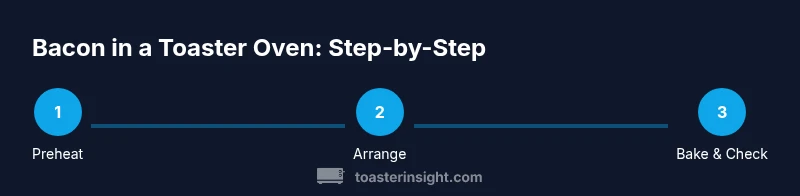
- Preheat the toaster oven to 375°F (190°C). This ensures immediate heat exposure when the bacon is loaded. 2) Place a rack inside a shallow tray and line with parchment if desired. The rack elevates the bacon for even fat drainage. 3) Arrange bacon in a single layer on the rack, making sure slices do not overlap. 4) Bake for 8-12 minutes, depending on thickness. Rotate the tray if your oven heat is uneven. 5) Flip the slices halfway through for even crisping. 6) Check doneness at around 12 minutes; if you want crisper bacon, continue in 1- to 2-minute increments. 7) Remove with tongs and drain on paper towels for 1–2 minutes before serving. 8) Clean the tray and rack after they cool; grease is hot and can splatter.
Step-by-step cooking method: Tray method (parchment)
- Preheat to 375°F (190°C). A parchment-lined tray reduces cleanup and makes retrieval easier. 2) Lay slices flat on the parchment, ensuring they don’t overlap. 3) Bake for 10-12 minutes for thin-cut bacon, and 12-15 minutes for regular-cut until edges are crisp. 4) If desired, flip slices halfway through baking for even browning. 5) Check for doneness; remove when most slices are crisp with a little chewy center if you prefer it. 6) Let rest on paper towels for 1–2 minutes to absorb residual fat before serving. 7) Wipe the tray with a damp cloth once cool to remove grease residue.
Troubleshooting doneness and common issues
If your bacon is undercooked after the minimum time, give it another minute or two and check again. Overcooking results in overly brittle edges and a strong bacon flavor that can taste burnt. If grease starts smoking, turn down the heat slightly or switch from convection to standard bake. Uneven browning is often caused by overcrowding or a non-flat tray; rotate the tray and provide space between slices to ensure heat reaches every piece. For sugar-cured varieties, monitor closely as sugar accelerates browning.
Cleanup and safety considerations
Grease can spatter when you remove the tray, so wear oven-safe gloves or use tongs. Let the tray cool before handling; wipe with a paper towel or cloth to remove excess fat, then wash with warm soap and water. If you used parchment, discard the paper with the cooled fat; it makes disposal easier and safer. Always unplug and re-seat the toaster oven after cleaning to ensure proper function. Avoid placing parchment too close to heating elements to prevent scorching.
Storing and reheating leftovers safely
Store cooked bacon in an airtight container or wrap in foil and refrigerate within two hours of cooking. Reheat in the toaster oven at about 300°F (150°C) for 3–5 minutes until warmed through and crisped to your liking. Do not leave cooked bacon at room temperature for more than two hours. Reheating once helps maintain texture without overcooking, though some moisture loss is inevitable.
Tips for better flavor and convenience
- For extra crispness, pat bacon dry with a paper towel before arranging it on the tray; removing surface moisture helps browning.
- Consider using a light spray of neutral oil on the tray to promote browning, especially with very lean bacon.
- If you often cook bacon, keep a dedicated toaster-oven rack and tray set for quicker setups.
- Use the bacon grease to sauté eggs or vegetables for a fast, flavorful breakfast.
- Preheat and time by thickness, not by a fixed minute count, to ensure consistent results across batches.
- If you enjoy maple-cured bacon, add a light drizzle of maple after cooking to avoid scorching sugar during heat.
Authority sources
- https://www.fsis.usda.gov/food-safety/safe-food-handling-and-preparation/meat-and-poultry
- https://www.cdc.gov/foodsafety/keep-food-safe.html
- https://www.bbcgoodfood.com/howto/guide/how-to-cook-bacon
Tools & Materials
- Bacon slices(As many as will fit in a single layer on the tray without overlapping)
- Toaster oven tray or shallow sheet pan(Rimmed to catch fat; nonstick coating helps cleanup)
- Parchment paper or aluminum foil(Optional lining for easier cleanup)
- Oven-safe tongs(For safe handling and turning slices)
- Meat thermometer (optional)(Useful to confirm doneness if unsure about thickness)
Steps
Estimated time: Total time: 18-22 minutes depending on thickness and oven performance
- 1
Preheat the toaster oven
Preheat to 375°F (190°C) so heat is ready when bacon goes in. This promotes even rendering and browning from the start.
Tip: Preheating reduces overall cook time and helps avoid cold spots. - 2
Prepare the tray
Line the tray with parchment or foil if you want easier cleanup. If using a rack, place it on the tray to elevate bacon.
Tip: Lining the tray saves time on cleanup and reduces grease sticking. - 3
Arrange bacon in a single layer
Place slices in a single layer with space between them for heat circulation. Overlapping will lead to uneven browning.
Tip: If your slices are long, trim to avoid crowding the edges. - 4
Bake for the first interval
Bake 8–12 minutes depending on thickness. Thin slices cook faster than regular or thick-cut varieties.
Tip: Rotate the tray halfway through to promote even browning. - 5
Flip and continue cooking
Flip slices halfway through if you’re not using a rack, or rotate the tray for even exposure. This improves texture.
Tip: Convection reduces required time; start checking earlier. - 6
Check for doneness
Look for crisp edges with a slightly chewy center if you prefer it; fat should be rendered but not burnt.
Tip: If you see sugar-curing on the surface, reduce time or temperature slightly. - 7
Remove and drain
Transfer bacon to a plate lined with paper towels to drain excess fat for 1–2 minutes.
Tip: This step helps finish crisping as it cools. - 8
Clean up
Allow the tray to cool before washing; wipe grease while it’s still soft, then wash with soap and water.
Tip: Disposal: let parchment cool and discard with the fat.
Your Questions Answered
Can I cook bacon in a toaster oven without preheating?
Preheating is recommended to ensure consistent heat from the start; skipping it may extend cook time and uneven browning.
Preheating helps bacon cook evenly; skipping it may take longer and brown unevenly.
What temperature should I use for bacon in a toaster oven?
A common starting point is 375°F (190°C); adjust slightly based on thickness and how you like the texture.
Try 375 degrees to start, then tweak for thicker slices or crisper texture.
Rack or tray—what’s better for crispiness?
Using a rack promotes drainage and crisper edges, while a parchment-lined tray is easier for cleanup. Both work well; choose based on your priorities.
A rack gives crisper bacon; a tray is simpler to clean.
How do I tell when bacon is done?
Look for crisp edges and a rendered center. If it’s still limp, give it a minute or two more; watch closely near the end.
Crisp edges with rendered fat mean it’s done. If in doubt, test one piece.
How should I store and reheat leftovers?
Cool cooked bacon and refrigerate in an airtight container within two hours. Reheat in the toaster oven at a low temperature until warm and crispy.
Cool, then refrigerate. Reheat gently in the toaster oven.
Is toaster oven bacon healthier than pan frying?
Nutrition differences are small; the method mainly affects convenience and cleanup. Bacon fat content remains; trimming fat can reduce calories.
Nutritional differences are minor; your choice mostly affects cleanup and convenience.
Watch Video
Key Takeaways
- Start with 375°F and adjust by thickness.
- Rack yields crisper bacon than direct tray contact.
- Space slices for even browning; avoid overlap.
- Preheat for consistent results and faster cooking.
- Drain briefly after cooking for optimal texture.