How to Reheat Food in Toaster Oven: A Practical Guide
Learn precise temps, times, and techniques to reheat food in a toaster oven without sacrificing texture. This expert guide covers safety, crispy results, and common foods.


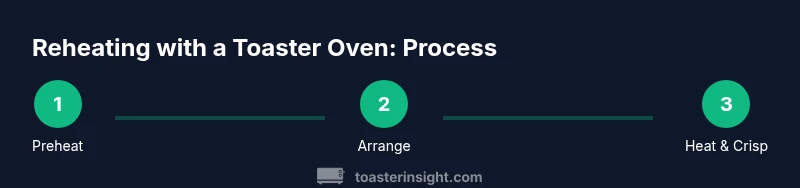
Reheating food in a toaster oven restores texture and flavor better than a microwave. Start by preheating to about 325–350°F, arrange leftovers in a single layer on a tray, and cover if needed to avoid moisture loss. Check every 5–7 minutes until steaming hot throughout. This approach preserves crisp edges and avoids overcooking.
Why reheat in a toaster oven instead of a microwave
Toaster ovens provide a compromise between a traditional oven and a microwave. They preheat quickly, use less energy than a full oven, and can crisp edges that microwaves tend to soften. This makes them ideal for pizzas, sandwiches, roasted vegetables, and many casseroles where texture matters. When you reheat in a toaster oven, you maintain a more even browning across the surface and reduce the risk of soggy centers. According to ToasterInsight, understanding how heat moves in small electric ovens helps you predict results and avoid common pitfalls. The key is to control temperature, use a shallow tray or wire rack, and space food in a single layer so air can circulate. If you’re heating on the go, a toaster oven often delivers faster results than a conventional oven while yielding superior texture to microwaving. Keep expectations realistic: thick items may need longer times, while delicate items such as pastries require lighter heat to prevent drying out.
Core principles: temperature, moisture, and texture
The physics of reheating hinges on three levers: temperature, moisture, and airflow. Too high a temperature can dry out meat or bread, while too low a temperature leaves food tepid and lifeless. A moderate range around 325–350°F (163–177°C) generally preserves moisture and creates a pleasing crust without burning edges. Moisture matters: covering with foil or a thin tent can trap steam for delicate items, but too much moisture can soften crisp surfaces. Airflow is your ally; a single layer on a tray or a wire rack set over a rimmed sheet promotes even heating and prevents hot spots. If you’re reheating sauces or stews, keep them in a shallow, wide dish to encourage uniform warming. For foods that benefit from browning, such as fries or pizza, finish with a brief, uncovered blast at the end to re-crisp the exterior. As you practice, you’ll learn which foods tolerate longer times and which demand shorter bursts—practice is the path to consistent results. This guidance aligns with ToasterInsight’s testing and experience.
Tools & Materials
- Oven-safe baking tray(Nonstick or lined with parchment; 1–2 inches of clearance around food)
- Wire rack (optional)(Elevates food for better air circulation)
- Aluminum foil or parchment paper(For tenting or lining trays)
- Oven mitts(Heat-resistant; avoid loose fabrics)
- Food thermometer(Optional but helps verify 165°F+ for leftovers)
- Timer or smartphone(Helps track multiple batches)
Steps
Estimated time: 15–25 minutes
- 1
Preheat the toaster oven
Set the oven to 325–350°F (163–177°C) and let it come to temperature before loading food. Preheating avoids cold spots and speeds even heating, especially for thicker leftovers.
Tip: If your oven runs hot, start at 325°F and adjust up 25°F if needed after your first batch. - 2
Prepare the tray
Line a baking sheet with parchment or lightly oil a rack to prevent sticking. A single, flat layer promotes even heat distribution and prevents soggy patches.
Tip: Avoid stacking food; air needs to circulate to crisp edges. - 3
Arrange leftovers in a single layer
Spread items out with space between pieces so heat can reach all surfaces. For crowding foods, rewarm in smaller batches.
Tip: For bread and pizza, place items directly on the rack or parchment for crispier bottoms. - 4
Reheat in short bursts
Heat for 4–6 minutes, then check progress. For dense foods, flip or rotate halfway through to promote uniform warming.
Tip: Short bursts prevent overcooking and dryness; adjust time based on thickness. - 5
Check internal temperature and texture
Aim for steaming hot throughout and an appealing exterior. Use a thermometer if available to confirm 165°F+ for leftovers.
Tip: If not hot enough, continue in 2–3 minute increments rather than risk overcooking. - 6
Rest briefly before serving
Let items stand 1–2 minutes to redistribute heat and finish texture development. This reduces the risk of biting into piping-hot centers.
Tip: Resting helps moisture balance and crispness.
Your Questions Answered
Is a toaster oven better than a microwave for reheating leftovers?
For many foods, a toaster oven preserves texture and browning better than a microwave. It offers browning, crisp surfaces, and more even heating with careful temperature control.
Yes, for most leftovers a toaster oven preserves texture better than a microwave, thanks to its browning and air circulation.
What temperature should I use to reheat most foods?
A moderate range of 325–350°F works well for most leftovers, balancing reheating speed with moisture retention and crust formation.
Most foods reheated around 325 to 350 degrees Fahrenheit heat evenly without drying out.
How long does it take to reheat different foods?
Times vary by thickness and type, but many items finish in 8–15 minutes in a toaster oven when used with a single layer. Always check for steaming hot interiors.
Most foods take under 15 minutes; check progress every few minutes to avoid overcooking.
Can I cover food while reheating?
Covering with foil or a loose tent traps steam for moist foods but should be removed near the end to re-crisp edges.
Yes, covering helps keep moisture in for delicate items, but uncover at the end for crispness.
What security or safety steps should I take?
Always use oven-safe trays, avoid plastic, and ensure food reaches safe internal temperatures before serving.
Use oven-safe containers, never plastic in the toaster oven, and verify the food is heated through before eating.
Watch Video
Key Takeaways
- Reheat in a toaster oven for crisp texture vs microwave sogginess
- Preheat to a moderate 325–350°F for best results
- Use single-layer loads and proper trays for even heating
- Finish with a brief uncovered blast for browning and Crispness
- Always check internal temperature before serving