Fire in Toaster Oven: Urgent Troubleshooting Guide
A practical, urgent troubleshooting guide for handling a fire in toaster oven, covering immediate safety steps, common causes, safe extinguishing, and preventive maintenance for homeowners.


The quickest fix for a fire in toaster oven is to cut power safely and contain the flames. Unplug the unit if you can do so safely, or switch off at the outlet, and keep the door closed for small flames. If flames grow, evacuate and call emergency services. Never use water on an electrical fire.
Immediate safety and what to do first
A fire in toaster oven can escalate quickly, so safety is the top priority. If you can do so safely, unplug the appliance and move away from the flames. Keep the oven door closed to deprive the fire of oxygen, and avoid trying to pull items out while hot. For tiny flames, sprinkle baking soda to smother, never pour water on an electrical device. If the fire is spreading beyond the crumb tray, evacuate and call emergency services. Once the flames are out and the unit has cooled, inspect for damage before reuse. This approach emphasizes calm, practical actions to handle a fire in toaster oven without risking burns or electric shock. According to ToasterInsight, staying composed and following a simple protocol minimizes harm and accelerates a safe recovery.
Common causes of fires in toaster ovens
Most toaster oven fires start from accumulations of crumbs and grease, or from overheating during cooking. The crumb tray and interior walls can collect oil and food particles that ignite as the unit heats. Overfilling pans, sugared or sticky foods that caramelize, or using foil improperly near the heating element also raises risk. Electrical faults like damaged cords or worn insulation can spark, while foreign materials placed too close to coils can overheat. Regular cleaning and smart loading practices dramatically reduce these risks. ToasterInsight notes that prevention is almost always more effective than reactive fixes.
Initial safety checks you can perform before unplugging
If you notice a fire, assess whether you can safely disconnect power. If it’s safe, unplug the toaster oven at the wall; if not, switch off the circuit breaker and back away from the appliance. Do not open the door if flames are present and still active. Check the crumb tray and interior for obvious grease buildup or food debris. Remove the rack and tray with tongs or oven mitts if the unit is cool enough to touch. Inspect the cord for damage or scorch marks. Avoid attempting complex disassembly; simple cleaning and safe operation checks are usually sufficient to prevent recurring incidents.
How to safely extinguish a small fire (and what not to do)
For a small, contained fire, smother flames with baking soda or a Class B/C fire extinguisher, following the PASS technique (Pull, Aim, Squeeze, Sweep). Do not use water on electrical equipment fires; water can conduct electricity and spread the fire. If the flames are out of control, evacuate immediately and call emergency services. After the flames are extinguished, only reuse the oven after thorough cooling and a full interior inspection by a professional if there was any sign of wiring damage or melted components.
Diagnosing the exact cause: crumbs, grease, electrical fault, or overload
Diagnosing requires looking at what ignited the fire. Crumbs or grease that ignited due to high heat indicate poor cleaning or improper pan placement. An overloaded rack or sugary residue on the bottom can also start a fire. Electrical faults—such as a frayed cord or burnt insulation—are more serious and require professional evaluation. A burning smell that lingers after cooling or visible scorch marks near the heating element strongly suggests electrical damage. Understanding the likely cause helps you decide between cleaning-and-try-again fixes and professional service.
Step-by-step fixes for the most common cause
If crumb buildup is the culprit, follow a structured fix: unplug and cool the unit, remove racks and crumb tray, vacuum or sweep out loose debris, clean the interior with warm soapy water and a non-abrasive sponge, rinse and dry completely, inspect seals and gaskets for wear, reassemble, and run an empty test at low heat to ensure no smoke or unusual odors. If grease residue persists, repeat cleaning more thoroughly and consider a deeper interior wipe-down with a degreaser labeled safe for appliances. Always ensure the unit is completely dry before test runs and monitor for abnormal heat or smells.
When to replace parts or call a professional
If you observe damaged cords, melted plastic around the outlet, scorch marks on the interior, or persistent burning smells after cleaning, do not reuse the appliance. A professional should inspect the heating element, control board, and door seal for integrity. Replacement is advised when repairs exceed a reasonable portion of the appliance’s value or safety cannot be guaranteed. Safety should always trump convenience in these situations.
Preventive maintenance and best practices
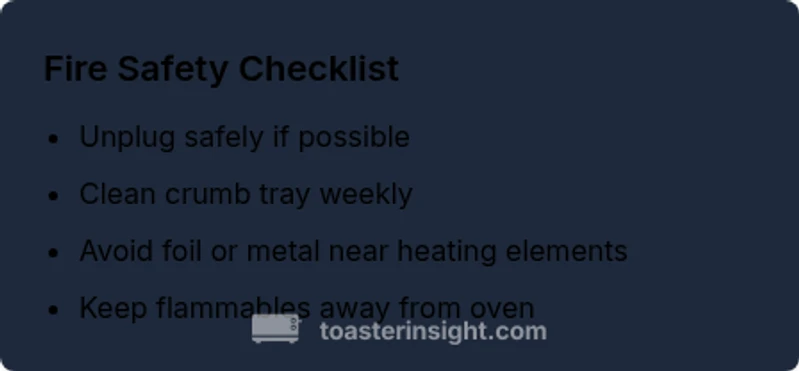
Prevent fires by cleaning the crumb tray weekly if you use the toaster oven daily, and after every spill. Never place metal foil directly on the heating element, and avoid blocking vents with towels or paper. Use cookware that fits properly and avoid overcrowding the interior. Preheat only when needed and never run the oven empty for long periods. Store the appliance away from combustibles and keep a small baking-soda supply on hand for quick smothers. Regular checks of the cord and plug will also catch wear before it becomes hazardous.
After-action cleanup and fire safety review
After the incident, remove burnt debris from the interior and crumbs from the tray. Ventilate the kitchen to clear smoke and odors, wipe down all surfaces with a safe cleaner, and recheck all accessories for heat damage. Review what caused the incident and adjust your routine accordingly—clean more often, avoid risky foods, and ensure proper preheating and space around the unit. Reintroduce use only after a thorough inspection confirms safety.
Steps
Estimated time: 25-45 minutes
- 1
Power down and assess safety
If safe, unplug the unit and stand back from any flames. Do not attempt to move the oven while hot.
Tip: Ensure you have a clear exit path before taking action. - 2
Cool the oven
Allow the appliance to cool completely before touching any interior parts or removing racks.
Tip: Use oven mitts only when safe to handle. - 3
Remove racks and tray
Carefully take out racks and crumb tray using tongs or good heat-resistant gloves.
Tip: Place parts on a nonflammable surface to inspect. - 4
Clean debris
Vacuum or sweep loose crumbs; wipe interior with warm soapy water and a non-scratch sponge.
Tip: Avoid getting water into electronics or vents. - 5
Inspect for damage
Check door seal, wiring, and heating element for scorch marks or melted parts.
Tip: If you see damage, stop use and consult a professional. - 6
Dry and reassemble
Dry all components thoroughly and reassemble the oven.
Tip: Never run the oven with moisture inside. - 7
Test run
Plug back in and run an empty cycle at a low temperature for 5-10 minutes, monitoring for smells or smoke.
Tip: Keep a safe distance and watch closely. - 8
Evaluate results
If no smoke or odor returns, gradually reintroduce cooking tasks and stay vigilant for heat buildup or unusual noises.
Tip: Schedule professional inspection if anything seems off.
Diagnosis: Fire occurs in toaster oven during operation
Possible Causes
- highCrumbs or grease ignition inside the oven
- mediumOverheating from heavy load or sugary foods
- lowImproper use of foil or metal near heating element
- lowElectrical fault (damaged cord or insulation)
Fixes
- easyUnplug safely and remove combustibles; smother small flames with baking soda
- easyCool, clean interior and crumb tray; inspect wiring and seals for damage
- easyTest oven empty at low heat to confirm safety before reuse
- mediumIf fire recurs or there is damage, call a professional for repair or replacement
Your Questions Answered
What should I do first if I see a fire in a toaster oven?
Assess safety, unplug if possible, keep the door closed, and smother small flames with baking soda. Evacuate if flames spread and call emergency services.
First, check safety and unplug if you can. Keep the door closed and smother small flames with baking soda; evacuate and call emergency services if flames grow.
Can I use water to put out a toaster oven fire?
No. Water can conduct electricity and worsen the fire in electrical appliances. Use baking soda or a suitable fire extinguisher if needed.
No, never use water on an electrical fire. Use baking soda or a proper extinguisher if flames are not contained.
Is a toaster oven safe to reuse after a fire?
Only after a thorough professional inspection confirms no damage to wiring, seals, or heating elements. If in doubt, replace the unit.
Only reuse after a full check by a professional. If you’re unsure, it’s safer to replace the unit.
What are early signs of wiring damage in a toaster oven?
Burning smell, melted insulation, scorch marks near the heating element, or hot spots during use indicate wiring damage.
Watch for a burning smell, melted parts, or scorch marks. If you notice any, stop using the unit and get it inspected.
How often should I clean the toaster oven to prevent fires?
Clean the crumb tray and interior regularly—weekly if used daily—to minimize fuel buildup and ignition risk.
Clean the crumb tray and interior regularly, ideally weekly if you use it often.
Should I use a fire extinguisher on a toaster oven fire?
Only if flames are spreading or not easily controlled. Use a class B or ABC extinguisher and follow the PASS steps.
Only use an extinguisher if flames get out of control; follow PASS and aim for the base of the fire.
Watch Video
Key Takeaways
- Unplug safely at the first sign of fire.
- Never use water on an electrical appliance fire.
- Regular cleaning prevents most toaster oven fires.
- Inspect wiring and door seals after any incident.
- Consult a professional if damage is suspected.