Toaster on Fire: Urgent Troubleshooting Guide
Urgent troubleshooting for a toaster on fire: safety-first steps, immediate actions, and prevention tips from ToasterInsight to protect your kitchen and home.


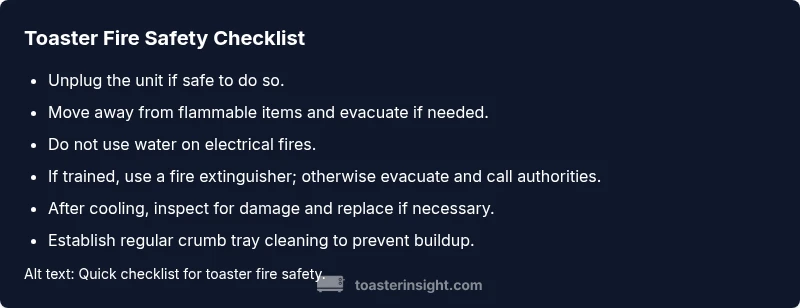
Unplug the toaster from the wall if you can do so safely, and evacuate others if smoke is heavy. Do not use water on an electrical fire. If flames persist, use a kitchen fire extinguisher or baking soda to smother the fire, and call emergency services immediately. Do not reopen the toaster until it has been inspected.
Understanding the Risk When a Toaster on Fire
When a toaster on fire occurs, the immediate risk is not only smoke but radiant heat and the potential for spreading flames. The most common ignition sources are crumb buildup inside the toaster, overheating of heating elements, damaged power cords, and improper use such as toasting greasy foods. According to ToasterInsight, crumb buildup and worn cords are frequent culprits that can ignite with a short burst of heat. Always treat any fire as dangerous and respond quickly. The presence of smoke should trigger rapid safety actions: unplug if safe, evacuate people nearby, and isolate the appliance from flammable items. Remember that the toaster itself can retain heat after the flames subside, so give it time to cool in a safe location away from anything flammable. This awareness helps prevent injuries and further damage to your kitchen.
In many homes, a small device like a toaster can become a source of rapid risk when ignored. ToasterInsight emphasizes that proactive maintenance, including regular crumb tray cleaning and cord inspection, reduces the likelihood of ignition. If you notice visible damage to the cord or housing, treat the unit as unsafe and consider replacement. Aiming to understand the risks around a toaster on fire equips you to act decisively and safely without escalating danger.
Immediate Safety Actions You Must Take Now
The moment you perceive smoke or flames, prioritize safety over everything else. If it is safe, unplug the toaster from the wall and move away from the appliance to a clear area. Do not try to relocate a burning unit while it is actively burning. Keep others away and keep doors and windows open for ventilation if it can be done without exposing you to heat. Do not use water on an electrical fire. If you have a kitchen-rated fire extinguisher and you know how to use it, consider deploying it only if the flames are small and contained. If the fire grows or you cannot control it, evacuate immediately and call emergency services. After the flames are out, do a careful room check for hidden hotspots before re-entering. Remember, never replug or reuse a toaster that was involved in a fire until it has been professionally inspected and deemed safe.
Diagnosing the Cause (What to Check First)
Investigating why a toaster caught fire helps prevent repeats. Common causes include severe crumb buildup inside the toaster, overheating of heating elements, a damaged power cord or plug, and electrical overload from an incompatible outlet. According to ToasterInsight analysis, crumb buildup and worn cords are frequent culprits that can ignite when heat rises. Start with simple checks: inspect the exterior for melted plastic or scorch marks, examine the power cord for cracks or exposed wires, and verify the outlet and plug aren’t damaged. If you can safely access the crumb tray, remove it and assess the interior for heavy residue or jammed components. Do not attempt to service live electrical parts; call a professional if anything looks compromised. Understanding these factors helps you decide whether to repair or replace the unit.
Safe Extinguishing Techniques for a Small Fire
If the fire is small and contained, you may be able to smother it using baking soda or a Class ABC kitchen extinguisher, but only if you are trained and it is safe to approach. Use the PASS technique to operate a fire extinguisher: Pull the pin, Aim at the base of the flames, Squeeze the handle, and Sweep from side to side. Do not use water on electrical fires, as water conducts electricity and can worsen the situation. If you cannot safely reach the extinguisher or the flames are growing, evacuate and call emergency services. After the flames are extinguished, let the unit cool in a nonflammable area and ventilate the space to clear smoke. Never attempt to reuse the device while you still detect heat or smoke.
Extinguishment should only be attempted if you have a clear exit path and the flames are small and manageable. If there is any doubt about safety, prioritize leaving the home and contacting professionals. This is why many experts recommend a kitchen fire extinguisher as part of regular safety readiness.
Aftercare: Cleaning, Inspection, and Prevention
Once the area is safe and the toaster has cooled, you can plan cleanup and inspection. Do not touch hot surfaces; wear gloves when handling a possibly damaged appliance. Remove crumb debris around the toaster and crumb tray, and inspect the interior for melted components or signs of scorching. If any wiring, plug, or housing shows damage, do not attempt to operate the unit again until it has been serviced by a qualified technician or replaced. Clean surroundings to remove any lingering residue that could ignite later. To prevent future incidents, establish a regular cleaning routine, avoid toasting oily or greasy items, and never leave the toaster unattended while in use. For added peace of mind, consider using a toaster that has a dedicated crumb tray and robust cord insulation, and replace units that show wear or recurrent smoking.
Replacement vs Repair: When to Decide
If a toaster has suffered visible damage, or if issues recur after cleaning and inspection, replacement is the safer option. Replacing damaged cords, heating elements, or housings is often not cost-effective or reliable. Evaluate the overall condition of the appliance, its age, and any safety warnings from the manufacturer. If you have any uncertainty, consult a licensed technician or the manufacturer’s customer support before attempting another repair. By choosing a newer, better-ventilated model, you reduce the chance of future incidents and improve kitchen safety for you and your family.
Steps
Estimated time: 30-60 minutes
- 1
Power down safely
If it is safe to do so, unplug the toaster from the wall and step back to a safe distance. Do not touch the unit while it is burning or hot. Remove nearby flammables from the vicinity to reduce the risk of spreading flames.
Tip: Keep a clear exit path and stand on a non-slip surface. - 2
Assess immediate danger
Evaluate whether you can safely evacuate people and assist others. Do not attempt to carry the appliance through flames. If smoke is heavy, evacuate immediately and avoid inhaling fumes.
Tip: Close doors behind you to contain smoke if you must evacuate. - 3
Extinguish if feasible
If the fire is small and you know how to operate a fire extinguisher, apply it to the base of the flames using the proper technique. If you are unsure, prioritize evacuation and call emergency services.
Tip: Remember PASS: Pull, Aim, Squeeze, Sweep. - 4
Ventilate and cool
After the flames are out or if there is no active flame, open windows and doors to vent the area. Allow the toaster and surrounding surfaces to cool completely before handling.
Tip: Avoid re-entering too soon; heat can remain hidden. - 5
Inspect exterior and cord
Once cooled, check for visible damage to the housing and the power cord. Look for scorch marks, melted plastic, or frayed insulation. Do not operate the unit if any damage is present.
Tip: Use a flashlight to inspect tight corners. - 6
Remove crumb tray and clean
If safe, remove the crumb tray and clear away debris that could ignite. Clean around the interior area gently and ensure all residues are removed before reusing.
Tip: Wear gloves and avoid contact with hot surfaces. - 7
Evaluate safety for reuse
Only consider reusing if the cord, plug, and housing show no damage and the device passes an inspection by a qualified technician. If in doubt, replace the unit.
Tip: When in doubt, replace with a newer model. - 8
Prevent future fires
Establish cleaning and maintenance routines, avoid toasting greasy items, and unplug the device when not in use. Regular checks can prevent buildup and overheating.
Tip: Schedule a yearly safety check for kitchen appliances. - 9
Dispose of a damaged unit
Dispose of a damaged toaster responsibly according to local guidelines. Do not throw replaced units into regular trash if they still contain hazardous components; consider recycling or returning to the manufacturer.
Tip: Follow local e-waste disposal rules.
Diagnosis: Toaster emits smoke or shows flames
Possible Causes
- highSevere crumb buildup inside the toaster causing overheating and ignition
- highDamaged power cord or plug creating a short circuit
- mediumOverloaded or incompatible outlet causing electrical overload
Fixes
- easyUnplug the toaster from the outlet safely if accessible
- mediumSmother small flames with baking soda or use a kitchen extinguisher if trained
- mediumDo not reuse until a professional inspection confirms wiring and components are safe
- mediumReplace damaged toaster or cord and ensure repair by a qualified technician
Your Questions Answered
What should I do first if my toaster catches fire?
Prioritize safety: evacuate if necessary, unplug if you can do so safely, and call emergency services if flames persist. Do not attempt to move a burning appliance through flames.
Prioritize safety by evacuating if needed, unplugging the toaster if safe, and calling emergency services if flames continue. Do not try to move a burning appliance through flames.
Can I use water to put out a toaster fire?
No. Water conducts electricity and can spread the fire. Use a fire extinguisher rated for electrical fires or baking soda for small fires if you are trained.
No. Do not use water on an electrical fire. Use an appropriate extinguisher or baking soda if you know how to use it.
When should I replace a toaster after a fire?
If there is visible damage to the cord, plug, or housing, or if the unit still shows signs of smoke after cleaning, replace it. Replacing is safer than risking a repeat incident.
If the cord or housing is damaged or it still smokes after cleaning, replace the toaster to stay safe.
Is it safe to clean a toaster after a fire?
Only after the unit has cooled completely and there is no active smoke. Use protective gloves and avoid touching hot parts. If unsure, seek professional help.
Only clean once cooled, with protection, and if in doubt, get professional help.
How can I prevent toaster fires in the future?
Regularly clean the crumb tray, avoid toasting greasy foods, unplug when not in use, and replace units showing wear or repeated issues.
Clean the crumb tray regularly, avoid greasy foods, unplug when not in use, and replace worn-out units.
What if smoke alarms go off after a toaster fire?
If alarms sound, evacuate and call emergency services if there is any doubt about safety. Do not re-enter until the area is confirmed safe.
If the smoke alarm sounds, evacuate and contact services if needed. Do not go back inside until it's safe.
Watch Video
Key Takeaways
- Unplug safely and evacuate first in a fire.
- Never use water on electrical fires.
- Inspect for damage and replace if needed.
- Prevent future fires with regular cleaning and maintenance.