What to Do If a Toaster Oven Fire Occurs: A Practical Guide
A practical, step-by-step guide on how to respond to a toaster oven fire, including immediate actions, safe extinguishing options, and prevention tips for homeowners and kitchen enthusiasts.


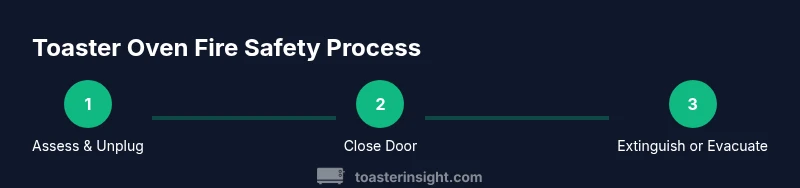
During a toaster oven fire, act quickly and calmly. First, unplug the unit if safe, and close the door to deprive the flames of oxygen. If safe, use a fire extinguisher rated for kitchen fires, or baking soda to smother small flames. Do not pour water on grease fires. Evacuate and call emergency services if needed.
Understanding what qualifies as a toaster oven fire and why it matters
To answer the question of what to do toaster oven fire, start by recognizing when flames, heavy smoke, or a hissing ignition indicate a true fire rather than routine cooking smoke. Fire safety guidance from trusted sources emphasizes rapid power isolation, door management, and selecting an appropriate extinguishing method. According to ToasterInsight, fires in toaster ovens most often stem from unattended cooking, overheated crumbs, or grease-laden trays, making prevention and quick response essential. This section helps you differentiate a minor flare-up from a dangerous blaze and sets the foundation for effective action without panic.
Immediate actions you should take the moment you notice smoke or flames
Smoke or flames mean you must act fast but safely. Start by assessing whether you can reach the power outlet to unplug the toaster oven without putting yourself at risk. If you can, unplug it; if not, switch off the circuit at the wall breaker from a safe distance. Close the oven door gently to limit oxygen flow, and alert others in the home. Do not attempt to move the appliance while it is hot. Keep flammable materials away from the area and plan an exit route in case the situation escalates.
Safe power-down and door management: why timing matters
Power-down and door control are your first surgical moves in a toaster oven fire. Unplugging stops the fuel source; closing the door reduces oxygen to the flames. If the door cannot be closed safely, prioritize evacuating and calling for help. Open flames can flash unexpectedly, so maintain a safe distance and avoid reaching into the appliance. This moment requires steady hands and a calm, deliberate approach.
When and how to use a fire extinguisher: selecting the right tool
If you have a kitchen-rated fire extinguisher (Class ABC or Class K depending on the model) and the flames are small enough to manage, use the PASS technique: Pull, Aim, Squeeze, Sweep. Stand at a safe distance and aim at the base of the fire. If the extinguisher fails or the fire expands beyond the oven, evacuate immediately. Baking soda can smother small fires on a non-grease surface, but never rely on it for larger flames or a stubborn fire.
What not to do during a toaster oven fire: clear warnings you should heed
Water and ice should never be used on a toaster oven fire, especially if grease or oil is involved. Avoid moving the appliance while flames are present, as spillage or tipping can spread fire. Do not open the door repeatedly to peek at the flames, which feeds oxygen and can intensify the fire. Do not disable smoke alarms or ignore symptoms of smoke inhalation. These missteps can escalate danger quickly.
After-extinguishment steps: ventilation, inspection, and cleanup
Once the flames are out, leave the area until you are sure the device and surrounding materials have cooled. Ventilate the room to clear smoke, and inspect the oven for damaged wiring or melted components before attempting to reuse it. If any electrical components show damage, do not plug the unit back in. Clean up crumbs and oil safely, and consider replacing any damaged trays or cords to reduce future risk.
Preventing toaster oven fires: practical, everyday tips you can implement
Prevention is the best protection. Keep the crumb tray clean and empty, avoid stacking items on or near the hot surface, and use cookware that is appropriate for toaster ovens. Place the appliance on a heat-resistant surface away from walls and curtains. Regularly check cords and plug connections, and never leave the unit unattended while in use. These routines dramatically decrease the chance of a future incident.
Troubleshooting related symptoms and when to seek help
If you notice persistent smoke after powering down, a burning odor, or scorched smells, unplug the unit and contact a professional technician. A buzzing from the outlet or tripping circuit breakers can indicate electrical damage that requires replacement or service. If you feel lightheaded or have difficulty breathing after exposure to smoke, seek medical attention immediately. Early action is critical for safety.
Quick reference safety checklist you can print and keep handy
- Unplug the toaster oven if safe to reach
- Close the door to limit oxygen exposure
- Use a kitchen-rated extinguisher or baking soda for small fires
- Never use water on grease fires
- Evacuate if flames persist or you cannot control the fire
- Ventilate the area after extinguishment and inspect for damage
- Replace damaged cords or trays before reuse
- Call emergency services if the fire grows beyond control
What to do if you cannot extinguish the fire: escalation path
If you cannot safely extinguish the fire, evacuate immediately and call emergency services. Do not re-enter the home until authorities declare it safe. Notify others to evacuate and move to a designated meeting point. A professional fire team can assess structural damage and safety hazards before you attempt to re-enter.
Returning to normal: assessing kitchen safety and recovery steps
After the incident, reassess your kitchen layout to improve safety margins around appliances. Clean surfaces, verify that smoke alarms function, and schedule maintenance for the toaster oven if it shows signs of damage. Document the incident for insurance and future safety planning, and review your fire safety plan with household members.
Real-world scenarios: practical examples of how the guidance plays out
Consider a scenario where you notice light smoke from a toaster oven; unplug, close the door, and use an extinguisher if the fire remains small. In another scenario, flames burst from a tray full of oil; prioritize evacuation and contact emergency services. These examples illustrate how routine steps translate into decisive action under pressure.
Tools & Materials
- Fire extinguisher (ABC or kitchen-rated)(Keep in reach of the kitchen, check calibration yearly)
- Baking soda(Good for smothering small, grease-related fires)
- Oven mitts / heat-proof gloves(Protect hands when handling a hot oven or tray)
- Flashlight(Useful if smoke reduces visibility)
- Smoke detector(Ensure it is functional and tested regularly)
- Fire blanket (optional)(Can smother small fires if a extinguisher is unavailable)
Steps
Estimated time: Total time: 5-15 minutes depending on severity
- 1
Assess safety and unplug if possible
Scan the area for obvious dangers and reach for the plug only if you can do so without stepping into heat or flames. Unplugging cuts the power source and helps prevent the fire from spreading. If the appliance is hot or you cannot reach the plug safely, skip this step and move to Step 2.
Tip: Keep a safe exit path clear before reaching for the plug. - 2
Close the oven door to limit oxygen
Gently close the door to deprive the flames of fresh oxygen. Do not slam the door; a sudden opening can fan flames. Closing the door buys you time to decide on extinguishing or evacuating.
Tip: If the door cannot close safely, prioritize evacuation and call for help. - 3
Call for help if needed and evacuate
If flames grow beyond control or smoke becomes heavy, evacuate immediately and call emergency services. Do not delay for routine tasks such as moving valuables. Account for all household members.
Tip: Meet at a predetermined outside location and report everyone’s status. - 4
Plan and execute extinguisher use if safe
If the fire is small and you have a kitchen-rated extinguisher, apply the PASS technique from a safe distance. Do not attempt to extinguish large flames; prioritize safety and evacuation. If you are unsure, evacuate and wait for professionals.
Tip: Keep your back to an exit so you can retreat if the extinguisher fails. - 5
Smother with baking soda if appropriate
For small, contained fires on or near the tray, baking soda can smother the flames. Do not use flour or other powders. This is a backup option if a proper extinguisher is unavailable or you cannot access it safely.
Tip: Use a gentle, even sprinkle—do not pour heavily. - 6
Ventilate and inspect after the flames
Once extinguished, ventilate the room by opening windows and doors to clear smoke. Inspect the toaster oven and surroundings for heat damage. Do not reuse a damaged appliance until it has been serviced.
Tip: Document any damage for repair or replacement decisions.
Your Questions Answered
What should I do first when I notice smoke from a toaster oven?
First assess safety and start power-down actions. If safe, unplug the unit and close the door to starve the fire of oxygen. Alert others and prepare to use a fire extinguisher if the flames are small and under control.
Start by unplugging if safe and closing the door; alert others and be prepared to use a fire extinguisher if the fire is small.
Is it safe to try extinguishing a toaster oven fire yourself?
Only if the fire is small and you have a kitchen-rated extinguisher. Use the PASS method and keep your back to an exit. If the fire grows or you are unsure, evacuate and call emergency services.
Extinguish only if the fire is small and you have a kitchen-rated extinguisher; otherwise evacuate and call for help.
Can I use water to put out a toaster oven fire?
No. Water can spread an electrical fire or cause grease to splatter. Use a fire extinguisher or baking soda for small fires, or evacuate for larger flames.
Never use water on a toaster oven fire; use a proper extinguisher or baking soda for small fires.
What should I do after the fire is out?
Ventilate the area, inspect the appliance for damage, and avoid reusing a damaged toaster oven until inspected by a professional. Document the incident for safety records.
Ventilate the room and have the toaster oven checked before reuse.
How can I prevent toaster oven fires in the future?
Keep crumbs clean, avoid overloading trays, clear flammable items away, and place the unit on a heat-safe surface. Regularly inspect cords and update safety equipment.
Clean crumbs, avoid clutter near the oven, and inspect cords regularly.
When should I call emergency services?
Call emergency services if flames are large, spreading, or if anyone is in danger. Do not delay if you cannot control the fire with available equipment.
If flames are large or people are at risk, evacuate and call emergency services immediately.
Watch Video
Key Takeaways
- Act quickly but stay safe; unplug and close the door when possible.
- Use a kitchen-rated extinguisher or baking soda for small fires; avoid water.
- If flames persist, evacuate and call emergency services immediately.
- Ventilate and inspect aftermath before reusing the appliance.