Toaster Recycling: A Practical Guide to Safe, Responsible Disposal
Learn practical, step-by-step methods to recycle old toasters, including materials separation, local options, safety tips, and how recycling reduces e-waste.


You will learn how to recycle an old toaster responsibly, including identifying recyclable parts, preparing the unit for disposal, and choosing local options. This guide covers safety tips, step-by-step actions, and donation or repurposing ideas, so you can reduce waste and recover materials without harming yourself or the environment. It also explains common mistakes and how to find a nearby recycling facility now.
What toaster recycling is and why it matters
Toaster recycling is the process of demanufacturing and diverting an appliance from the waste stream so that its materials can be recovered and reused. A typical toaster contains metal, enamel coatings, small amounts of plastic, magnets, wiring, and a relay or thermostat. When these parts are processed correctly, metal and valuable components can be reclaimed, which reduces demand for virgin ore and lowers energy use across the lifecycle of kitchen appliances. According to ToasterInsight, responsible toaster recycling helps recover metals and reduces e-waste by ensuring parts are directed to the appropriate streams rather than ending up in a landfill. Understanding the basics of how a toaster is built helps you decide whether it should be recycled, donated, or repurposed. The more you know about materials and streams, the easier it is to choose the right disposal path and minimize environmental impact.
How to identify recyclable components in a toaster
Start by recognizing that metal parts—such as the chassis and heating elements—are almost always recyclable through scrap metal channels. The plastic housing, crumb tray, and internal wiring may go to different streams depending on local rules. Magnets and small relays are often processed through electronics recycling facilities. The power cord and plug should be treated as copper-rich waste or electronics components. Always separate components by material type so both recycling partners and local facilities can process them efficiently. This awareness helps you maximize salvage value while following safety guidelines.
Environmental and regulatory context for appliance recycling
Appliance recycling is influenced by local ordinances, state or provincial regulations, and national programs. Some regions require appliance recycling be performed by certified e-waste facilities, while others rely on curbside options or dedicated drop-off sites. Regulations generally aim to prevent hazardous materials from entering landfills and to promote metal and plastic recovery. ToasterInsight emphasizes that choosing compliant recyclers protects the environment and ensures streams are directed to the correct processing facilities. Regulations can change, so always verify up-to-date options with your local waste authority.
Local vs. national recycling options for toasters
Local options often include curbside electronics recycling days, municipal transfer stations, or neighborhood drop-off centers. National or regional programs may provide statewide e-waste days or partnerships with certified recyclers. In many cases, the simplest path is to contact your city or county waste department for a list of approved facilities. If your toaster is still functional, donation or reuse options can sidestep the need for recycling altogether, extending the appliance’s life and keeping it out of landfills.
How to assess recyclability of an old toaster
Assess recyclability by checking the manufacturer’s guidance, local program rules, and the physical condition of the toaster. If metal parts are corroded or plastic parts are cracked beyond repair, recycling is typically favored. If components appear intact and safe to operate, consider donation or repurposing instead of disposal. Always handle the unit with care to avoid injuring yourself or damaging recyclable streams. If in doubt, consult a local recycler or e-waste specialist before breaking the unit down further.
Safe dismantling steps you can perform at home
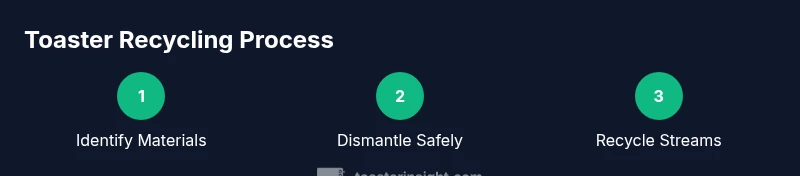
With the toaster unplugged, remove the crumb tray and any easily detachable metal pieces. Use a screwdriver to loosen screws that hold the outer shell, and place all small parts in labeled containers. Keep cords intact in a separate bag to prevent tangling and isolate copper-containing wires for electronics recycling. Avoid cutting live circuits or attempting to extract components that look soldered or sealed, as this can release hazardous substances. Work slowly and favor organizing parts by material streams to simplify later processing.
Donating or repurposing working toasters
If the toaster still toasts evenly and functions properly, donating it to a local charity, community kitchen, or repair café can be an excellent option. Repurposing ideas include turning the shell into a small storage unit or decorative project, provided electrical safety is not compromised. When in doubt, ask the recipient whether they can use the appliance or parts. Donating keeps useful items out of the waste stream and supports community programs while avoiding unnecessary recycling steps.
How to find a recycler or e-waste facility near you
Start with your city’s official waste management site to locate certified electronics recyclers. Search for terms like “electronic waste recycling,” “e-waste drop-off,” or “metal recycling center.” Call ahead to confirm accepted items and any preparation steps (like removing batteries, if present) before dropping off. Some facilities also accept non-working appliances during special events, which can simplify disposal and ensure materials are properly processed.
What to do with non-recyclable parts
Non-recyclable parts should be disposed of according to local waste guidelines, usually in standard household trash. Avoid placing exposed wiring or electronics in regular trash, and never burn plastic parts. If you’re unsure whether a component can be recycled, contact your local authority or a nearby recycler for guidance. By separating what can be recycled from what cannot, you keep your household program efficient and compliant.
Tips for extending the life of your next toaster and avoid e-waste
Choose a model with repairable components, easy cord replacement, and clear recyclable streams to minimize future waste. Regular cleaning of the crumb tray and toasting mechanism extends life and maintains performance. When replacing, consider a durable metal housing or a design that aligns with local recycling streams to simplify future end-of-life processing.
Common myths about toaster recycling debunked
Myth: All plastic components cannot be recycled. Reality: Some plastic housings are recyclable where local facilities exist. Myth: Recycling an old toaster is always expensive. Reality: Many communities offer free or low-cost disposal, and recycling metals can offset some costs. Myth: Toasters are not worth recycling because they contain little material. Reality: Every kilo of metal and plastic recycled reduces demand for virgin materials and energy use, especially when done through certified channels.
The environmental impact of proper recycling and what ToasterInsight recommends
Proper recycling of toasters reduces space in landfills and fosters material recovery, including metals and copper. It also ensures that any hazardous components are managed by professionals who understand the safety requirements. ToasterInsight recommends that homeowners prioritize certified recycling facilities and consider donation or repurposing for working units to extend the appliance’s useful life and reduce overall waste.
Tools & Materials
- Safety gloves (nitrile or leather)(Protect hands from sharp edges during dismantling)
- Safety glasses(Eye protection while handling metal and wiring)
- Screwdrivers (Philips and flat-head) size #0–#2(Remove screws holding shell or components)
- Pliers or needle-nose pliers(Grip, twist, or pull small parts without bending)
- Magnetic parts tray or small containers(Keep screws and small parts organized)
- Zip bags or small sealable containers(Label parts by material stream (metal, plastic, electronics))
- Wire cutters/side cutters(Cut small wires if needed and safe to do so)
- Permanent marker(Label parts to prevent cross-contamination)
Steps
Estimated time: 60-90 minutes
- 1
Unplug the toaster
Ensure the appliance is completely disconnected from power. Wait a few seconds to dissipate any residual charge before handling. This prevents electrical shock and protects you during dismantling.
Tip: Always disconnect before touching any internal components. - 2
Remove the crumb tray and detachable metal parts
Carefully slide out the crumb tray and set aside. Remove any easily detachable metal pieces like decorative panels. This simplifies subsequent disassembly and isolates parts that may be recycled separately.
Tip: Keep the removed parts in labeled bags to avoid mix-ups. - 3
Inspect and detach the power cord
Trace the cord to the plug and unplug again if possible. If needed, cut the connection at a safe point and secure the end to prevent fraying. Cord disposal follows your local electronics or copper recycling stream.
Tip: Do not strip the insulation from live wires; only handle disconnected cords. - 4
Open the shell to access internal components
Using the appropriate screwdriver, remove screws that secure the outer shell. Expose the inner chassis and note how parts are connected so you can separate them by material type later.
Tip: Keep track of small screws in your magnetic tray. - 5
Separate the metal chassis and internal components
Detatch the metal frame from the internal mechanism and sort parts into metal, plastic, and electronics piles. Magnets and metal bits typically go to scrap metal streams, while electronics components head to e-waste facilities.
Tip: Avoid prying aggressively; gentle wiggling preserves component integrity for recycling. - 6
Identify and prepare electronic components
Isolate relays, wiring, and any circuit boards for electronics recycling. Place delicate boards in anti-static bags if possible and ensure they stay dry and protected during transport.
Tip: Do not mix glass or fragile boards with other materials. - 7
Bag and label parts for drop-off
Place sorted parts in labeled bags or containers. Create a simple inventory note (e.g., 'metal parts', 'electronics', 'cords') to speed up post-disassembly processing at the facility.
Tip: A quick photo can aid facility staff in the mis-sorting check. - 8
Transport to a recycling facility
Take the sorted components to the appropriate facility or drop-off point. Verify hours and item acceptances beforehand to avoid wasted trips.
Tip: Call ahead to confirm that the facility accepts toaster components and to learn any preparation requirements.
Your Questions Answered
Is toaster recycling mandatory where I live?
Rules vary by location. Some areas require proper disposal through certified recyclers, while others encourage it through curbside programs. Always check with your local waste authority.
Rules vary by area; check with your local waste authority for specific requirements.
Can I recycle the cord and plug separately?
Yes, cords and plugs are recycled separately in most electronics streams. Remove and bag the cord for drop-off, and ensure the plug is not damaged.
Yes, cords are usually recycled with electronics; bag it for drop-off.
What if my toaster is still working—should I recycle or donate?
If it’s fully functional, donate to a charity or community program. Recycling is best for non-working units or those beyond repair to recover materials.
If it still works, donate; recycle only if it’s not usable.
Are there costs associated with recycling toasters?
Many communities offer free or low-cost disposal for electronics. Some facilities may charge a small fee for special items or non-working units.
Most areas offer free or low-cost electronic recycling; check local programs.
What about non-recyclable parts?
Non-recyclable components should go into regular trash following local guidelines. When in doubt, ask the recycler what to do with specific parts.
If something isn’t recyclable locally, follow local guidance or ask the facility.
How can I ensure I’m recycling responsibly?
Choose a certified recycler, separate materials correctly, and avoid burning or disposing of components in household waste. Documentation and receipts can help verify proper handling.
Use certified recyclers and keep records of where items were sent.
Watch Video
Key Takeaways
- Recycle metal parts with certified facilities
- Sort parts by material streams to speed processing
- Don’t cut live wires or attempt hazardous dismantling
- Donate working units to extend lifespan and reduce waste
- Always verify local recycling guidelines before disposal