Best Way to Toast Bread in the Oven
Master the best method to toast bread in the oven with expert tips, timing, and flavor boosters. Achieve golden, evenly browned slices every time, whether you’re using a standard oven or a toaster oven.


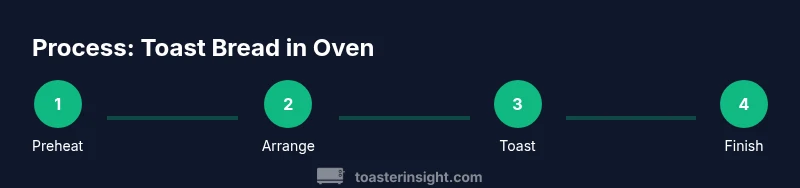
To toast bread in the oven, preheat to 350–400°F, place slices on a rack or parchment-lined sheet, and bake until edges are golden and centers are crisp. Flip halfway for even browning, then toast an additional 1–3 minutes if you want extra crunch. Add butter or toppings after toasting.
Why oven toast can be a smart choice for busy kitchens
The best way to toast bread in the oven offers a reliable alternative when a toaster isn't available or when you need to toast multiple slices at once. An oven provides even browning across larger batches and lets you control texture more precisely than many countertop toasters. The technique scales from a simple weekday toast to more complex preparations like crostini and breakfast bruschetta. In this guide, we explore how to optimize heat, rack placement, and timing to achieve crispy edges and soft centers consistently. According to ToasterInsight, oven-toasted bread can rival traditional toaster results when the temperature is managed properly and slices are arranged with space for air circulation.
How oven temperature and air flow affect browning
Browning is a function of surface heat and exposure time. A steady 350–400°F range encourages steady crust development without scorching the bread’s interior. Airflow matters: a rack elevates slices for even heat, while a pan can trap steam if crowded. If you’re using a convection oven, you can shave 1–2 minutes off the total time due to the consistent hot air circulating around the slices. The key is to monitor the color closely and adjust in small increments to avoid over-browning.
Bread types and thicknesses matter for texture
Thicker slices (like rustic sourdough or country bread) will need a bit more time, while thin sandwich bread browns quickly. Hearty breads with open crumb absorb more moisture, which can delay crisping slightly. For baguette or ciabatta, consider slicing diagonally to maximize surface area. For sweeter breads (like brioche or cinnamon raisin), watch for sugar caramelization that can lead to quicker browning. If you’re toasting a dense loaf, pre-slice to thinner rounds to ensure even heating.
Rack vs. sheet: choosing the best surface for even browning
Using a wire rack allows air to circulate around both sides of each slice, producing consistent browning on all faces. A parchment-lined sheet sits closer to the heating element and can yield slightly crisper bottoms, especially when space is limited. If you’re toasting many slices, use a rack and rotate trays halfway through for uniform results. For freshly baked (still warm) bread, let it cool for a minute to avoid soggy edges.
The classic bake method: step-by-step timing without the broiler
Preheat to 350–400°F and arrange bread in a single layer with space between slices. Bake for 4–6 minutes, then flip and bake another 2–4 minutes, watching closely for a golden color. Once done, remove promptly to avoid continued browning. This method yields a uniform crust while preserving the bread’s interior softness, making it ideal for breakfast toasts and crostini bases.
The broil method for fast, crisp results
If you’re in a hurry, switching to the broil setting can deliver rapid browning. Move slices to the top rack and broil for 1–2 minutes per side, keeping a close eye to prevent burning. Broiling works best for thinner slices and for toppings like garlic butter that you want to caramelize quickly. Always monitor closely, as heat is intense and can go from perfect to burnt in seconds.
Flavor boosters and toppings that upgrade oven toast
Butter, olive oil, or garlic butter added before toasting can enhance aroma and crust color. A light brush of olive oil or a sprinkle of sea salt after toasting can elevate the flavor without adding moisture that would soften the crust. If you’re making a crostini, drizzle a touch of balsamic or lemon juice after toasting to brighten the taste.
Rejuvenating stale bread in the oven
Stale bread toasts especially well in the oven because moisture has departed, and the dry surface browns quickly. Lightly mist the crust with water or brush with a tiny amount of olive oil before placing in a hot oven. Toast for 4–6 minutes, flip, then watch for a crisp, revived texture. This technique also works for day-old baguette and leftovers turning into bruschetta bases.
Common pitfalls and how to avoid them
Overcrowding slices or using a pan without space can trap steam and lead to soggy bottoms. Using too high a temperature risks burnt edges while leaving the center underdone. Always preheat fully and keep slices in a single layer. If browning too fast, reduce temperature by 25°F and extend the cooking time slightly for even results.
Safety, oven care, and energy considerations
Toast efficiently by preheating only as hot as needed and by toasting in batches rather than crowding the oven. After use, allow the oven to cool with the door ajar for 10–15 minutes to prevent heat stress on racks and seals. Clean crumbs regularly to prevent smoke and reduce appliance energy use.
The ToasterInsight verdict on mastering oven toast
By controlling heat, airflow, and timing, you can consistently achieve high-quality oven toast at home. The technique scales for family meals and entertaining guests, and it complements a wide range of toppings and toppings. The ToasterInsight team recommends practicing with a few test slices to dial in your preferred browning level and texture across different bread varieties.
Tools & Materials
- Oven or toaster oven(Ensure it can reach 350–400°F; convection is optional but helpful for faster browning)
- Wire rack(Best for even browning on all sides)
- Baking sheet or parchment paper(Useful if you don’t have a rack)
- Bread slices(Any bread variety, thickness 1/2–3/4 inch works well)
- Spatula or tongs(Helpful for flipping slices without tearing)
- Butter, olive oil, or spreads(Optional flavor boosters applied after toasting)
- Timer or clock(Keeps track of multiple intervals for even browning)
- Oven mitts(Protect hands during handling hot sheets or racks)
Steps
Estimated time: 10-20 minutes
- 1
Preheat the oven
Set the oven to 350–400°F and allow it to heat fully. A properly heated oven ensures even browning and prevents pale centers.
Tip: If your oven runs hot, start at 350°F and monitor closely. - 2
Prepare the bread
Arrange slices in a single layer on a rack or parchment-lined sheet with space between pieces for air to circulate.
Tip: Thicker slices may need an extra minute per side. - 3
Bake first side
Place the tray in the middle rack and bake 4–6 minutes until the edges begin to color.
Tip: Keep an eye on color; color preferences vary by bread type. - 4
Flip the slices
Turn slices over to ensure even browning across both faces.
Tip: Use a spatula or tongs to minimize crumb damage. - 5
Bake second side
Bake 2–4 minutes more, watching for a golden, crisp crust.
Tip: If using convection, reduce time by 1–2 minutes. - 6
Finish and serve
Remove from oven and rest briefly. Add butter or seasoning if desired.
Tip: Toast is best immediately to preserve crunch.
Your Questions Answered
Is toasting bread in the oven better than using a toaster?
Both methods work well; the oven is advantageous for large batches and even browning across slices. It’s also ideal when you want a crisper crust on thicker bread.
Both work well. The oven is great for many slices and even browning; it’s especially good for thicker breads.
Can I use convection or bake without convection?
Convection speeds browning and cooks more evenly, but you can toast successfully in standard bake mode as well. If using convection, reduce time by about 1–2 minutes.
Yes, convection helps; if you use it, reduce time slightly.
What bread types work best for oven toast?
Most breads work, including sourdough, whole wheat, and baguette. Dense loaves may need a longer bake; soft sandwich breads toast quickly.
Sourdough, wheat, and baguette toast nicely; dense breads may take longer.
Should I toast with butter before or after?
Butter is best applied after toasting to avoid burning sugars. If you like, a light brush before can add flavor but may lead to uneven browning.
Butter after toasting is usually best for flavor without burning.
How can I revive stale bread using the oven?
Moisten the crust slightly and toast for a short period to restore crunch. This method helps restore texture without making the interior soggy.
Moisten lightly, then toast briefly to revive stale bread.
Watch Video
Key Takeaways
- Preheat to 350–400°F for even browning.
- Use a rack for best airflow and uniform texture.
- Flip slices for consistent color on both faces.
- Finish with butter or oil for flavor.
- Monitor closely to prevent burning.